
Last updated November 15, 2026
 Wrought iron
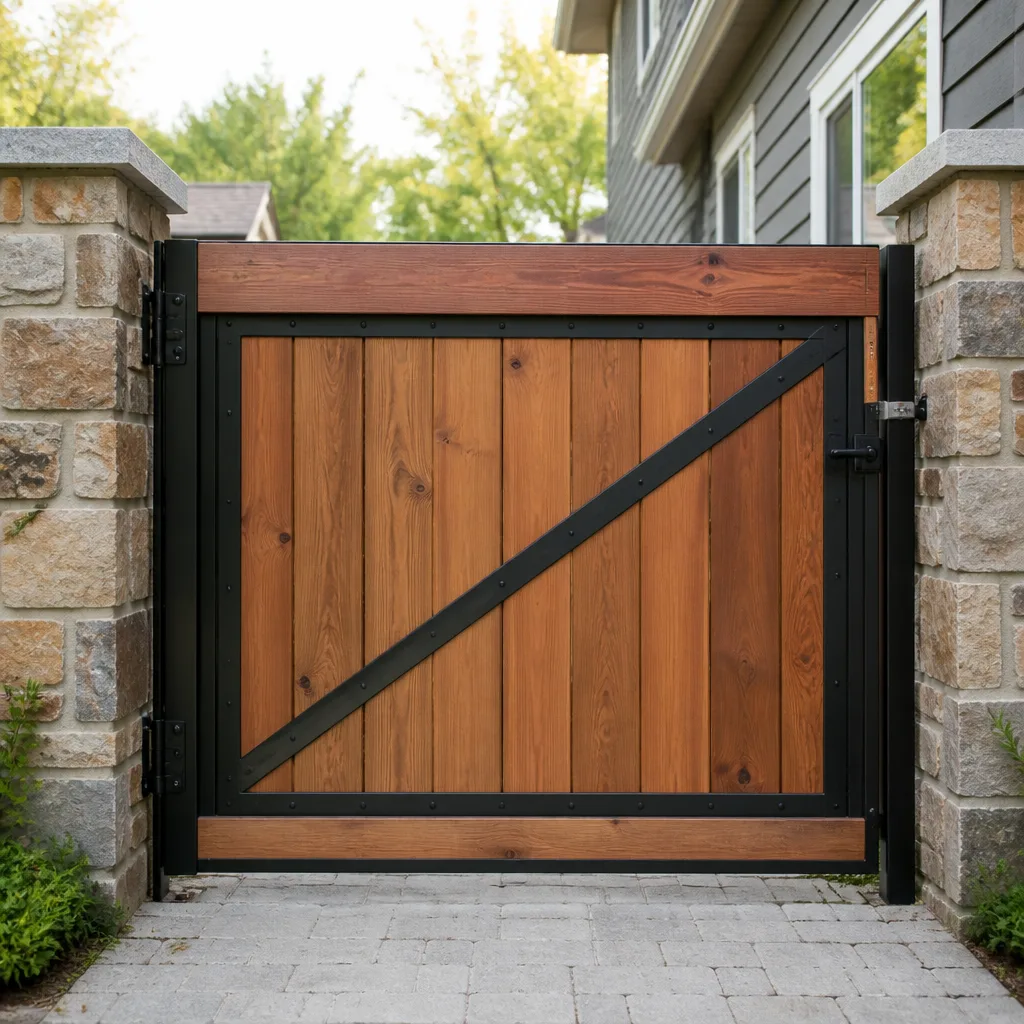 Wood & steel frame
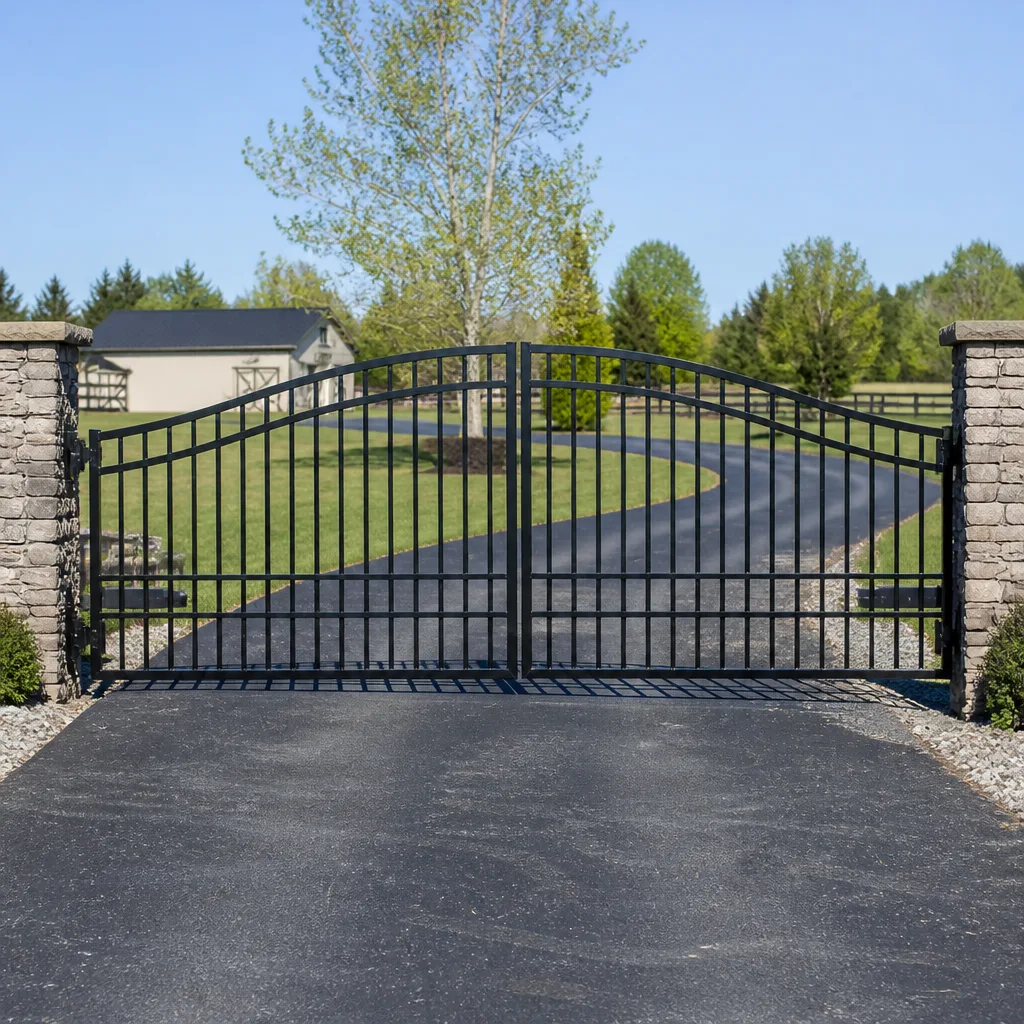 Farm & ranch
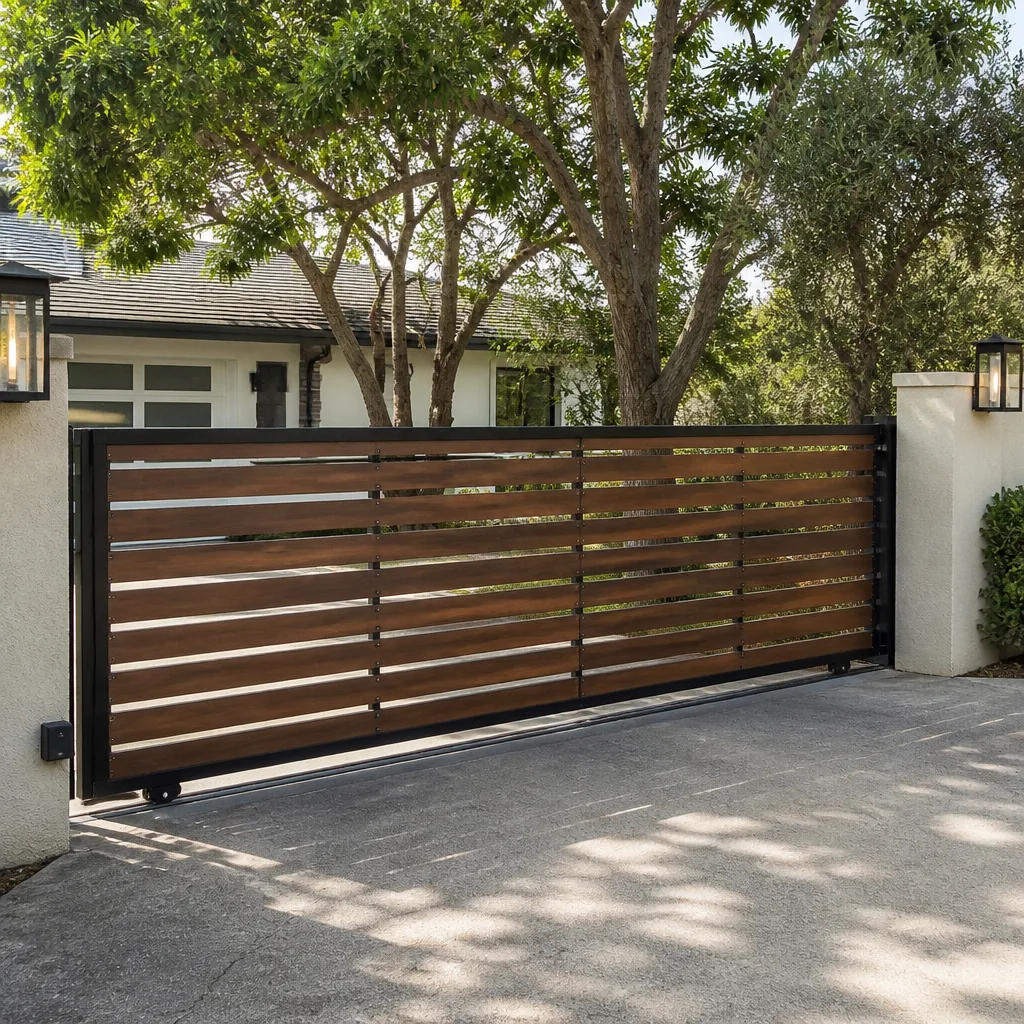 Sliding driveway gates
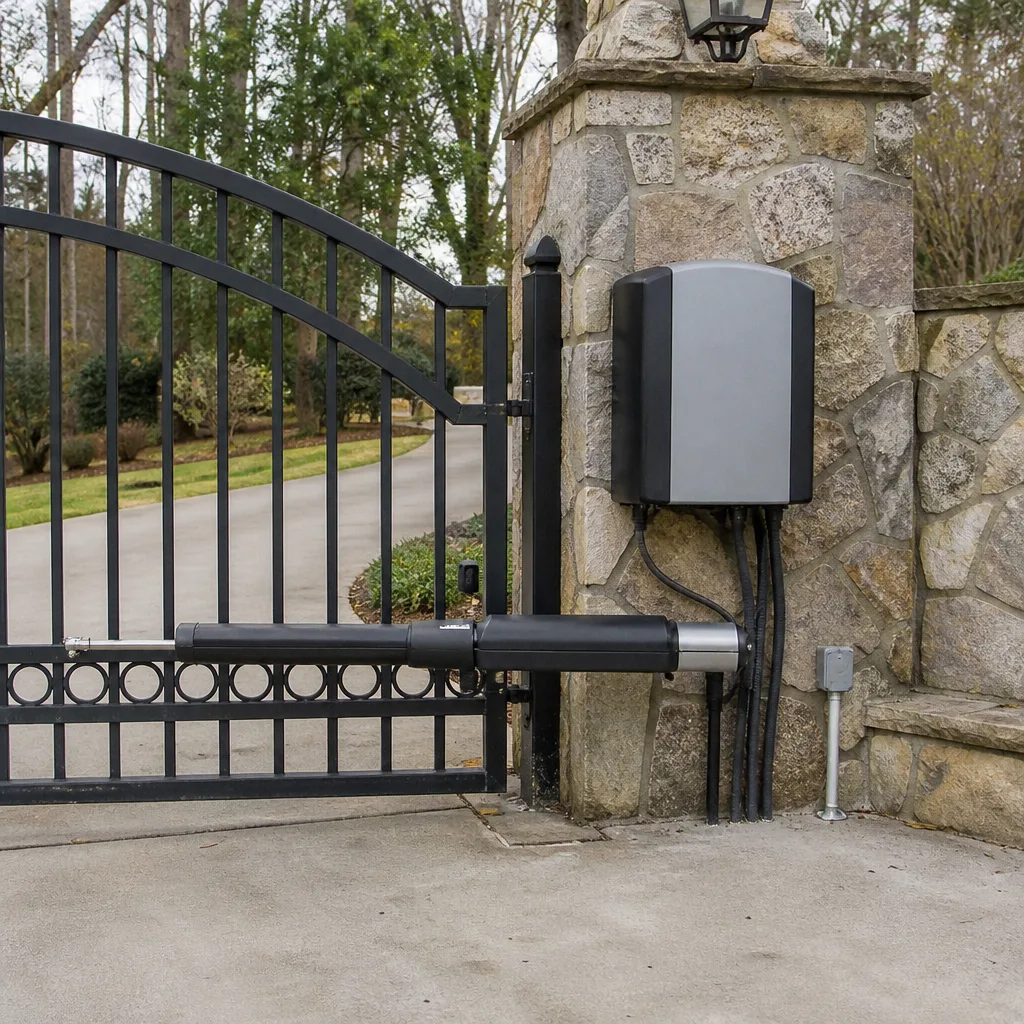 LiftMaster operators
Free on-site gate assessment - hinges, posts, and your LiftMaster or Nice gate operator checked before anything is quoted
The assessment is free and the quote is the invoice.
Get your free estimateGate Repair Permits, Codes & Inspections in Georgetown, TX: What You Need to Know
Most gate work in Georgetown doesn’t need a permit. The work that does need one tends to be the work contractors are most tempted to skip on the paperwork because pulling it adds a stop at the counter. Here’s the part people miss: a gate motor swap is usually a like-for-like repair, but if the job adds new electrical wiring, it turns into permitted work, and that distinction matters years later at a home sale, an insurance claim, or an HOA review. This guide walks through which jurisdiction your property falls under, what triggers a permit, how HOA review overlaps with city code, and where permits are filed in Georgetown’s busy development queue.
Quick Answer
In Georgetown, most gate repairs – replacing a hinge, straightening a sag, swapping a control board, or replacing a motor on existing wiring – do not require a permit. New electrical wiring for an automated gate, a brand-new gate installation with power run, and structural changes to a gate or its posts generally do require a permit. Your property’s jurisdiction determines who issues it: the City of Georgetown inside city limits, Williamson County outside them, and the ETJ sits in a gray zone where you need to confirm before work starts.
Styles & brands we work with
- Wrought iron
- Wood & steel frame
- Farm & ranch
- Sliding driveway gates
- LiftMaster operators
Table of Contents
- Which Jurisdiction Covers Your Georgetown Property?
- Which Gate Repairs Actually Require a Permit?
- How HOA Review Overlaps With (and Sometimes Conflicts With) City Code
- What Unpermitted Gate Work Does to an Insurance Claim
- Where to File, What It Costs, and How Long It Takes
- What a Gate Inspection Actually Checks
- Permits, Disclosures, and Your Future Home Sale
- Common Mistakes to Avoid
Which Jurisdiction Covers Your Georgetown Property?
Your jurisdiction depends on where your property sits relative to the Georgetown city limits line. Inside the line, the City of Georgetown issues permits and conducts inspections through its building and development services. Outside the line but still in Williamson County, the county takes over, though county permitting for residential gate and electrical work is narrower than city permitting. The hard part is the extraterritorial jurisdiction, or ETJ – the band of unincorporated land just outside the city that falls under Georgetown’s planning authority for some purposes but not all.
The ETJ is where most confusion happens. A property in the ETJ may need Georgetown’s approval for platting and subdivision, but not necessarily a city building permit for a gate. The rules are nuanced by project type, and the safest approach is to call the city’s development services line with your address before a contractor starts.
How to Check Your Jurisdiction in Three Steps
- Look up your address on the City of Georgetown’s online GIS or zoning map to see whether it sits inside the city limits, in the ETJ, or fully outside both.
- Call Georgetown’s building and development services department and give them the address plus a one-sentence description of the work (for example, “new operator with a new dedicated circuit” or “hinge replacement only”).
- Write down the name of the person you spoke with and the date. If a question comes up later at sale or insurance, that note is worth more than a verbal assurance from a contractor.
Sun City and the neighborhoods inside the city limits fall under Georgetown’s jurisdiction. Rural properties east and north of town often land in the ETJ or the county. Knowing which one applies before you hire anyone saves backtracking. If you’re not sure whether your property is inside or outside the line, our Georgetown service page covers the areas we work most often.
Which Gate Repairs Actually Require a Permit?
Simple test: if the work is a like-for-like replacement of a part using existing electrical service and existing structural elements, it’s usually repair and no permit applies. If the work adds new wiring, a new circuit, a new post footing, or changes the gate’s dimensions or location, treat it as permitted work.
Here’s how the categories usually break down. This is how we evaluate jobs in the field, and it matches what most jurisdictions expect. It’s not a substitute for asking your city, but it’s a starting framework.
Usually No Permit Required
- Replacing a hinge, roller, or latch on a manual or automated gate
- Swapping a control board on an existing operator (Ghost Controls, Elite, DoorKing, Mighty Mule, and similar)
- Replacing a gate motor using the existing electrical circuit and wiring
- Adjusting a limit switch, re-syncing remotes, or repairing a photo-eye
- Straightening a sagging gate or re-tightening hardware
- Replacing a gate panel with an identical-size panel in the same location
Usually Requires a Permit
- Adding a new dedicated electrical circuit to power a gate operator
- Running conduit or wiring from a house panel to a gate location that didn’t previously have power
- Installing a new automated gate where none existed before
- Changing the gate’s width, height, or swing/slide footprint
- New post footings or structural work on a shared or property-line gate
- Adding a keypad, intercom, or access control panel that ties into the home’s electrical or low-voltage system in a new location
The line is drawn at what’s new versus what’s replaced. A motor swap on existing wiring is repair. A motor install with a new circuit is construction. If a contractor tells you “gate work never needs a permit,” that statement is only accurate for part of the list above. Our gate repair team walks this through on every estimate so you know which side of the line your job lands on before anyone starts.
How HOA Review Overlaps With (and Sometimes Conflicts With) City Code
HOAs and the city are two separate approval tracks. Satisfying one does not satisfy the other, and in Georgetown’s newer planned communities, both tracks usually apply. HOAs typically control appearance: material, color, height, style, and sometimes setback from the property line. The city controls structural safety, electrical work, and zoning compliance for height and lot-line placement. Those two codes sometimes pull in different directions.
The classic conflict is height. An HOA may cap gate and fence height at a lower number than the city allows, so the HOA is stricter. Less common but real: the city requires a setback for safety or sight-line reasons, and the HOA wants the gate at the lot line. When that happens, the city wins because a permit can’t be issued that violates zoning, but the HOA can still fine you for the setback. Getting both approvals in writing before construction avoids the conflict.
What HOA Architectural Review Usually Asks For
- A site plan showing the gate’s location relative to the property line and home
- Material samples or a spec sheet for the gate and posts
- The exact height, width, and finish color
- Manufacturer literature for the operator if the gate is automated
- A written maintenance commitment for finish and appearance
Some HOAs also limit noise at certain hours, which can matter for slide operators. Ask specifically about noise covenants before you buy a heavy commercial-grade operator for a residential lot. In our experience, a five-minute conversation with the HOA design review contact at the start saves weeks of back-and-forth later. If you’re in a community with active architectural review, plan for that step before you plan the install date.
What Unpermitted Gate Work Does to an Insurance Claim
Your homeowner policy’s structural and liability coverage assumes work on the property was done to code. If your gate fails and someone is injured, or a vehicle is damaged when the gate swings or slides where it shouldn’t, the adjuster will ask whether the installation was permitted and inspected. If the answer is no and the work required a permit, the claim can be reduced or denied – not always, but often enough to matter.
The second scenario is the automated gate that’s supposed to stop when it meets resistance but doesn’t. That function depends on properly set force limits and safety edges. A gate that was never inspected after installation may never have had those settings verified. If a child or pet is injured, the liability picture gets much worse when the adjuster learns the safety equipment was never checked by anyone with authority to sign off.
What Documentation Your Insurer May Ask For
- The permit number and final inspection record for any new electrical work
- The name of the licensed electrician or contractor who performed the wiring
- Manufacturer documentation for the operator, particularly force-limit and safety-edge specs
- Any inspection report from a licensed gate or access control professional
Two things to do now: save the permit paperwork in your home records (not just in an email thread), and if your gate was installed before you bought the property, ask the previous owner or the title company for any inspection history. Our electric gate repair team can document the condition of an existing installation so you have a written record, which is often the missing piece when an insurer asks questions after an incident.
Where to File, What It Costs, and How Long It Takes
In Georgetown city limits, permits are filed through the city’s building and development services department, usually online through the permitting portal. Williamson County handles unincorporated properties through its own process. Costs vary by project type and current fee schedule, and timelines are the part nobody warns you about: Georgetown has been one of the fastest-growing cities in the country, and its development services queue reflects that.
For a straightforward residential electrical permit tied to a gate operator install, the wait is usually days, not months. For anything that requires plan review – a new gate in a front setback, a commercial install, a job that touches a shared property line – you should plan for a longer review. If you’re targeting a specific install date, add two to three weeks of buffer to whatever timeline you’re quoted.
How to File: Step by Step
- Confirm your jurisdiction (city, county, or ETJ) using the steps in the first section above.
- Gather the scope: a site sketch with the gate location, dimensions, and distance from the property line; the operator make and model; and the electrical plan if new wiring is involved.
- Submit through the appropriate portal (Georgetown’s permitting portal for city-limit work, Williamson County for unincorporated) or in person at the development services counter.
- Pay the permit fee when the application is accepted. Fees vary by scope; the counter will quote yours at intake.
- Schedule the inspection after the work is complete. Don’t cover trenches or close up the electrical run until the inspection passes.
The counter staff at Georgetown’s development services are generally helpful if you bring a simple scope. What slows applications down is vague descriptions and missing electrical detail. Have your contractor or electrician prepare a scope sheet before you file. If you’re not sure what the scope sheet should say, call us before you go to the counter.
What a Gate Inspection Actually Checks
A gate inspection isn’t a test of whether the gate looks nice. It’s a check that the installation meets code for safety and structure. What gets examined depends on the scope, but a few things come up on nearly every inspection.
The Standard Inspection Checklist
- Post footings: depth and concrete set to the approved plan
- Electrical: circuit size, breaker, GFCI protection where required, and weatherproofing at the operator housing
- Grounding and bonding: metal gates and operators grounded per code
- Safety features: photo-eyes, safety edges, and force-limit settings on automated gates
- Structure: gate hung plumb, hardware secure, no exposed sharp edges or pinch points in reach of pedestrians
- Clearances: gate clear of public right-of-way and utility easements
One thing the inspection often doesn’t catch: whether the operator’s force-limit settings match the actual weight and length of the gate. That’s a functional check, not a code check, and it’s the single most common cause of the “my gate should have stopped but didn’t” scenario. Our gate repair Georgetown team verifies force limits on every automated gate we touch, even when the inspection isn’t part of the job. We work with LiftMaster, FAAC, BFT, Linear, Viking, Ghost Controls, DoorKing, Elite, and Mighty Mule operators, so the settings are familiar territory.
Permits, Disclosures, and Your Future Home Sale
When you sell a home in Georgetown, the buyer’s inspection will eventually reach the gate. If the gate is automated and the inspector notes “operator appears newer, ask for permit,” the sale timeline can slip. Buyers’ agents in this market have gotten more careful about asking for documentation on exterior improvements, and a gate is high on the list because of the electrical component.
The Texas seller’s disclosure form asks about improvements and any known code issues. If you know your gate was installed or rewired without a permit and never tell the buyer, you’re exposed to a post-sale claim. If you disclose it, the buyer may ask for a retroactive inspection or a credit. Neither is fatal, but both are easier to avoid by pulling the permit when the work is done.
Documents That Make a Sale Go Smoothly
- Permit number and final inspection record for any electrical work on the gate
- Manuals for the operator (Ghost Controls, Elite, DoorKing, Mighty Mule, and similar) – these often list safety settings the buyer’s inspector will want to see
- Any HOA architectural approval letter for the gate as installed
- Records of recent repairs, including who did them and when
A gate with clean paperwork doesn’t slow a sale. A gate with a question mark does. If you’re planning to sell within a few years, getting the paperwork in order now costs far less than dealing with it during a contract negotiation.
Common Mistakes to Avoid
- Assuming every gate repair needs a permit. Most don’t, and pulling permits for hinge swaps or remote programming wastes time and money. Confirm the scope before filing.
- Assuming no gate work ever needs a permit. New wiring, new operator installs on a fresh circuit, and structural changes typically do. If a contractor says “never,” ask them to put that in writing.
- Skipping the ETJ check. Properties just outside the Georgetown city limits get missed in both directions – some homeowners assume county rules apply when city planning overlays do, and others pay city permit fees for work the city doesn’t cover.
- Treating HOA approval as equivalent to city approval. They’re separate. Satisfying one doesn’t satisfy the other, and occasionally they conflict on height or setback.
- Letting the electrician pull the permit for the whole job. Electrical permits usually cover electrical work only. The gate install, footing, and structural work may need a separate permit or a general contractor of record.
- Filing with an incomplete scope. A vague description like “install gate operator” delays review. Detail the operator model, wiring path, and gate dimensions up front.
- Never verifying safety settings after a repair. Force limits and photo-eyes have to be re-verified after any operator work. Skipping that check leaves the safety features unproven even when the motor runs fine.
See the difference
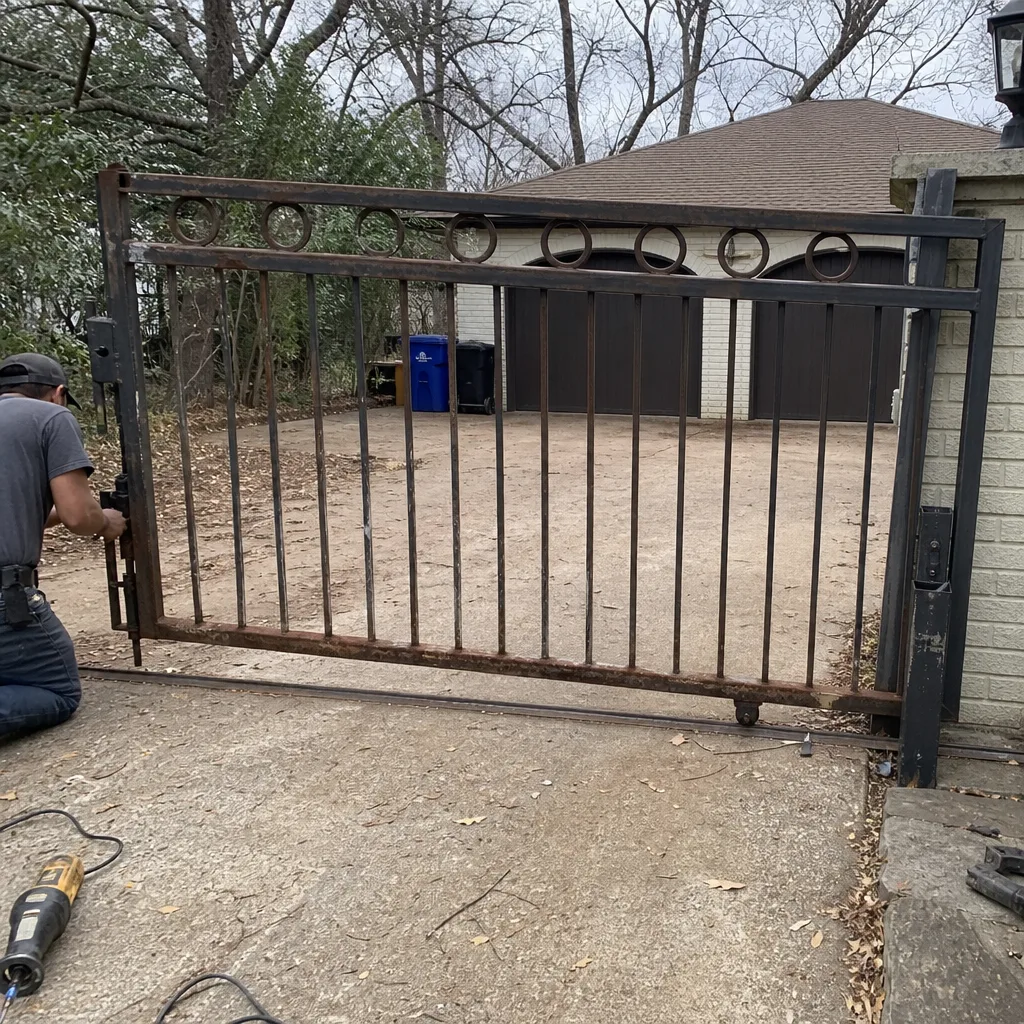 Before
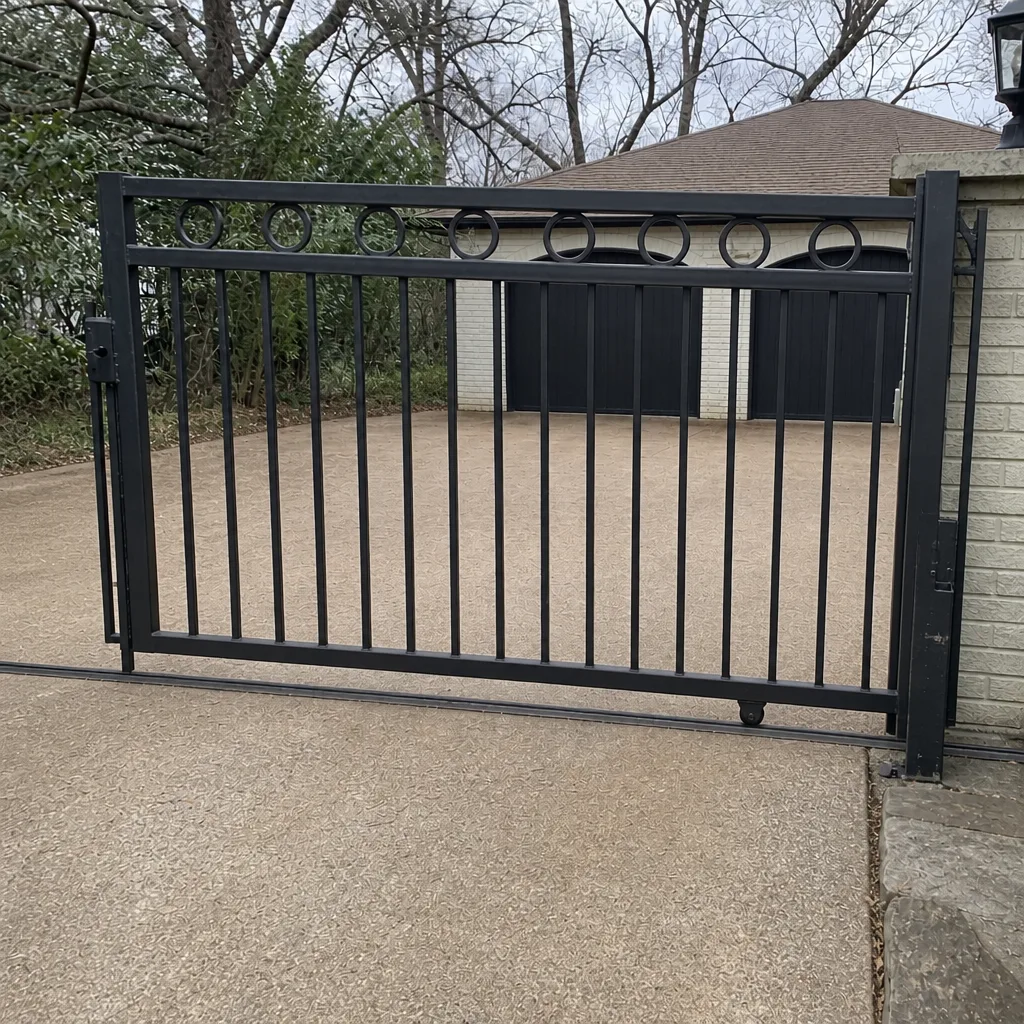 After
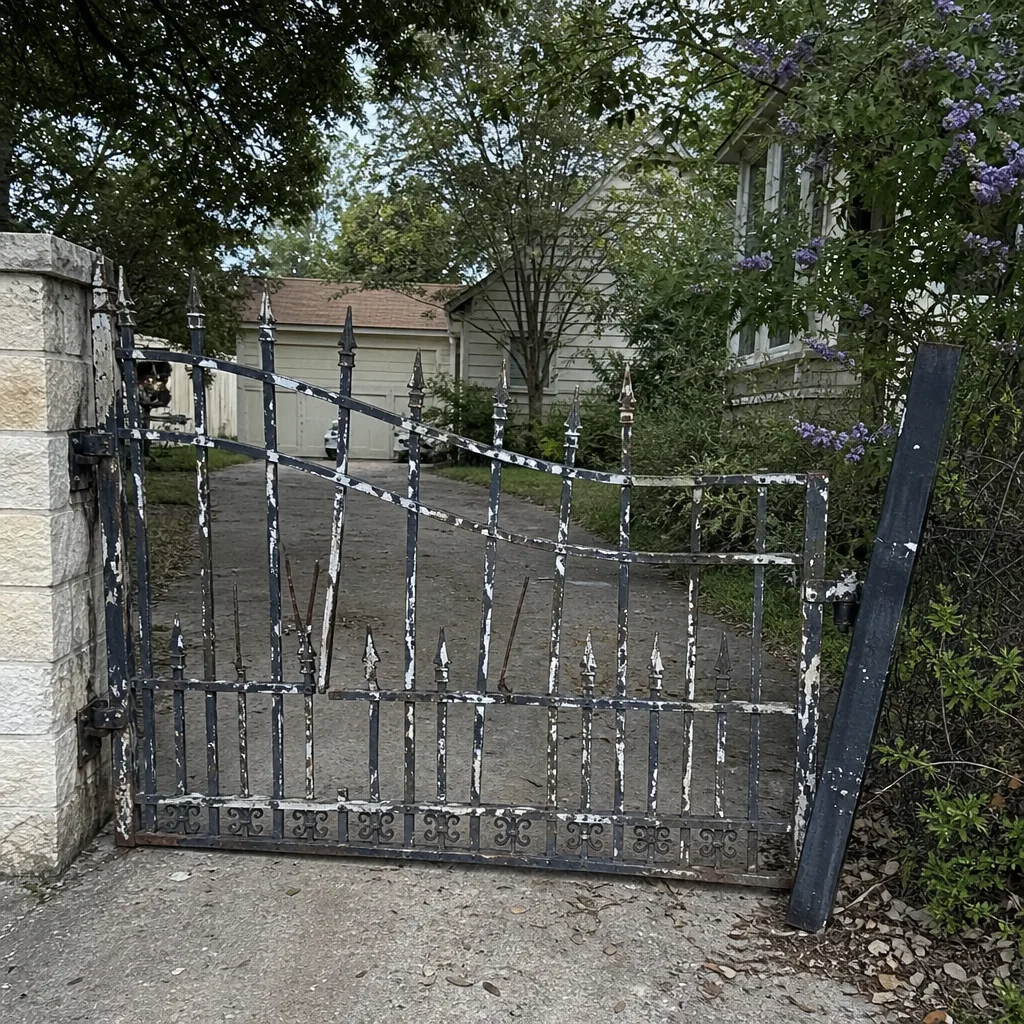 Before
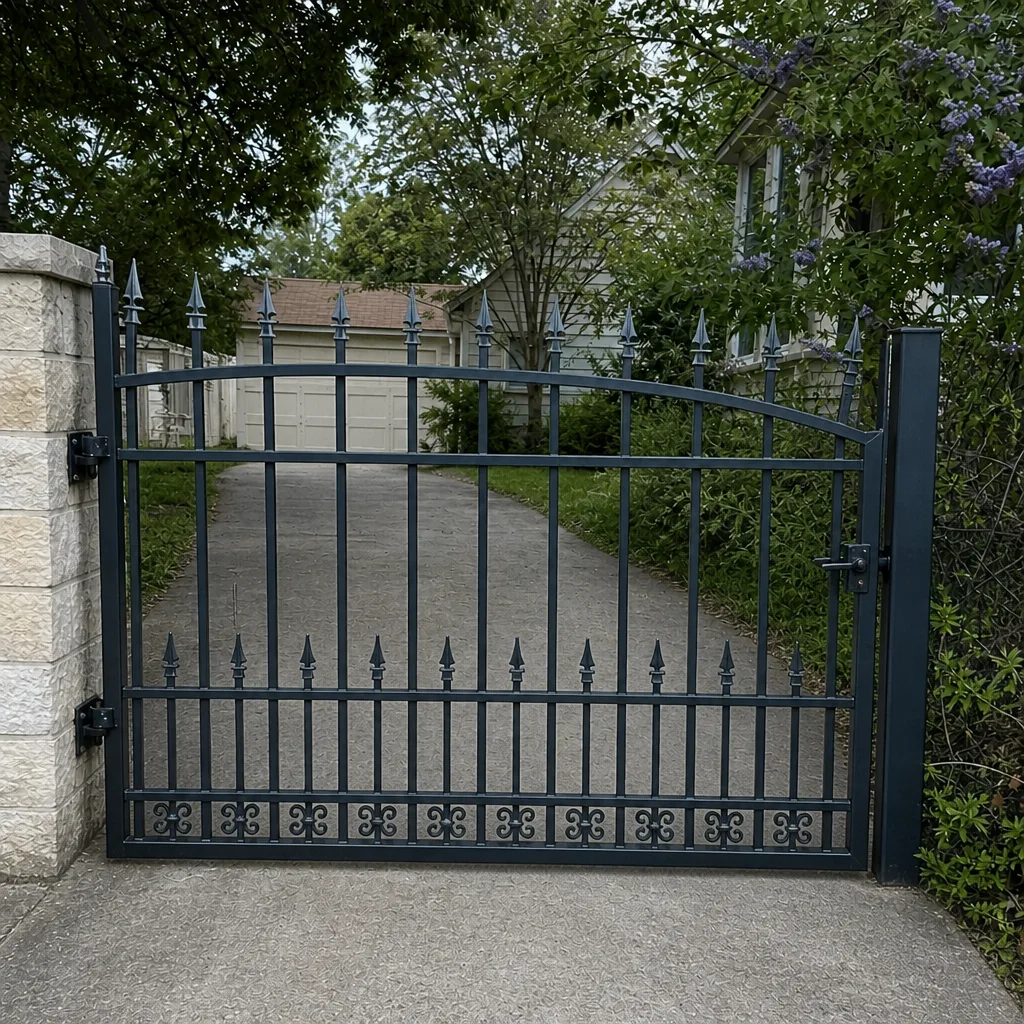 After
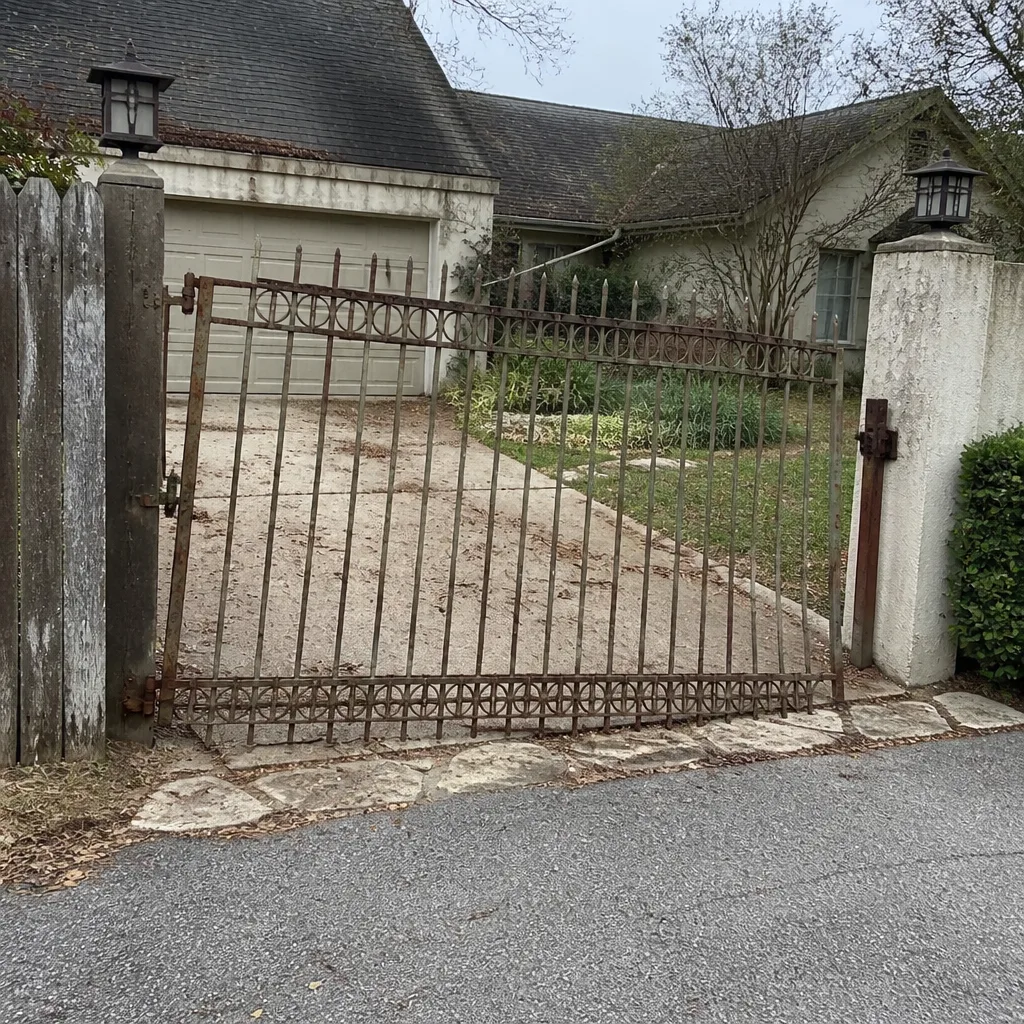 Before
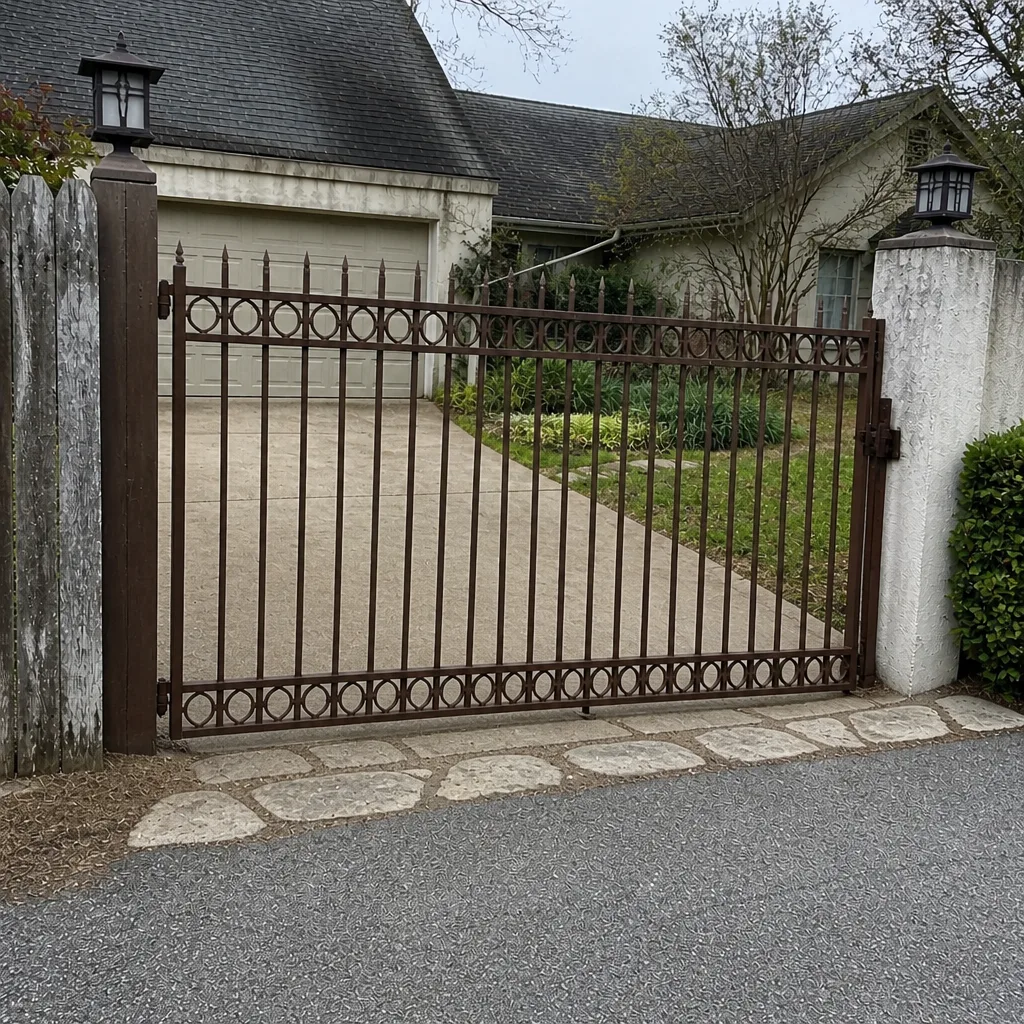 After
When to Call a Professional
Call a professional when the question is technical rather than administrative. If your gate motor is on the way out, if your slide gate has jumped its track, if your safety edges aren’t triggering, or if the operator is throwing codes you can’t decode, the permit question is secondary to getting the gate fixed safely. High-traffic commercial gates and heavy residential slide gates carry real injury risk when they malfunction; testing force limits by hand is not something we’d recommend. Call a trained technician. The diagnostics on an operator like a DoorKing or a LiftMaster are not guessable and the wrong adjustment can leave a gate more dangerous than it started.
Gate Repair Georgetown offers free estimates in Georgetown – call (833) 408-4022 to schedule. We answer 24/7. Fast dispatch from 7am to 7pm, Sunday through Friday. Same-day service is often available for repairs on gates we’ve diagnosed, and every job is quoted in writing before work starts.
Frequently Asked Questions
Most gate repairs in Georgetown do not require a permit. Like-for-like replacements – hinges, motors on existing wiring, control boards, photo-eyes, and hardware – are repair and don’t trigger permitting. New electrical wiring, a new operator on a new circuit, and structural changes to the gate or posts generally do require a permit. Call (833) 408-4022 if you want a quick read on your specific scope – estimates are free.
No, if the motor uses the existing wiring and circuit. Yes, if the replacement involves running new conduit or wiring, upgrading the circuit, or adding an operator where none existed. The distinction is whether the electrical infrastructure is new or reused. Our technicians have up to 13 years of experience diagnosing this, and we’ll tell you which side your job is on before any work begins. Call (833) 408-4022 for a free estimate.
Look up your address on the City of Georgetown’s online GIS or zoning map first, then call Georgetown’s building and development services department to confirm which jurisdiction covers your project type. The ETJ is the band just outside the city line where Georgetown has planning authority for some projects but not all, and it’s the most common source of confusion. If you’re not sure, call us at (833) 408-4022 and we’ll help you sort out which office to call.
Yes, it can. If a gate fails and causes injury or property damage, and the work required a permit that was never pulled, the adjuster may reduce or deny the claim. The risk is highest for automated gates with safety equipment that was never inspected after install. Our gate repair team can document the condition of an existing installation if you want a written record. Call (833) 408-4022 for a free estimate.
It doesn’t have to come first, but getting HOA architectural approval before construction is the safer sequence because HOA rules sometimes conflict with city code on height or setback. Approving one doesn’t satisfy the other; both approvals are usually required. If you’re in an active architectural review community, plan for the HOA timeline before you plan the install date. Call (833) 408-4022 if you want to talk through the sequence.
A typical gate inspection checks post footings, electrical wiring and grounding, weatherproofing, structural soundness, and the safety features on automated gates (photo-eyes, safety edges, force limits). Force-limit settings are the one thing inspections sometimes miss, because they’re functional rather than code-defined. We verify them on every automated gate we touch. Call (833) 408-4022 to schedule a free estimate on yours.
The Bottom Line
Permits on gate work in Georgetown come down to a simple rule: replacement of existing parts is usually repair, and new wiring, new installs, and structural changes are usually permitted work. Your first move is confirming your jurisdiction – city, county, or ETJ – because the rules differ between them. Your second is getting HOA approval in writing before construction. Your third is keeping the permit and inspection paperwork somewhere you can find it years later. Do those three things and the gate stops being a liability question at sale, insurance, or inspection time. If you’d rather have someone walk the job with you, that’s what we do.
Ready to get your gate sorted out and get the paperwork straight? Call Gate Repair Georgetown at (833) 408-4022 for a free estimate. We answer 24/7. Fast dispatch from 7am to 7pm, Sunday through Friday. Every price is quoted in writing before work starts, so you know the number before we turn a wrench.
Written by the team at Gate Repair Georgetown.