
Last updated November 15, 2026
 Wrought iron
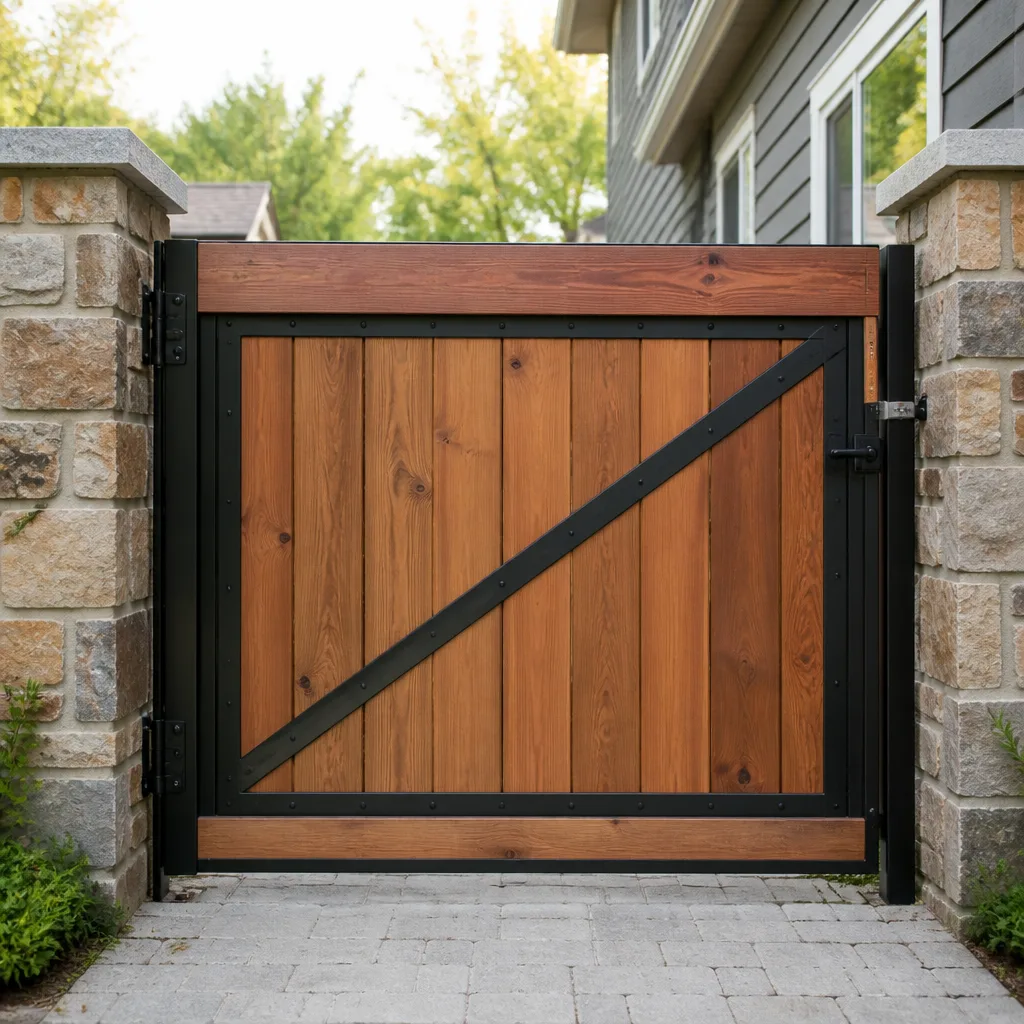 Wood & steel frame
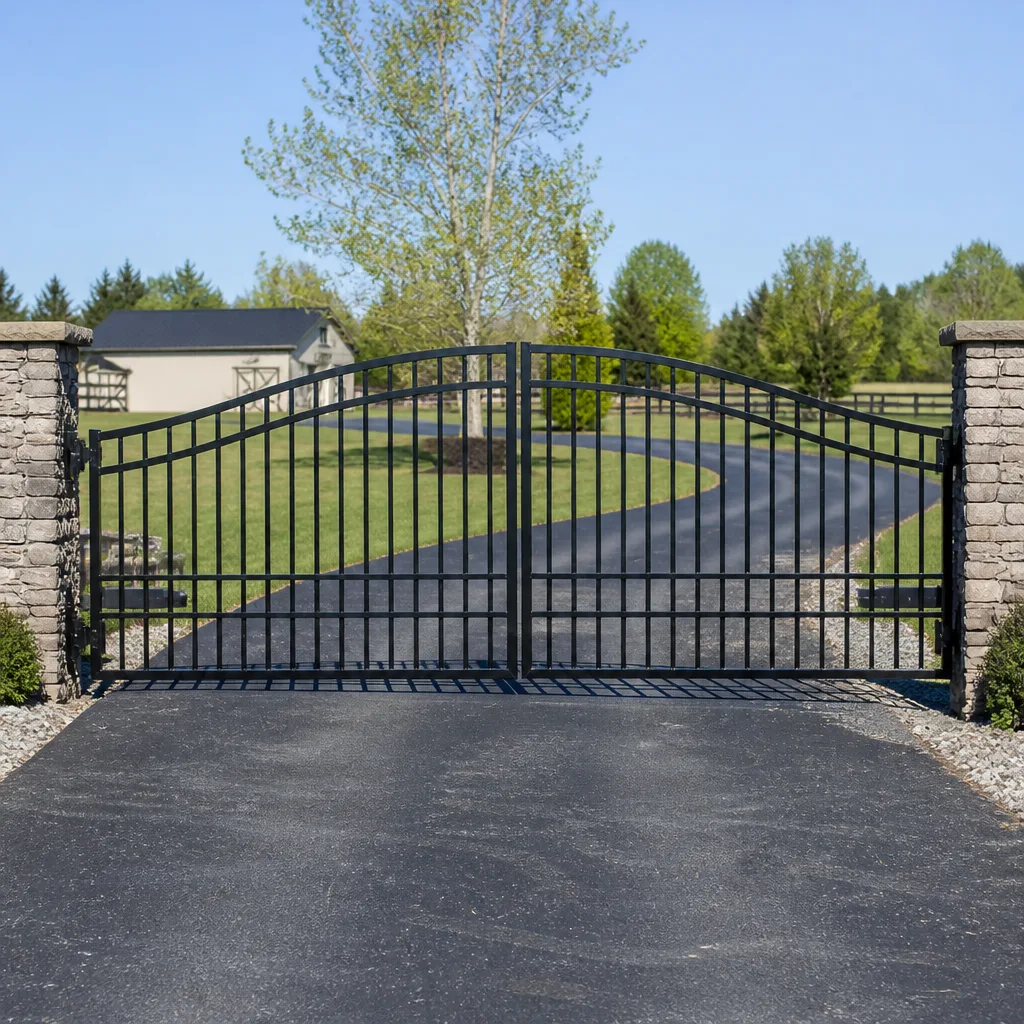 Farm & ranch
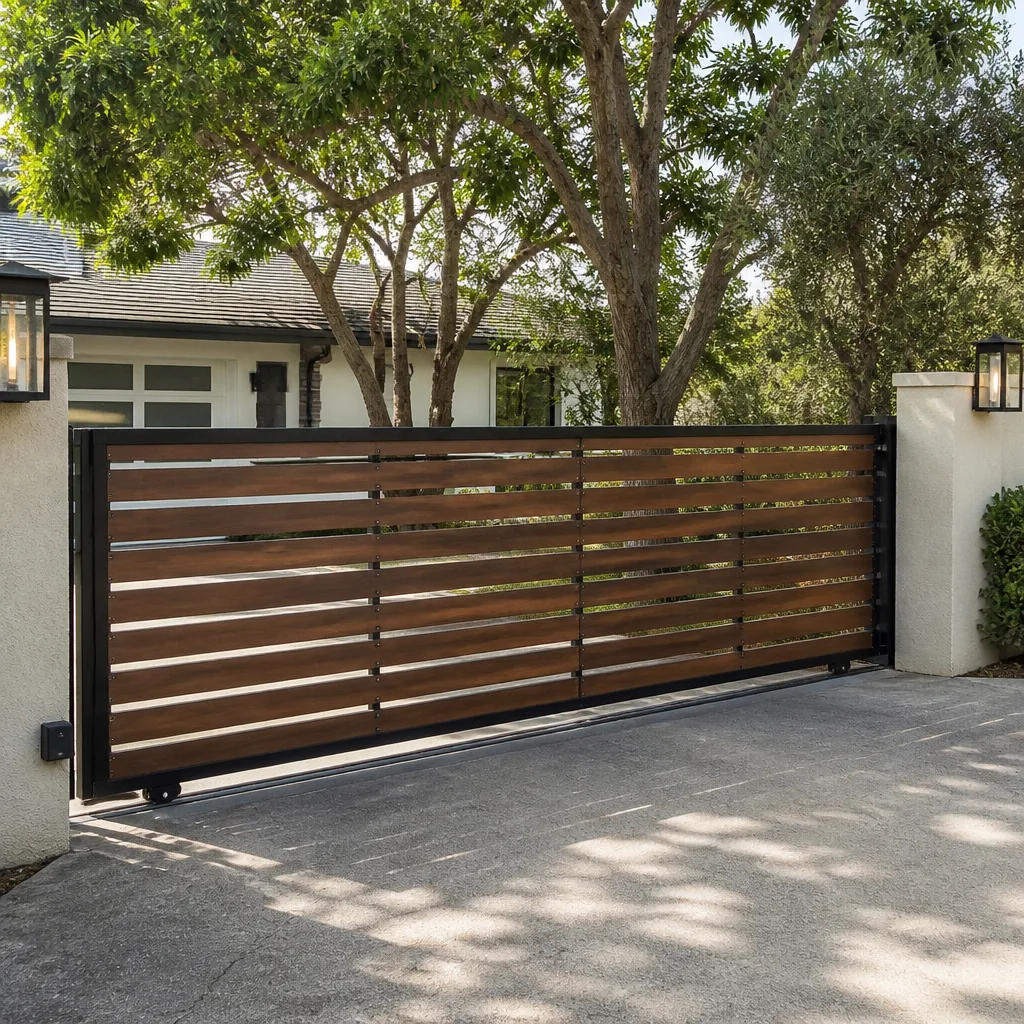 Sliding driveway gates
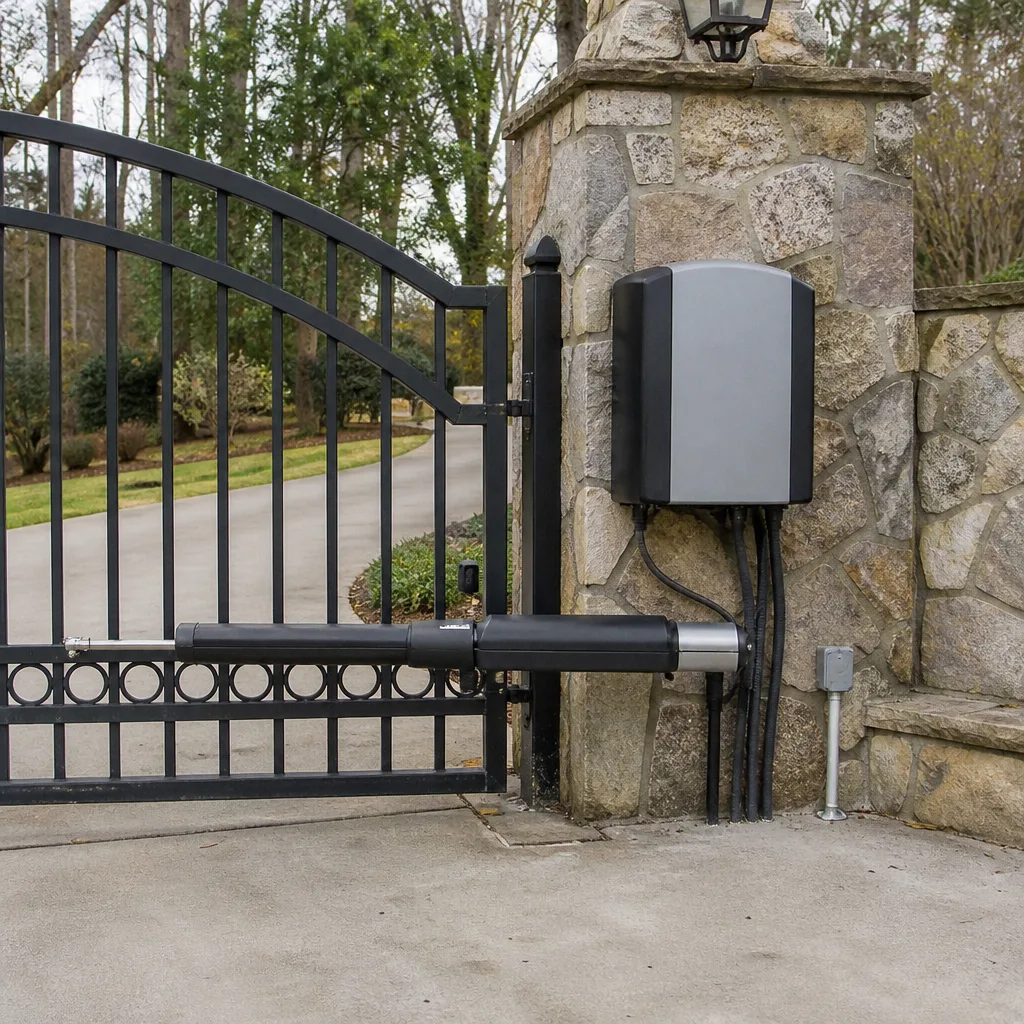 LiftMaster operators
Free on-site gate assessment - hinges, posts, and your LiftMaster or Nice gate operator checked before anything is quoted
The assessment is free and the quote is the invoice.
Get your free estimateGate Repair Warning Signs: A Georgetown Homeowner’s Reference Guide
A gate that hesitates for two seconds before it opens isn’t “warming up.” It’s a motor drawing excess current against a mechanical resistance problem, and that resistance is about to get worse. Most gate failures we diagnose in Georgetown give 60 to 90 days of observable warning before they quit entirely. Homeowners miss those signals because nothing in the owner’s manual tells you which symptom maps to which failing part. A grind isn’t the same as a hum. Slow travel isn’t the same as a false limit trigger. This guide breaks down every warning sign your gate gives you, separates the electrical symptoms from the mechanical ones, and shows you which failures belong to slide gates, swing gates, and overhead gates specifically.
Quick Answer
The most reliable gate repair warning signs are intermittent operation, grinding or squealing during travel, a gate that moves slower than it used to, and a gate that reverses or stops without hitting anything. These point to a failing operator, worn rollers or hinges, or a misaligned limit switch, in roughly that order of frequency. Catching any of these within the first 60 to 90 days of onset is what separates a small repair from a full operator replacement.
Styles & brands we work with
- Wrought iron
- Wood & steel frame
- Farm & ranch
- Sliding driveway gates
- LiftMaster operators
Table of Contents
- Symptom-to-Component Diagnostic Index
- How to Tell Electrical Warning Signs From Mechanical Ones
- The Five Sounds a Gate Makes Before Failure
- Georgetown-Specific Triggers: Seasonal vs. Progressive
- Warning Signs Unique to Slide Gates
- Warning Signs Unique to Swing Gates
- Warning Signs Unique to Overhead Gates
- Which Warning Signs Mean Stop Using the Gate Today
Symptom-to-Component Diagnostic Index
Here’s the index we use when a homeowner describes a symptom over the phone. Start by finding your symptom in the left column, then read what it usually points to before a technician sees the gate. This is diagnostic guidance, not a repair manual; anything involving the operator’s wiring or power needs a trained professional.
| Symptom | Most Likely Component | Urgency |
|---|---|---|
| Intermittent operation (works, then doesn’t) | Control board, receiver, or loose wiring connection | Moderate to high |
| Grinding during travel | Worn rollers, hinge pins, or drive gear in the operator | Moderate |
| Slow travel in one or both directions | Motor drawing excess current, or mechanical drag | Moderate |
| False limit triggers (stops early or reverses) | Misaligned limit switch or obstruction sensor | Moderate |
| Gate won’t respond to remote but responds to keypad | Receiver or remote battery | Low |
| Gate hums but doesn’t move | Seized motor, stripped gear, or jammed track | High |
| Gate reverses without touching anything | Safety sensor misalignment or photo-eye fault | High |
| Gate drifts open or closes after stopping | Failing limit switch or brake on the operator | Moderate |
In our experience with the many gate operators in Georgetown, the two-thirds of “it just stopped working” calls actually trace back to a symptom the homeowner noticed weeks earlier and dismissed as a quirk. Intermittent operation is the most common one, and it’s also the one most worth acting on because it can signal a control board on the way out. Our electric gate repair work starts with the same index, then narrows once a technician is on-site.
How to Tell Electrical Warning Signs From Mechanical Ones
You don’t need a multimeter to separate most electrical failures from mechanical ones. You need to listen and watch. The gate itself tells you which system is struggling if you know what to look for.
Electrical warning signs (no tools needed)
- Intermittent operation. The gate works one day and ignores commands the next. This is almost always electrical: control board, receiver, or a loose wire at a terminal.
- Remote works only up close. Range shrinking is typically a receiver or antenna issue, not a mechanical one.
- Gate reverses on its own. A photo-eye or safety edge that’s misaligned or shorting will trigger a phantom reversal. Nothing physically touched the gate.
- Gate stops at the same spot every time. That’s a limit switch error, not wear.
- Operator clicks but nothing happens. The board is receiving the command but the motor isn’t getting the signal. Board or relay issue.
Mechanical warning signs (no tools needed)
- Excess noise during travel that wasn’t there before. Noise is friction.
- Slow travel in one direction only. Asymmetry points to drag on one side of the gate, not a motor problem.
- The gate binds or jerks mid-travel. Worn hinge pins, rollers, or a track that’s out of alignment.
- Visible sag at the free end of a swing gate. That’s a hinge or post footing issue.
- The gate moves freely by hand when the operator is disengaged but struggles when engaged. Mechanical drag.
The single most useful test without tools: disconnect the operator (most have a manual release lever or key, handled by a professional if you’re unsure) and push the gate by hand. If it moves smoothly, the problem is electrical. If it drags, binds, or grinds, the problem is mechanical. If both feel off, you likely have both. That’s common in older gates and it’s exactly the kind of thing a generalist misses. Whether your operator is a Mighty Mule or a commercial FAAC system, we know it, because we work on these systems every day.
The Five Sounds a Gate Makes Before Failure
Sound is the earliest warning a gate gives you. It precedes visible damage by weeks. Learn these five sounds and you’ll catch failures 60 to 90 days before they happen.
- The hum that doesn’t move anything. The motor is energized but the gate stays put. This is a seized motor, a stripped gear, or a jammed track. Stop using the gate immediately. A motor that hums without moving is overheating and the repair cost jumps with each cycle.
- The grind. A rhythmic, low grind during travel is worn rollers or drive gear. It gets louder and rougher over time. Left alone, it damages the track or rack, which turns a roller swap into a larger repair.
- The squeal. High-pitched, usually at hinges or rollers. This is dry metal on dry metal and it accelerates wear fast. A squealing gate is a call worth making before the friction damages the parts the sound is coming from.
- The clunk. A single sharp clunk at the start or end of travel is a limit switch hitting early or late, or a hinge pin with play in it. Clunks at the same point every cycle mean worn hardware. Clunks that vary usually mean the operator’s stopping position is drifting.
- The rattle. A loose rattle across the whole gate during travel means hardware is coming loose: bolts, brackets, or the operator mount. This one is dangerous because a gate can come off its track or drop off a top-hung slide rail, and that’s a heavy panel coming down.
Grinding and squealing are mechanical. Humming and rattle are mechanical-adjacent but often originate from the operator or its mount. Clunk is the crossover symptom. In our experience diagnosing gates across Georgetown, the hum and the rattle are the two most likely to be dismissed as normal by homeowners, and both are the ones that lead to the biggest repairs if left alone.
Georgetown-Specific Triggers: Seasonal vs. Progressive
Some gate warning signs in Georgetown appear on a schedule. Others progress steadily no matter the season. Knowing the difference tells you whether an issue needs attention now or whether it’s the mild winter easing off.
Seasonal triggers in Georgetown
- Spring pollen and grit. Pollen coats rollers, tracks, and hinges. It picks up dust and turns into an abrasive paste. A gate that squeals in spring and quiets by summer isn’t fixing itself; the grit has worn into the parts.
- Summer heat and operator duty. Operators that open frequently in hot months build more heat. A residential LiftMaster on a busy driveway may show intermittent thermal shutoff in July that disappears in October. That’s a warning sign, not weather.
- Fall leaf debris in tracks. Slide gate tracks collect leaves and twigs. A gate that starts reversing after a leaf fall is hitting a physical obstruction on the track. Clean the track and if the symptom persists, the sensor or limit needs checking.
- Winter gate stiffness. Mild Texas winters still thicken lubricants and stiffen rubber safety edges. A gate that hesitates on the coldest mornings of January and February is telling you the operator is at its current limit.
Progressive triggers (all seasons)
- Worn hinge pins and bushings wear steadily regardless of weather.
- Control board degradation on older operators shows up as slowly increasing intermittent operation.
- Post footing movement in clay-heavy Georgetown soil appears as a sagging gate that slowly drifts out of alignment over months.
- Photo-eye and safety-edge failure rarely season-linked; they fail when they fail.
Georgetown sits on expansive clay soil in many parts, and post footings shift with moisture changes through the year. That makes gate sag a progressive issue here regardless of season. Our gate repair work in Georgetown treats post movement as a mechanical failure, not a symptom, because it won’t resolve without correcting the alignment or the footing itself.
Warning Signs Unique to Slide Gates
Slide gates fail in ways swing gates never do because they run on a track and rack. The failure modes aren’t interchangeable, and treating a slide gate problem like a swing gate problem leads to the wrong repair.
Slide gate warning signs
- Grinding that gets louder when the gate passes a specific point on the track. That’s a dented or misaligned track, or a worn roller at one location. It’s directional and repeatable.
- Gate lifting off the track or rocking sideways. Worn guide rollers or a loose upper guide bracket. Stop using the gate: this is the failure mode where a heavy panel can come off the track and drop.
- Track debris buildup. Fresh debris on a slide gate track is a sign the gate is riding out of groove and dragging channel edges.
- Rack and pinion noise at the same point every cycle. A worn or damaged rack gear, usually traced to a stripped tooth.
- Gate drifting past its open or closed stop. Limit switch error on the slide operator, or a slipping clutch that’s lost its adjustment.
- Uneven track wear that appears as a gate “walking” to one side by the end of each travel.
Slide gate operators from DoorKing and similar commercial brands have external limit cams that wear at the same point over time. If a slide gate in Georgetown stops 2 inches short of its full position every cycle, that’s the limit cam, not the motor. If it stops in random positions, that’s usually a slipping clutch. Random position errors are the urgent ones because the clutch is protecting the gate from a bigger failure; a slipping clutch that stops slipping ends in a stripped gear.
Warning Signs Unique to Swing Gates
Swing gates hinge and pivot; their failure points are hinges, posts, and the swing arm or actuator that pushes them. A swing gate’s problems show up at its hinge and post more often than at the operator.
Swing gate warning signs
- Visible sag at the free end. The gate’s outer corner drops toward the ground. That’s a hinge pin, hinge bushing, or post footing issue. Left alone, sag translates into operator strain.
- Dragging at the bottom. Gate scrapes the ground during swing. This is settled footing or a worn hinge and it forces the operator to work harder on every cycle.
- Bind in mid-swing. The gate jerks or stalls at the same point mid-travel. On a dual-leaf swing gate, usually one hinge. On a single leaf, usually the far hinge from the operator.
- Operator arm noise. A creak or groan from an articulated swing arm on an Elite or LiftMaster operator usually means the arm bushings are dry or worn, not a motor problem.
- Gate strikes the closed or open stop harder than it used to. That’s a slipping limit, or slow-decay in the swing deceleration setting. Both damage hardware over time.
- Uneven swing speed side to side on a dual-leaf gate. One actuator is fading, or one leaf is dragging more than the other.
Swing gates are more sensitive to post footing than slide gates. In Georgetown’s clay soils, a footing that drains poorly will move a swing gate out of square over years. That movement shows up first as a slight bind mid-swing and last as a gate that won’t close. If your swing gate binds, test whether pushing it by hand (with the operator disengaged) resolves the bind. If it does, the problem is at the hinge. If not, it’s in the operator.
Warning Signs Unique to Overhead Gates
Overhead gates lift vertically and run on tracks and rollers. Their failure modes are closer to a roll-up door than to a swing or slide gate, which is why specialists who only do swing and slide miss them.
Overhead gate warning signs
- Gate moves unevenly up or down. One side lifts faster than the other. That’s a track alignment issue or one of the two lifting cables is stretching.
- Track noise during travel that changes location. Rollers running in a warped track. Same sound, moving location, means the track is out of alignment rather than a roller.
- Gate stops partway up or won’t fully descend. Limit switch on the overhead operator, or a safety edge that’s triggering early.
- Visible gap between gate and floor when closed. Cables that have stretched or a limit that’s drifted. This is a security problem in addition to a mechanical one.
- Popping or snapping sound from one side during travel. Cable or drive chain on that side under tension. Stop using the gate: this is the failure mode that ends with the panel dropping.
Overhead gates have the smallest margin for error of the three gate types because gravity works against them when the lifting mechanism fails. Any popping, snapping, or cable-slip sound from an overhead gate is a stop-using-it signal. DoorKing and Linear make commercial overhead operators, and the failure modes across both are similar: limits drift and cables stretch. The owner sees the same warning signs first regardless of brand. If your gate has one of these symptoms, Gate Repair Georgetown is the place to start, and a technician will walk through the same signs with you to confirm the diagnosis.
Which Warning Signs Mean Stop Using the Gate Today
Some warning signs can wait a few days. Others mean the gate should not cycle again until a technician looks at it. Here’s how we triage the signs when a homeowner calls.
- Stop today: Popping or snapping from an overhead gate’s cable or drive side.
- Stop today: A slide gate lifting off its track or rocking sideways.
- Stop today: Any smoke or burning smell from the operator housing.
- Stop today: A gate reversing on its own in a driveway where a person or vehicle is present.
- Stop today: Humming but not moving. The motor is overheating on every cycle.
- Call within a few days: Grinding, squealing, or rattle that’s new but not accompanied by a safety issue.
- Call when convenient: Slow travel, misbehaving remotes, or intermittent operation that isn’t causing safety issues.
The stop-today list exists because those symptoms are the ones we’ve seen escalate to a heavy panel dropping or a motor burning out entirely. Everything on the stop-today list involves either gravity working against a compromised mechanism or a motor working against a jam. Both are cheap to fix early and expensive to fix late. The rest of the warning signs are progressive; they won’t go away on their own, but they don’t require you to act before the next cycle.
Common Mistakes to Avoid
- Treating intermittent operation as a “quirk.” It’s the earliest and most reliable warning sign of a failing control board or receiver. On a LiftMaster or Elite operator, catching it early is often a board swap instead of a full operator replacement.
- Greasing everything. Grease on a slide gate track collects grit and turns into a paste that grinds rollers faster. Grease goes on hinges and pivot points, not on the track’s running surface.
- Adjusting the limit switch because the gate stops early. If the gate stops early only in cold weather or only under load, the limit isn’t the problem. Adjusting it masks the symptom and gets you a gate that hits the stop harder.
- Overriding the safety edge to “make it work.” A gate that reverses on its own is telling you the safety system is compromised. Bypassing the safety edge, or zip-tying the photo-eye out of the way, removes the one thing keeping a gate from closing on a person or vehicle.
- Ignoring post footing on a swing gate. In Georgetown’s clay-heavy soil, sag often starts at the footing, not the hinge. Replacing hinges without addressing footing movement means a gate that sags again in the same season.
- Calling a generalist for a brand-specific operator. Commercial operators from FAAC, BFT, and DoorKing differ substantially in board layout, limit setting, and diagnostics routines. A handyman guessing at a FAAC board can turn a small board issue into a full operator replacement.
- Skipping the “does it move freely by hand” test. This one test separates electrical from mechanical at the phone stage. Without it, technicians arrive expecting one problem and find the other.
See the difference
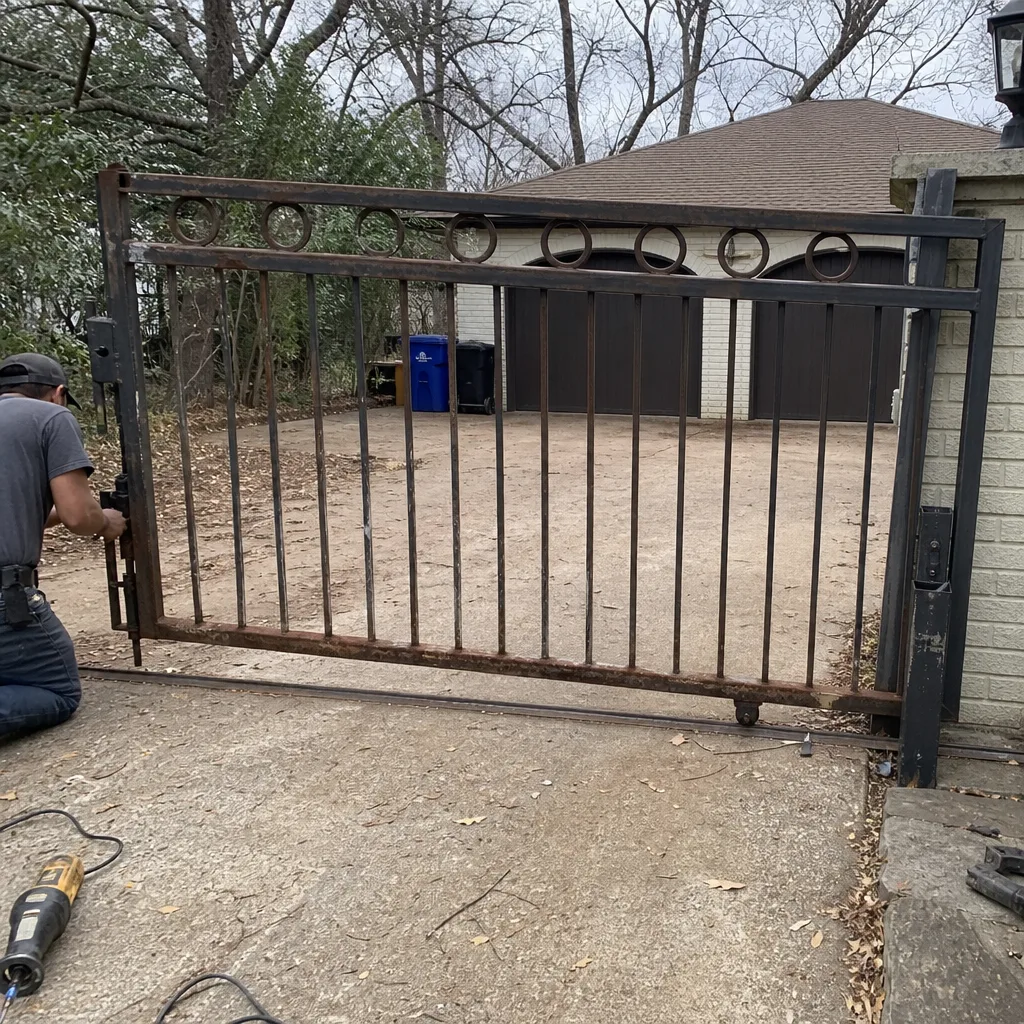 Before
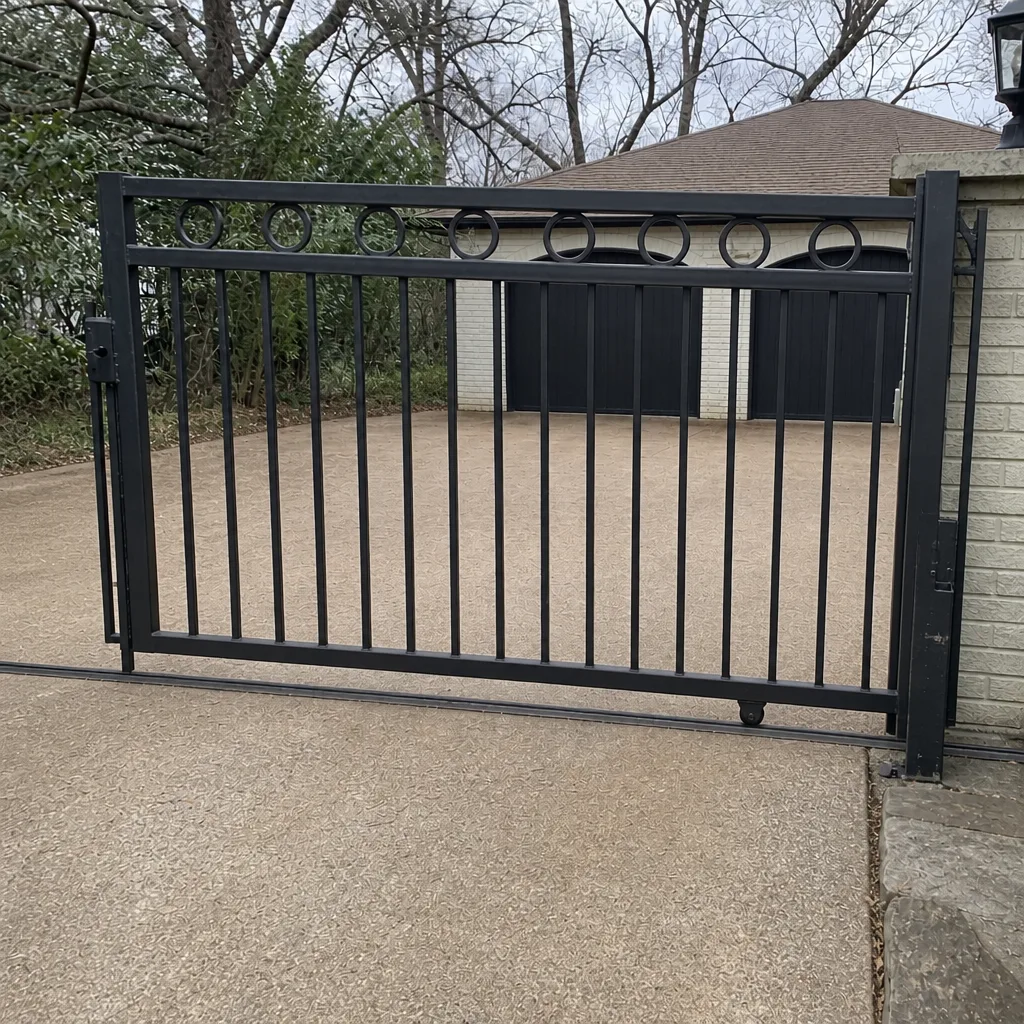 After
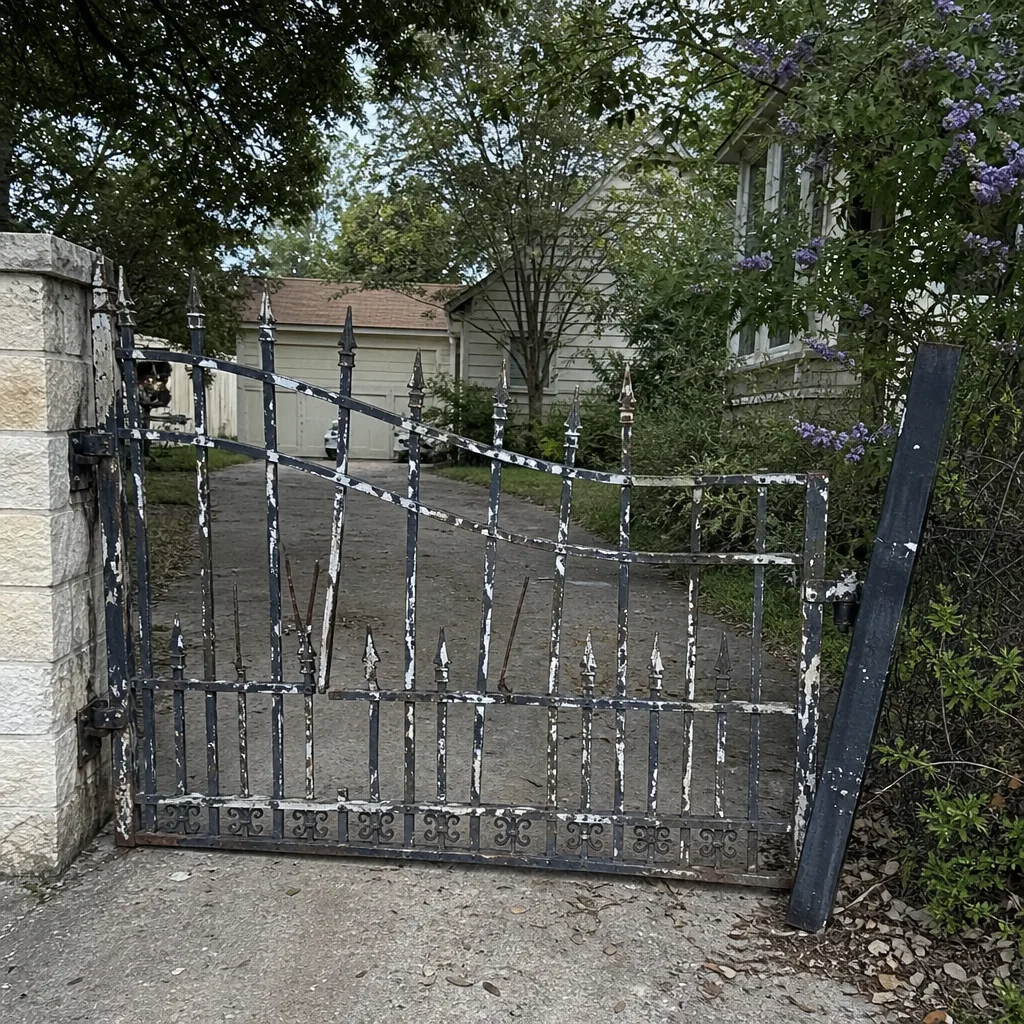 Before
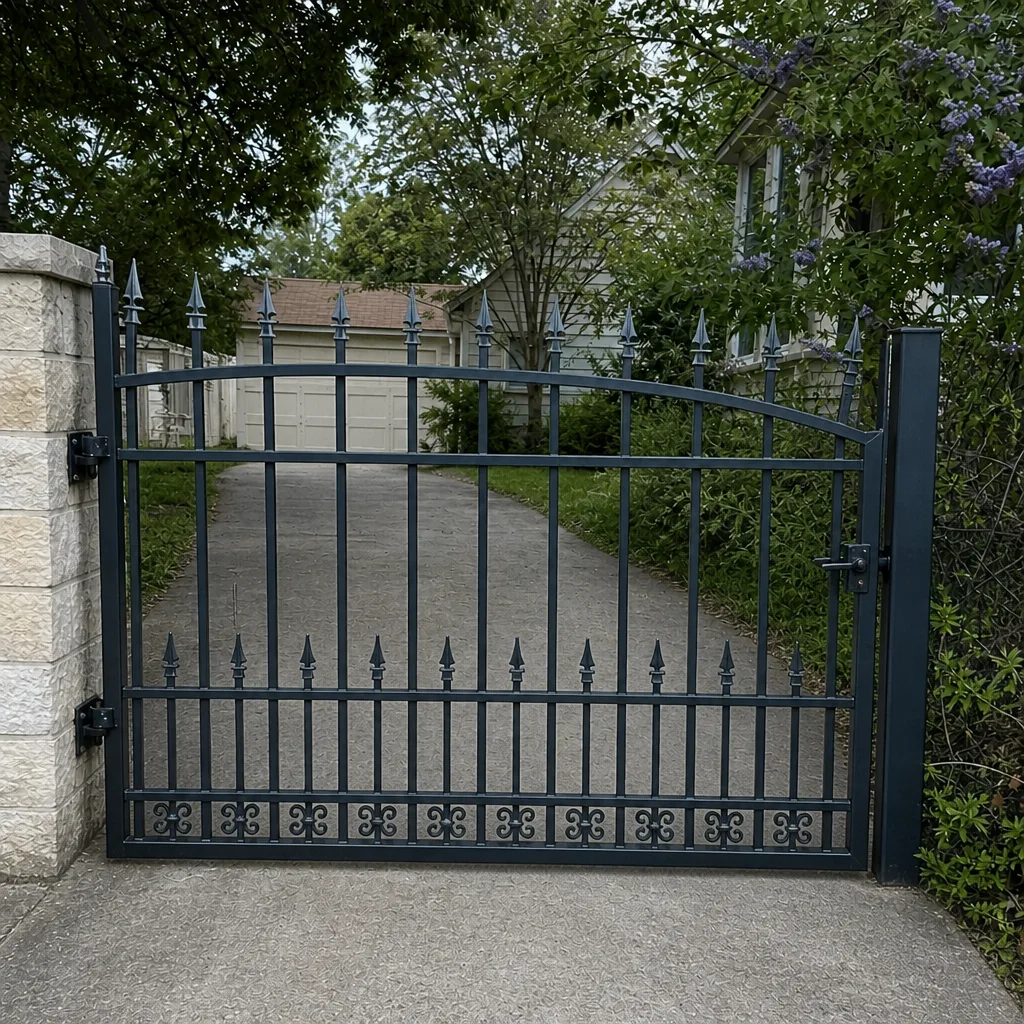 After
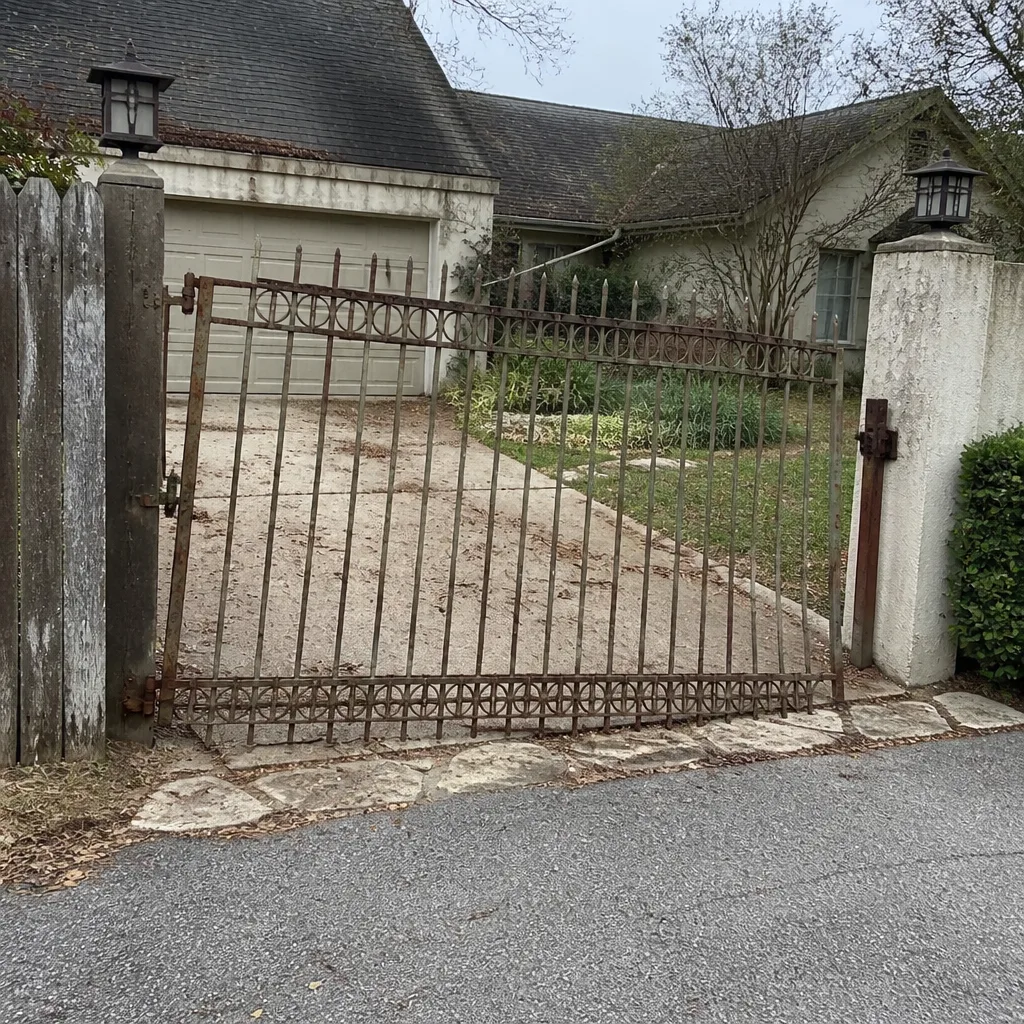 Before
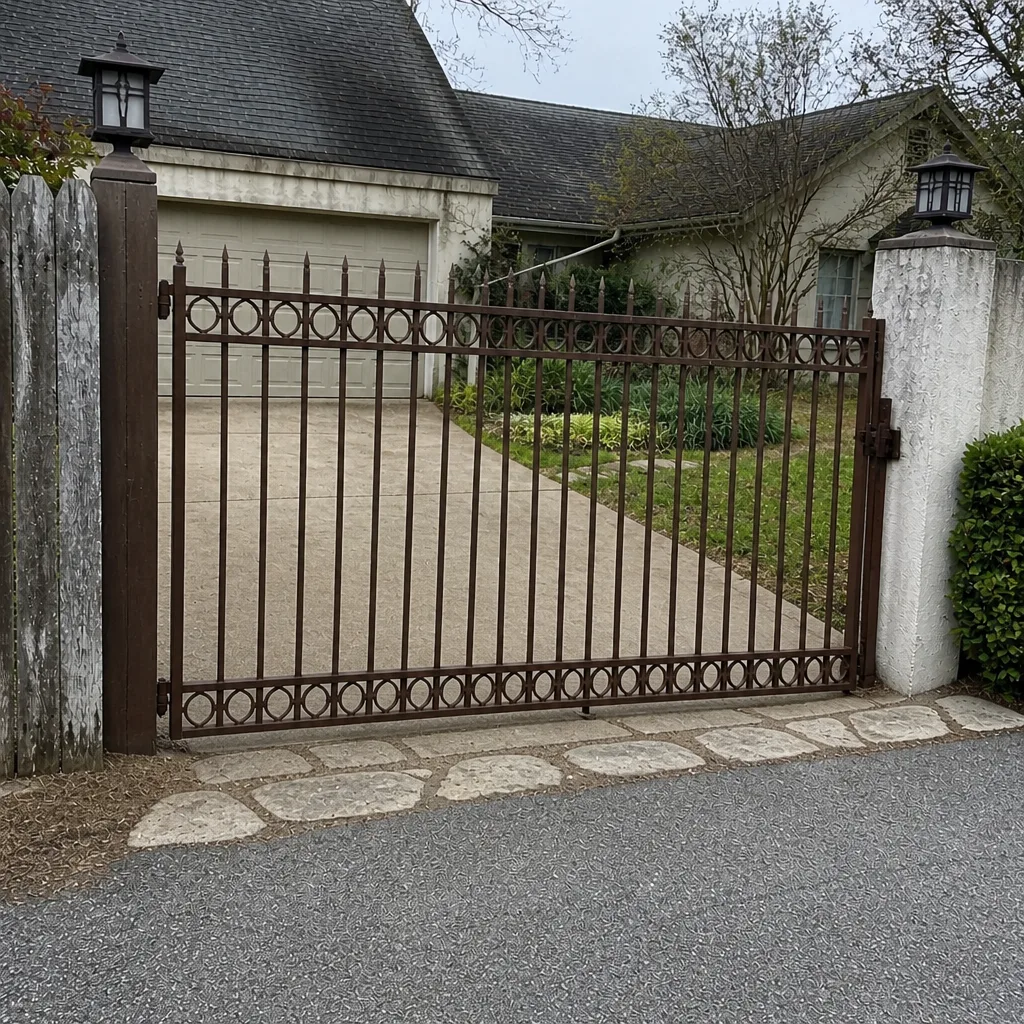 After
When to Call a Professional
Call a professional when the warning sign involves power, wiring, heavy panels, or any of the stop-today symptoms on the triage list above. The operator’s power run and the safety edges are the two systems we never recommend a homeowner touch directly; both can turn a cheap repair into a serious injury. Call a professional if the symptom is intermittent, if it recurs after cleaning, or if you’ve had to reset the operator more than once in a week. Call a professional if the gate is a commercial operator (FAAC, BFT, DoorKing) because the diagnostics aren’t homeowner-accessible. And call a professional before making adjustments that hide a symptom instead of fixing it, because the second repair is always bigger than the first would have been.
Gate Repair Georgetown offers free estimates in Georgetown. Call (833) 408-4022 and we’ll walk through your symptom against the index above before anyone is dispatched.
Frequently Asked Questions
Intermittent operation is the most common early warning of a failing gate operator. The gate works for a stretch, then ignores a command, then works again. Electrical faults in the control board, receiver, or wiring tend to flicker in and out before they fail entirely, which is why intermittent is a stronger signal than any single hard stop. If it’s happening more than once a week, it’s worth a call now rather than later.
It depends on cycle count, gate weight, and how well the track and hinges are maintained. The warning-sign timeline is what matters more: catch a warning sign in the first 60 to 90 days and the repair is usually a component swap; ignore it for six months and the same symptom often leads to operator or gate hardware replacement. Your gate’s actual lifespan is set by how the mechanical parts wear, which is why early diagnosis pays off.
Yes, for the most part. Disengage the operator (via the manual release your operator uses) and push the gate by hand. If it moves smoothly, the problem is electrical. If it drags, binds, or grinds, the problem is mechanical. Don’t do this if the gate is on the stop-today list. Also don’t test anything on the operator’s wiring or power, which is the part that requires a trained professional.
We’re trained on nine major brands: LiftMaster, FAAC, BFT, Linear, Viking, Ghost Controls, DoorKing, Elite, and Mighty Mule. That covers virtually every operator a homeowner in Georgetown is likely to own, from residential DIY-grade Mighty Mule and Ghost Controls systems to commercial-grade FAAC and DoorKing operators. If your operator’s brand is on that list, we know the diagnostics routine for it. If it’s not, we’ll still look at it and tell you whether we can help.
It means the motor is being energized but the mechanical system isn’t responding. The three common causes are a seized motor, a stripped gear, or a jammed track. Each cycle of the motor re-overheats the winding and increases the repair scope, which is why this one is on the stop-today list. Turn the gate off at the breaker and call for a diagnosis rather than cycling it again.
Yes, and the two are not interchangeable. Slide gates fail at the track, the rollers, the rack and pinion, or the upper guide. Swing gates fail at the hinges, the post footing, the arm, or the actuator. A symptom like “gate lifts off the ground” belongs only to overhead gates, whereas “gate sags at the free end” belongs only to swing gates. If you describe a symptom to a generalist who handles both, ask whether they specialize in gates; our Georgetown work is gate-only, which is why the diagnosis is faster.
The Bottom Line
Your gate is telling you what’s about to fail 60 to 90 days before it does. Intermittent operation, grinding, slow travel, false limits, and the five sounds on the list are all early warnings, not quirks. Electrical signs are about commands and safety (intermittent, reverse-on-own, limit errors). Mechanical signs are about noise and motion (grinding, grinding that changes location, sagging, binding). Slide, swing, and overhead gates fail in different places and need different diagnostics. If the gate gives you any of the stop-today signs, stop cycling it. For everything else, catching the warning sign early turns a small repair into a small repair. Call Gate Repair Georgetown at (833) 408-4022 to schedule a free estimate. We answer 24/7, and fast dispatch runs from 7am to 7pm, Sunday through Friday.
Written by the team at Gate Repair Georgetown.