
Last updated November 15, 2026
 Wrought iron
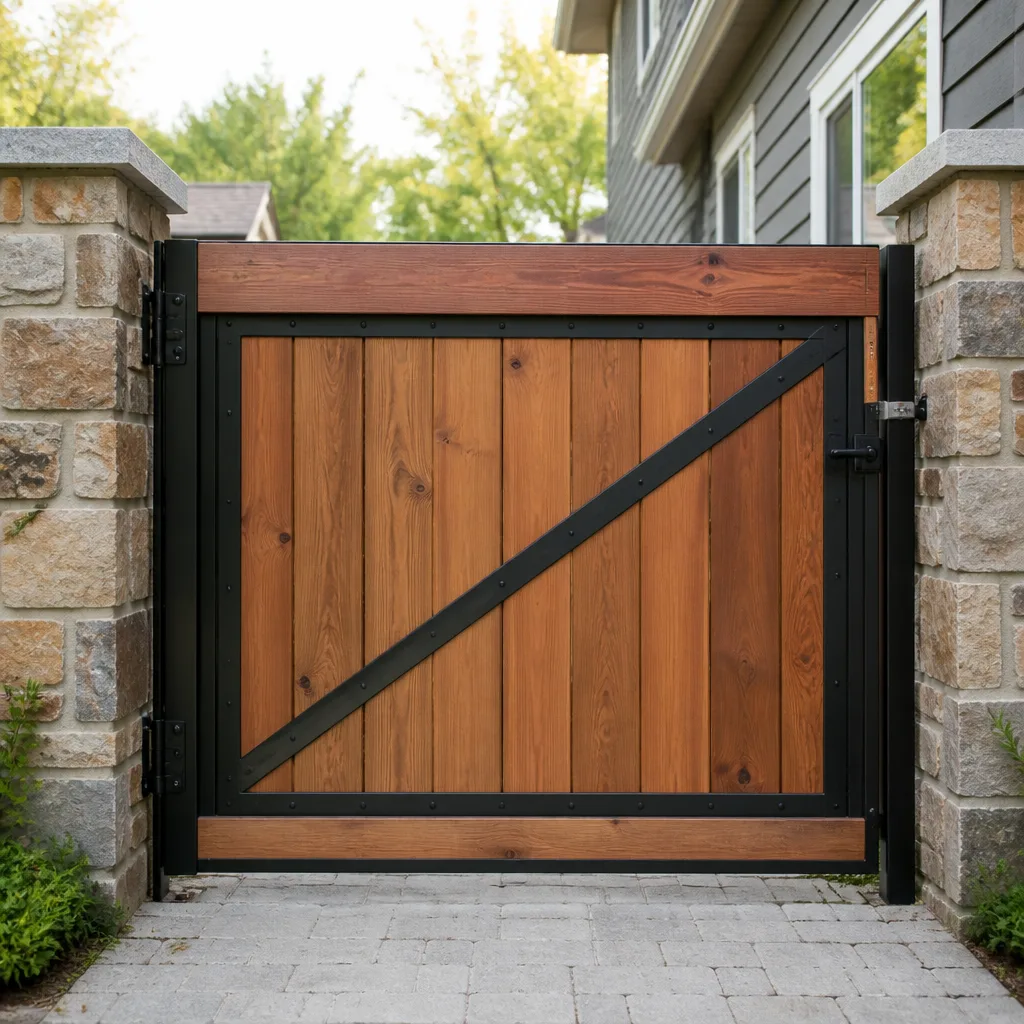 Wood & steel frame
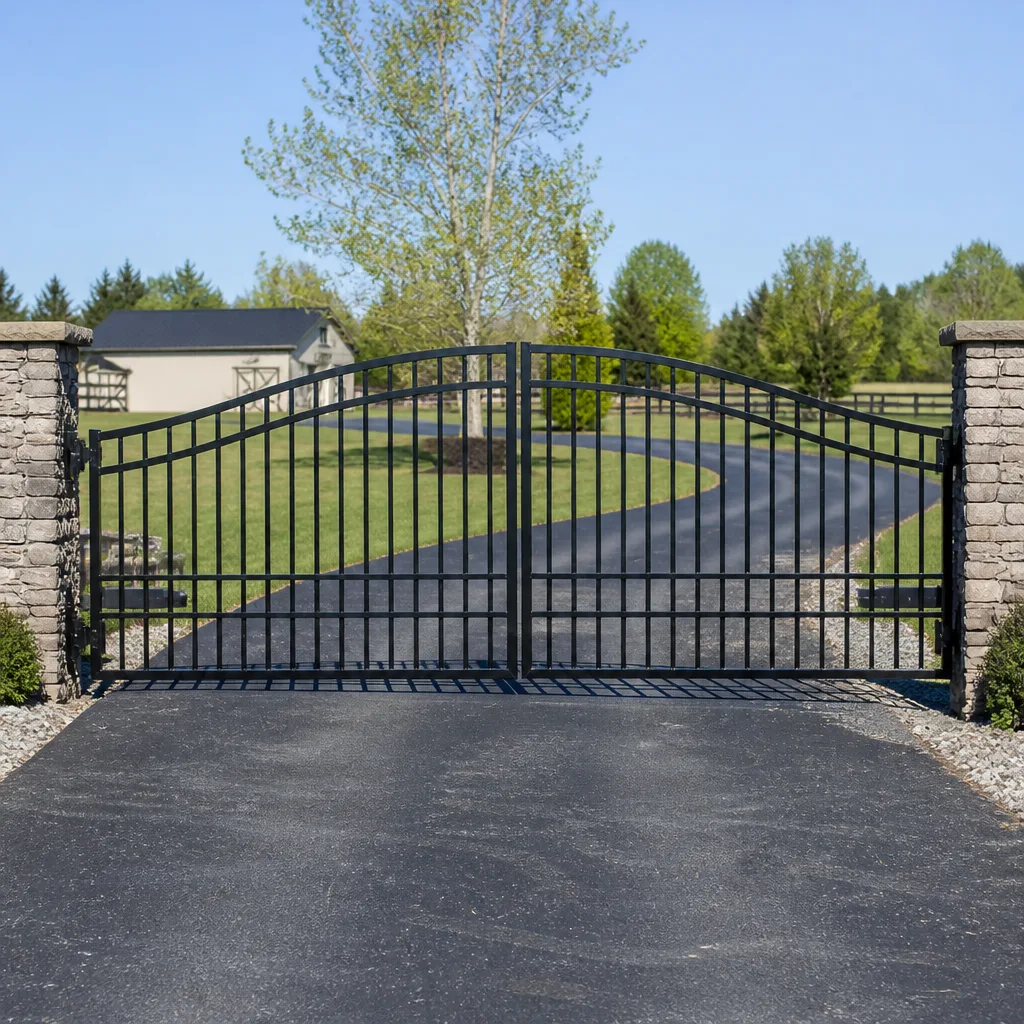 Farm & ranch
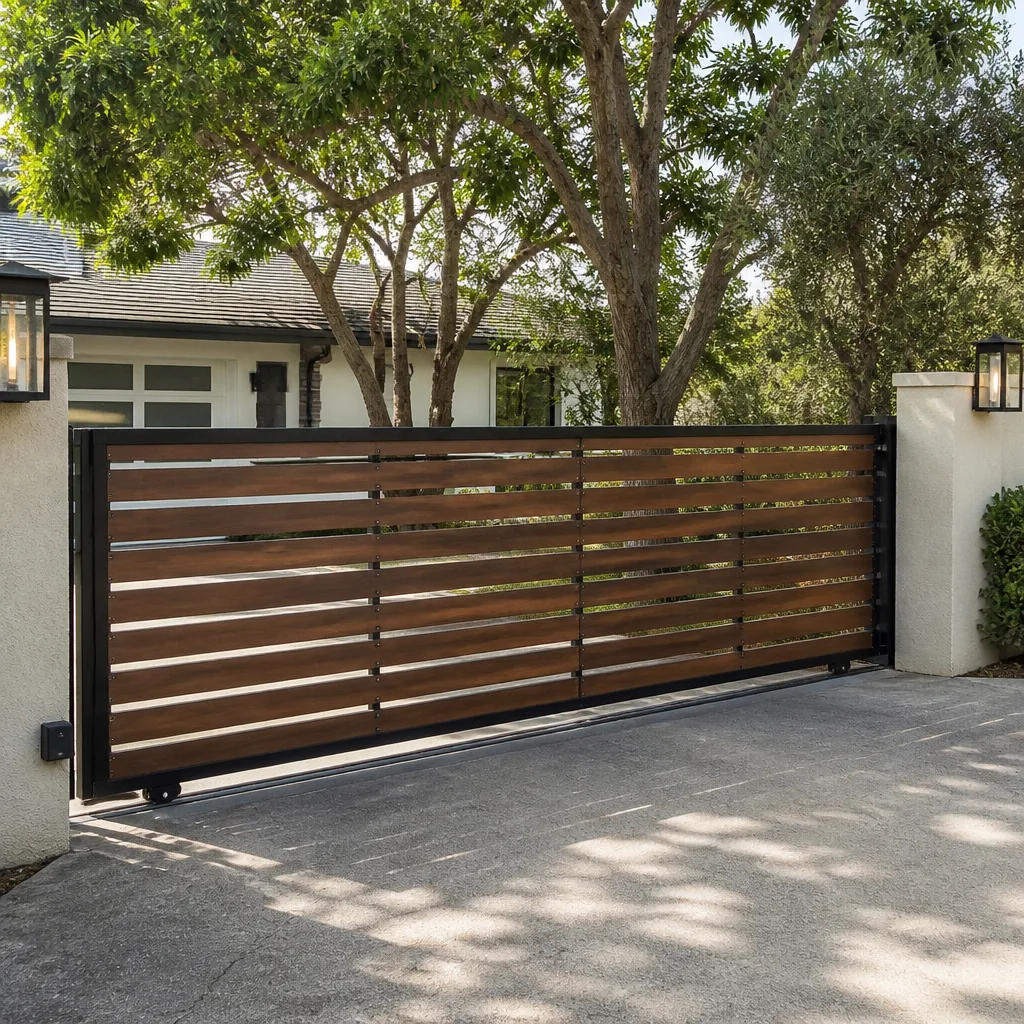 Sliding driveway gates
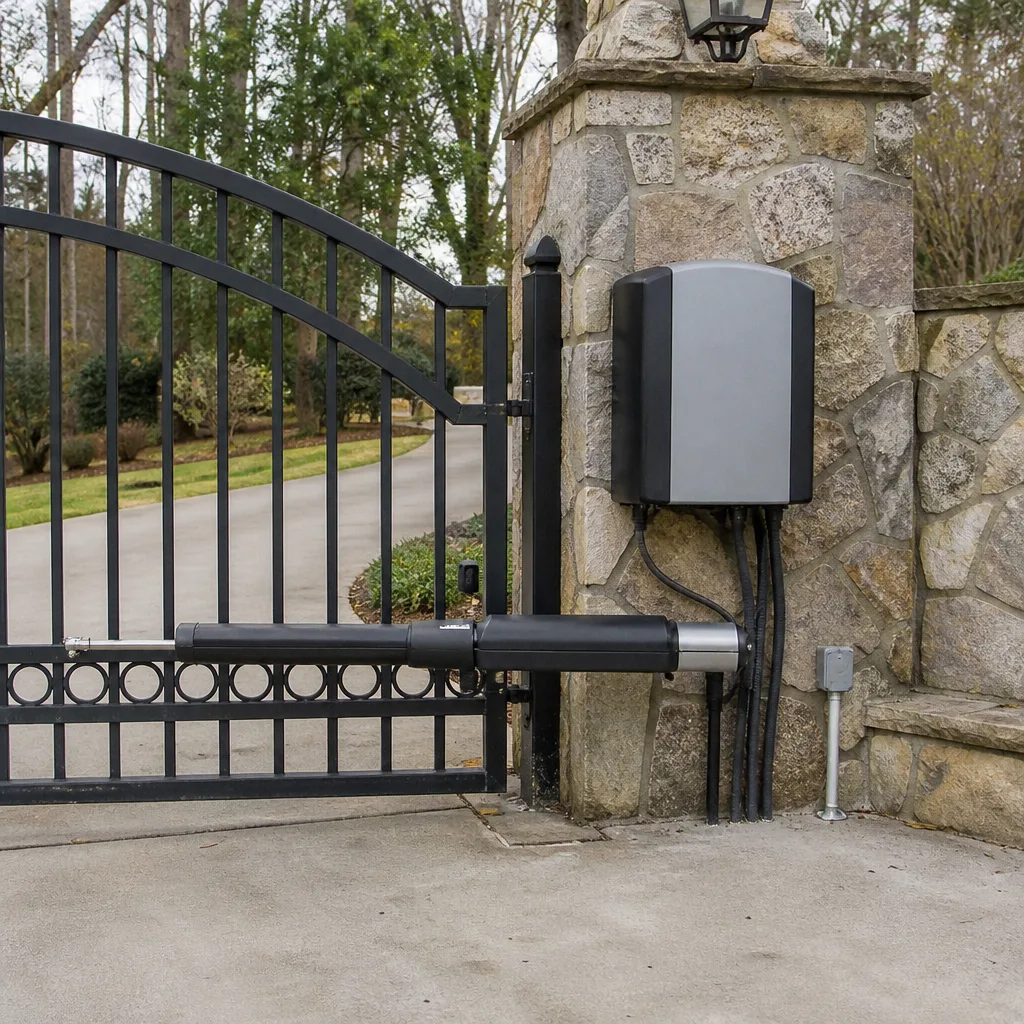 LiftMaster operators
Free on-site gate assessment - hinges, posts, and your LiftMaster or Nice gate operator checked before anything is quoted
The assessment is free and the quote is the invoice.
Get your free estimateGate Repair Troubleshooting in Georgetown: Common Problems and How to Fix Them
A gate that stops halfway through its cycle looks like a motor problem. Most of the time it isn’t. Limit switches, obstruction sensors and loose connections trip a safety cutoff far more often than an operator burns out, and replacing a motor to fix a sensor fault is the single most expensive misdiagnosis in gate repair. In Georgetown, those failures are layered on top of a specific local pressure: clay-heavy soil that moves posts and underground wiring slowly enough that nobody notices until something fails. This guide teaches you to read your gate’s symptoms the way a specialist does. You’ll learn the five root causes behind most failures, how to tell a control board from a transformer before anyone arrives, what our clay soil does to a gate over time, and the two checks that can save you a service trip.
Quick Answer
Most gate failures trace back to one of five root causes: an obstruction sensor or limit switch cutting power, a wiring or connection fault, a failing control board, a power supply problem, or physical damage to the gate’s posts and hardware from soil movement. Reading the symptom correctly matters because the same visible behavior – a gate that stops or reverses mid-travel – can come from a sensor fault, a wiring fault, or an operator fault, and those repairs sit in very different cost ranges. A gate that works “sometimes” is almost always a wiring or connection issue, not an operator failure.
Styles & brands we work with
- Wrought iron
- Wood & steel frame
- Farm & ranch
- Sliding driveway gates
- LiftMaster operators
Table of Contents
- The Five Root Causes of Gate Failure
- Symptom-to-Cause Diagnostic Tree
- Control Board vs. Transformer Failure
- What Georgetown’s Clay Soil Does to Gates
- Why a Gate That Works “Sometimes” Is a Wiring Fault
- Two Checks to Run Before Any Service Call
- Sliding vs. Swing: How Symptoms Differ
- Common Mistakes to Avoid
The Five Root Causes of Gate Failure
Nearly every gate problem we diagnose falls into one of five categories. Knowing which one you’re facing is the difference between a targeted repair and an expensive guess. The categories are:
- Safety device faults. Obstruction sensors (photocells) and limit switches are designed to stop or reverse a gate. When they misread, the gate stops as though something were in the way. This is the most common cause of an intermittent or mid-cycle stop, and replacing the operator won’t fix it.
- Wiring and connection faults. Loose terminal screws, corroded splices, damaged underground runs, and cracked control wiring account for a large share of “works sometimes” complaints. The operator is usually fine; the signal reaching it isn’t.
- Control board failure. The logic board receives input from every sensor and safety edge and commands the operator. When it fails, symptoms are inconsistent – random reversals, no response to the remote, or a gate that runs only in one direction.
- Power supply failure. A transformer or power supply that can’t deliver voltage drops the operator into an erratic or dead state. It looks like a board failure but costs far less to correct.
- Physical and structural damage. Bent tracks, worn hinges, sagging posts, damaged rollers, and gates knocked out of alignment by soil movement. On this type of failure the operator may be working perfectly while the gate binds against its own hardware.
Each cause has a different repair profile, and a specialist on a residential operator like Mighty Mule or Ghost Controls applies the same diagnostic order as on a commercial FAAC or BFT system. Call (833) 408-4022 for a free estimate. We answer 24/7. Fast dispatch from 7am to 7pm, Sunday through Friday.
Symptom-to-Cause Diagnostic Tree
Work through the gate’s behavior in order. Read what the gate does, not what you assume is broken. This tree is the same first pass a technician runs on arrival.
- The gate stops mid-cycle and reverses. Look at the obstruction sensor first. Photocells on opposing posts must be aligned and their lenses clear. If the gate reverses even with nothing in the path, a misaligned or dirty sensor is the likeliest cause. On a sliding gate, also check that a limit switch isn’t triggering early.
- The gate won’t move at all, but the operator clicks. This usually points to a power supply or board issue rather than the motor itself. A clicking operator with no movement often means the control board is receiving a command but the motor isn’t getting voltage.
- The gate opens but won’t close (or vice versa). A one-direction failure is typically a limit switch, a jammed safety edge, or a wiring fault on the close-side input. It’s rarely the motor, which runs both directions from the same drive.
- The gate moves freely by hand and won’t power on. On a swing gate, check the manual release and confirm the gate swings without binding. On either type, look for a tripped breaker at the power source and a controller in a fault state.
- The gate works sometimes and not others. A wiring or connection fault until proven otherwise. See the dedicated section below; this pattern almost never points to the operator.
- The gate drags, binds, or jumps the track. Structural. Inspect the track, rollers, hinges, and post alignment before calling about the operator.
Control Board vs. Transformer Failure: Why the Distinction Matters
A dead or erratic gate operator often gets diagnosed as “the board” when the real problem is the power supply feeding it. These are two different repairs with two different costs, and confirming which you have before ordering parts saves money and time.
The control board is the logic center. It processes signals from the remote, the sensors, the safety edge, and the limit switches, then commands the motor. Symptoms of a board failure tend to be inconsistent: the gate responds to some commands but not others, reverses at random, or ignores the remote while the keypad works. On a commercial DoorKing unit, board faults often come with behavior patterns specific to that system’s logic.
A transformer or power supply failure produces a different signature. The operator may be completely dead, or the gate may move sluggishly and then stall. Voltage that should be steady may sag when the motor loads, causing erratic behavior that looks like a board fault. Because the board can only work with the voltage it receives, a failing supply mimics a failing board. Testing voltage at the operator is what separates the two.
The practical difference is scope. A transformer is a single component; a control board is more involved and its replacement often requires reprogramming travel limits and matching remotes. A specialist tests the power side first precisely because it’s cheaper to rule out. Diagnosing this correctly at the first visit is why we focus only on gates – see the full range of Gate Repair Georgetown work.
What Georgetown’s Clay-Heavy Soil Does to Gate Posts and Underground Wiring
Georgetown sits on expansive clay soil. That soil swells when wet and shrinks when dry, and it does this season after season. For a gate, that movement is slow and cumulative, and it shows up in ways that don’t look like soil problems at first.
Gate posts are set to proper footing depth for a reason. When the soil around a post moves, the post tilts slightly. A swing gate that used to close flush may start rubbing at the latch, sagging at the hinge, or dragging at the bottom edge. A sliding gate may develop a track that’s no longer level over its run. None of these are operator problems, and no amount of adjustment to the operator will fix them. The gate is binding against its own hardware because the ground underneath moved.
Underground wiring runs suffer the same treatment. A conduit that shifted gradually can crack, fill with water, or pull a splice apart at a junction. The failure often shows up as intermittent operation rather than a clean break: sometimes the gate works, sometimes it doesn’t, depending on moisture and how the wire is sitting. That’s one reason diagnosing a gate in Georgetown means looking at the ground and not just the control box.
Early warning signs include a gate that no longer lines up with its strike, a track that looks slightly off level, soil cracks along the post line, or a latch that needs a nudge to catch. Address post movement before it becomes a hardware or wiring problem, and the repair stays small.
Why a Gate That “Works Sometimes” Is Almost Always a Wiring Fault
An operator failure has a consistent signature. When an operator’s motor or board is genuinely failing, it tends to fail predictably: it stops in the same place, it won’t respond to a specific command, or it’s simply dead. A gate that works on Monday and not on Tuesday, or that opens fine in the morning and stalls in the afternoon, is not showing an operator pattern.
Intermittent operation points to the signal path or the power path. A loose terminal screw, a corroded splice, a wire that’s been nicked and makes contact only when it’s sitting a certain way, an underground run with moisture getting in – these all produce exactly the start-and-stop behavior people describe as “it works sometimes.” Temperature and moisture change the contact point. The gate’s own vibration shifts the wiring.
This distinction matters for cost because a wiring repair is usually a far smaller job than an operator replacement, and the two are frequently confused precisely because the symptom (gate doesn’t work) looks the same from the driver’s seat. Tracking a wiring fault takes patience and a meter, not a part order. A residential Linear or Viking system and a commercial-grade operator both get the same treatment: confirm the wiring before condemning the unit. If your gate is misbehaving and you’d rather not guess, gate repair diagnostics are what we do every day.
Two Checks to Run Before Any Service Call
You don’t need to take anything apart, and you shouldn’t. Two simple checks rule out the most common causes and can save you a trip. Do these first.
- Check the power and the controller’s display or indicator lights. Confirm the operator has power at its source and isn’t on a tripped breaker. Many systems (DoorKing and FAAC among them) have indicator lights or a small display that shows a fault code or an input state. Note what it shows. A controller showing a sensor input as “blocked” is telling you a safety device is preventing movement, which is a very different call than a dead operator.
- Inspect the obstruction sensors and the safety edge. Look at the photocells on both posts: are they aligned, are the lenses clean, is anything (a spider web, a leaf, a plant growing into the beam) interrupting them? On the gate’s leading edge, check that the safety edge isn’t jammed or damaged. Then release the gate to manual and, if you safely can, move it by hand to confirm it doesn’t bind on the track or hinges. If it binds, the issue is structural, not electronic.
Do not open the operator housing, touch the safety edge wiring, or work on any of the line-voltage connections. The power run and the safety circuits carry real danger, and a wrong connection can create a hazard that looks like a working gate. Leave anything inside the housing to a trained professional. If the two checks don’t identify the problem, that’s your signal to call.
Sliding vs. Swing: How Symptoms Differ
The two gate types fail in different ways, and the common faults aren’t the same. Knowing yours narrows things down fast.
Sliding gates
Sliding gates run on a track and rollers and are pushed by a rack-and-pinion or chain operator. The most common problems are track-level issues from soil movement (the gate drifts off the track or binds), worn or damaged rollers, and limit switches that trigger at the wrong point so the gate stops short or overruns. A sliding gate that “jumps the track” is a structural failure – the operator may be fine. Safety edges on the leading edge are critical on sliding gates because the panel is heavy and keeps moving under momentum.
Swing gates
Swing gates pivot on hinges and are driven by an arm or an underground operator. Their most common problems are sagging hinges from post movement, latches that no longer align, and obstruction sensors that get knocked out of alignment when the gate shifts. Swing gates are where we see the most “works sometimes” complaints, because a post that moves slightly can put a photocell beam out of line only at certain gate positions. If you have a residential swing operator from a brand like Ghost Controls or a commercial arm on a BFT system, the diagnostic order is the same.
Commercial gates on higher-traffic properties tend to show wear-based failures – roller and hinge wear, track wear – faster than residential gates. Residential gates show soil-shift and alignment problems more often. For the heavier commercial systems, competency across the brand matters, which is why electric gate repair on a high-traffic operator is a specialist job.
Common Mistakes to Avoid
- Replacing the operator to fix a sensor fault. A gate that stops or reverses is usually tripping a safety device, and a new operator won’t change the sensor. Confirm the safety devices before ordering any part.
- Assuming “works sometimes” means a bad motor. Intermittent behavior is a wiring signature. Treating it as an operator failure sends you down the wrong repair path and can cost far more than a wiring fix.
- Ignoring post movement until the gate won’t latch. Georgetown’s clay soil moves posts slowly, and catching a tilt early on a gate in Sun City or the older neighborhoods near the Square keeps the repair small. Wait for the latch to stop catching and the fix gets bigger.
- Replacing a control board without testing the power supply. A failing transformer imitates a failing board. Test the voltage side first; a board is the costlier part.
- Adjusting the operator to compensate for track or hinge problems. Forcing the operator to push through a binding gate wears the operator out and doesn’t solve the real issue. Fix the mechanical problem, not the symptom.
- Assuming a generalist covers every brand. A gate serviced by someone who rarely works on that operator can take longer to diagnose and may miss model-specific behavior. Brand familiarity cuts the guesswork.
- Working on the line-voltage side yourself. The power run and safety edge wiring are dangerous. A wrong connection creates a hidden hazard. This is work for a trained professional.
See the difference
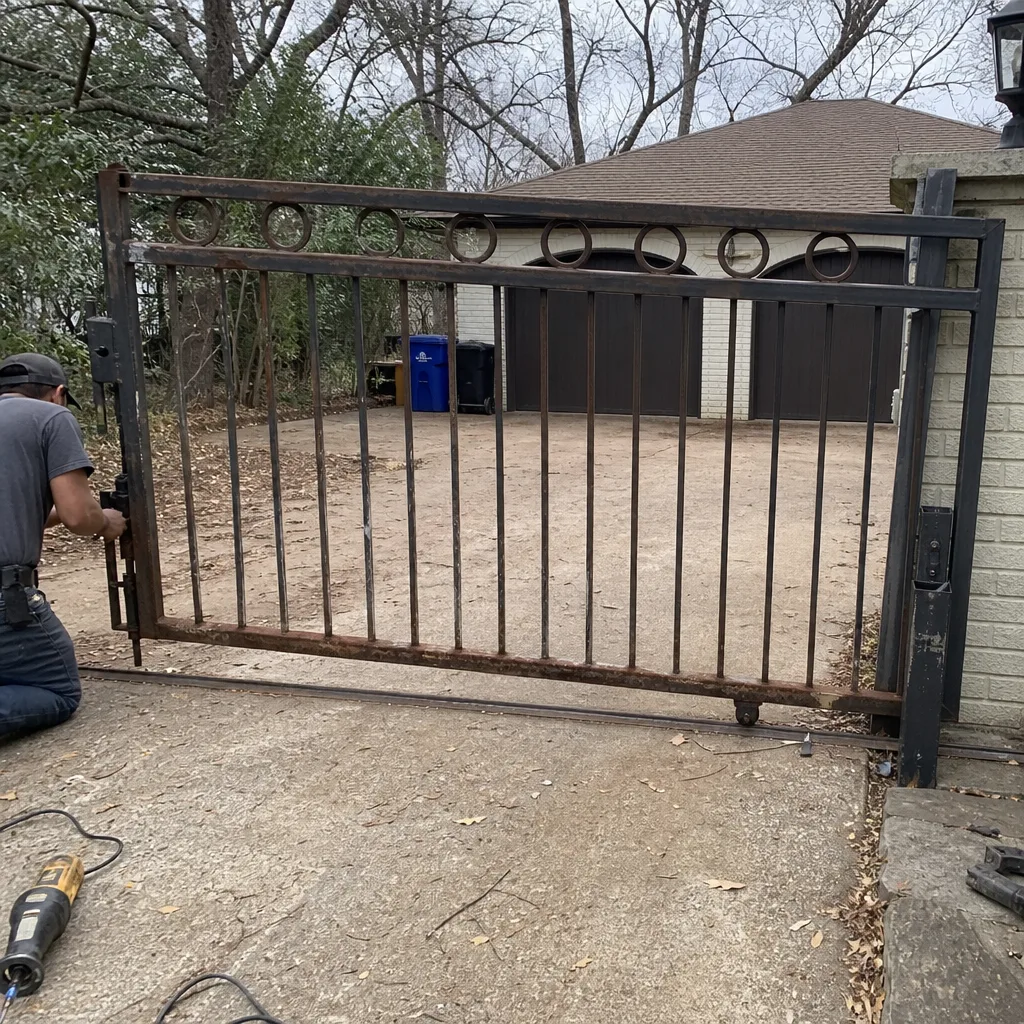 Before
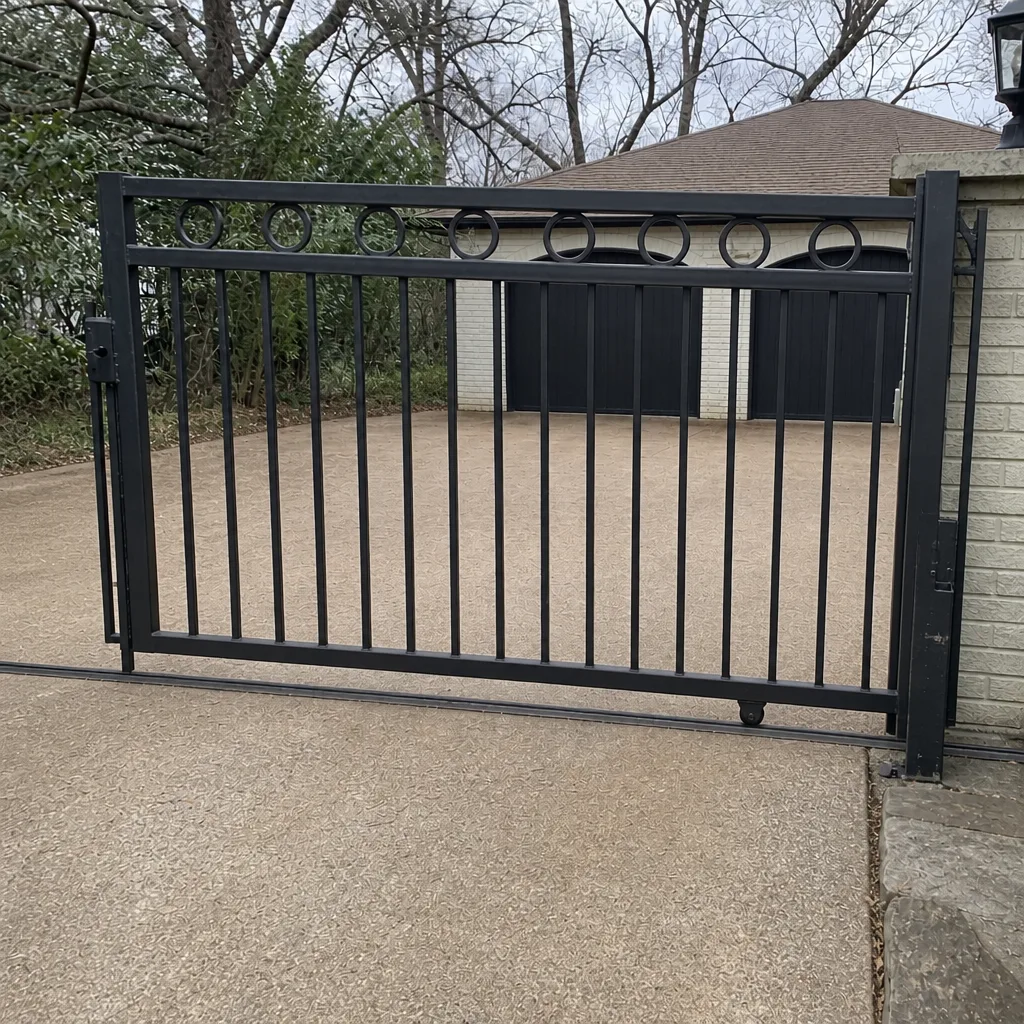 After
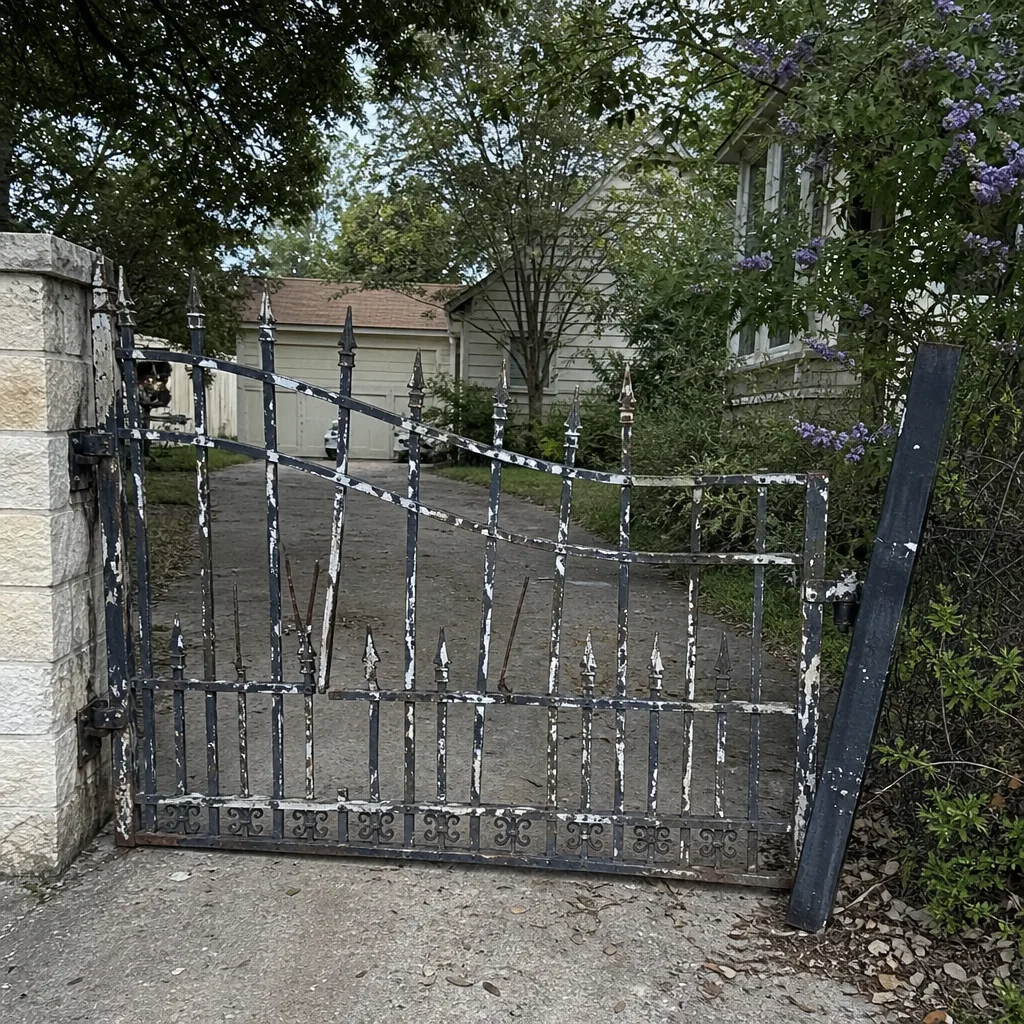 Before
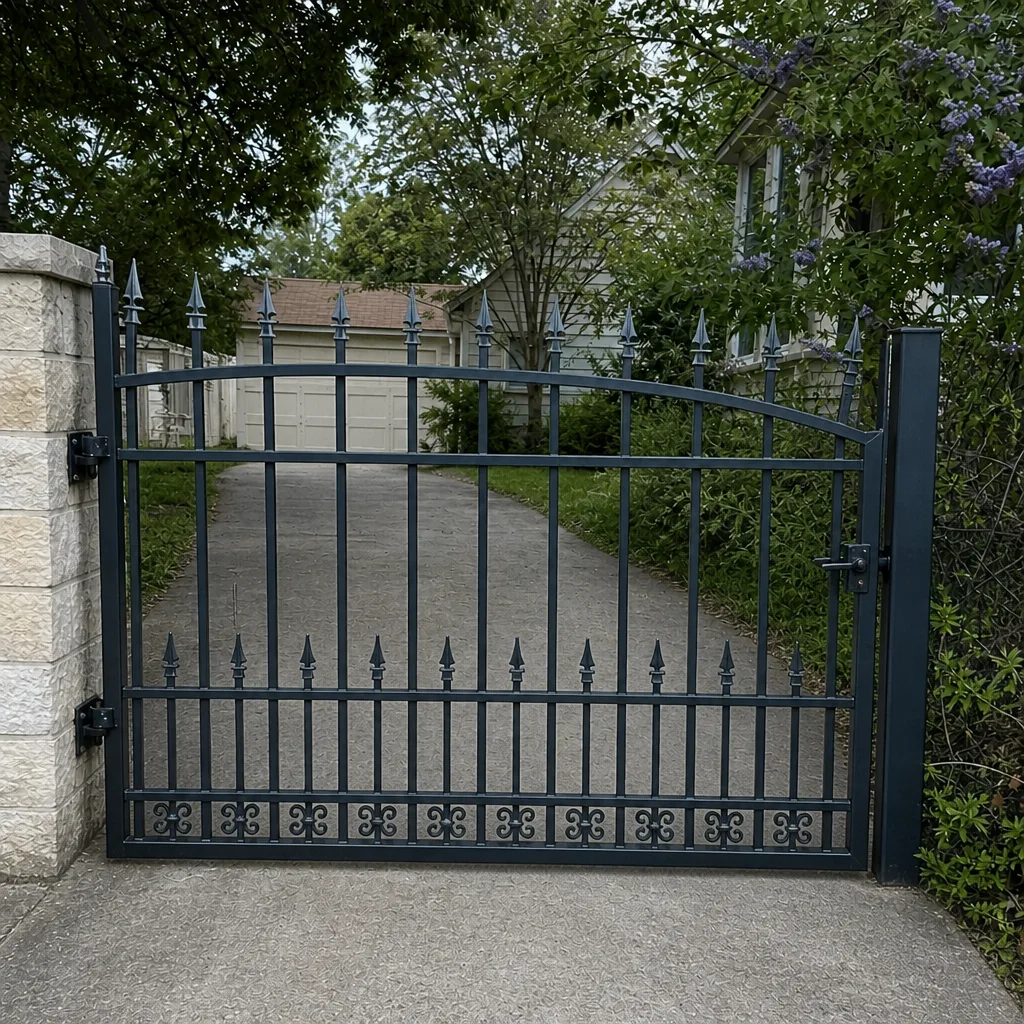 After
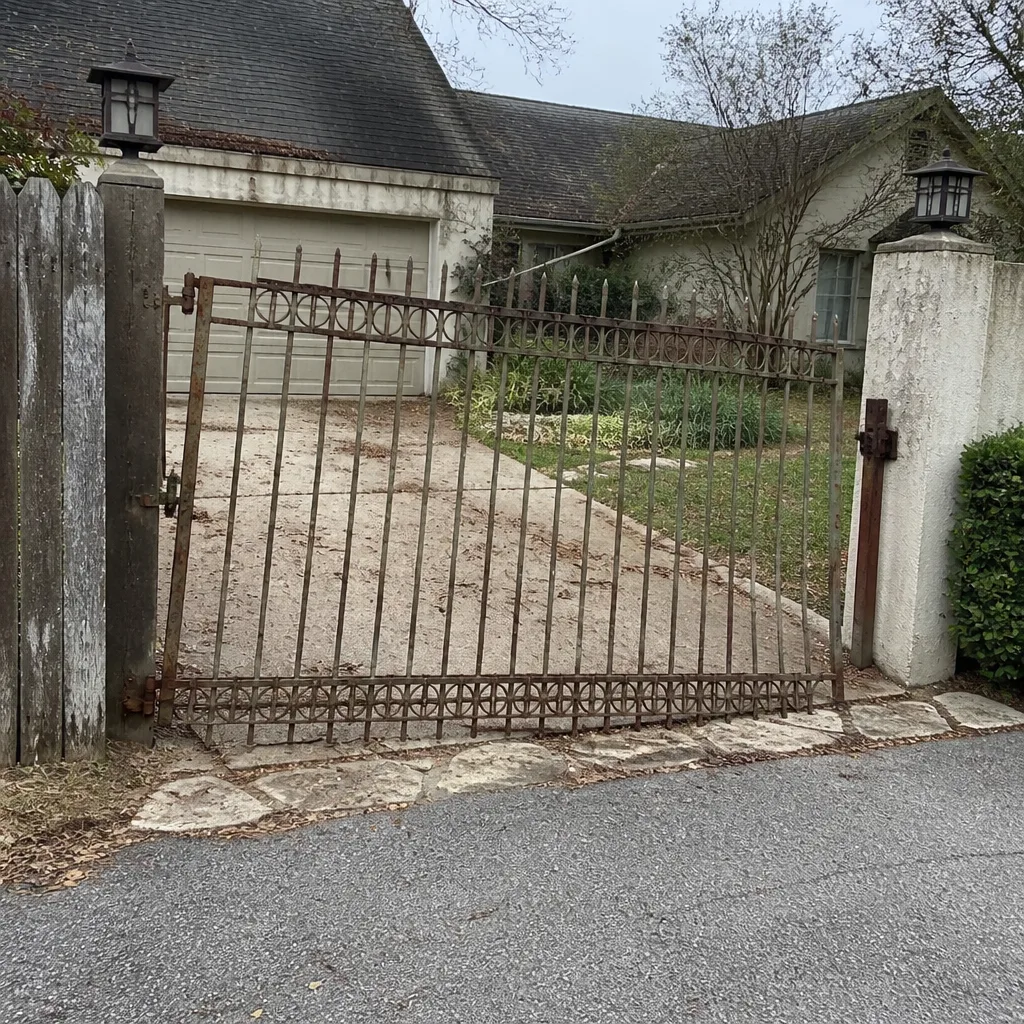 Before
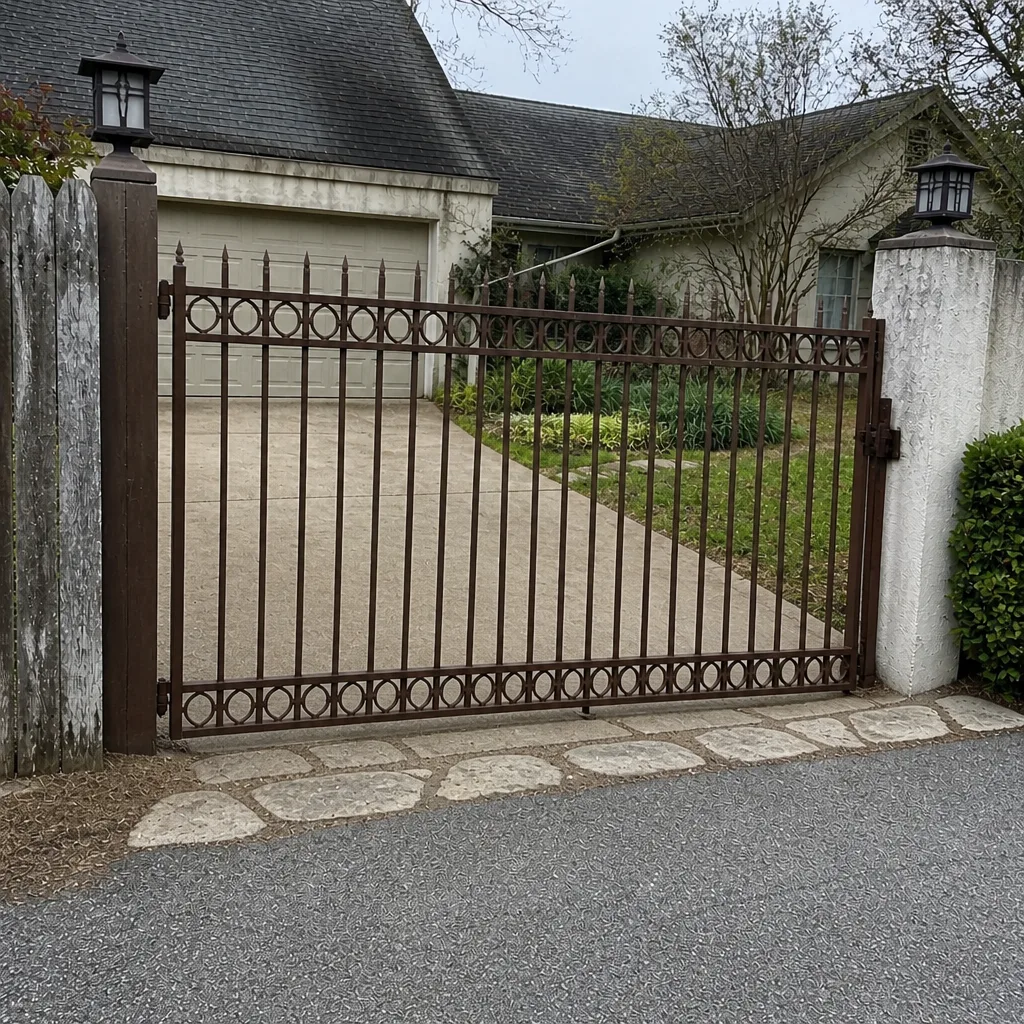 After
When to Call a Professional
Call a professional when the gate’s behavior doesn’t match the two checks above, when anything inside the operator housing or the line-voltage run is suspect, or when the gate binds on its track or hinges and needs the cause found rather than worked around. Call immediately if the gate reverses without cause, if the safety edge or sensors aren’t stopping the gate, or if a heavy sliding or swing panel has come off its track – those are safety conditions. Keep your controllers and sensors out of reach of children in the meantime. When you’re ready for a real diagnosis, Gate Repair Georgetown offers free estimates in Georgetown – call (833) 408-4022. We answer 24/7. Fast dispatch from 7am to 7pm, Sunday through Friday.
Frequently Asked Questions
Gate repair in Georgetown is priced per job by a written estimate. The final price depends on the root cause – a sensor adjustment, a wiring repair, a control board or transformer replacement, and structural repairs all sit in different ranges. We give you the price in writing and you agree to it before any work starts, so there’s no surprise on the invoice. Call (833) 408-4022 for an exact quote – estimates are free.
Usually not. A gate that stops mid-cycle is most often tripping an obstruction sensor or a limit switch, and the operator is working correctly by cutting power. Check the photocells for alignment and the safety edge for a jam before assuming the motor is bad. A free estimate will confirm the cause before any part is ordered.
A gate that works inconsistently is almost always a wiring or connection fault rather than an operator fault. Loose terminals, corroded splices, moisture in an underground run, and damaged control wiring all produce start-and-stop behavior. The right repair is tracking the wiring with a meter, not replacing the operator, which is why that diagnosis matters for cost.
You can narrow it down. A board failure tends to be inconsistent – random reversals, some commands working and others not – while a transformer failure often leaves the operator dead or sluggish under load. The definitive test is measuring voltage at the operator, which a technician does on the first visit.
Expansive clay soil swells and shrinks with moisture, and over time that moves gate posts out of line. The result is a swing gate that rubs at the latch or sags at the hinge, a sliding gate whose track is no longer level, and underground wiring that shifts and can crack or loosen at a splice. Post movement is behind many gate problems in Georgetown that look like electronic failures.
Yes. Obstruction sensors and safety edges are what stop a heavy moving gate from crushing something or someone in its path. If they misaligned, dirty, damaged, or bypassed, the gate can behave unpredictably and create a real hazard. Never disable a safety device to get a gate working; get it aligned or replaced. Serving the wider Georgetown area, we see sensor faults more than any other single cause.
Yes. We work on residential DIY-grade operators like Mighty Mule and Ghost Controls and commercial-grade systems like FAAC, BFT, Linear, and Viking. The diagnostic order is the same, though commercial gates see wear-based failures at higher rates. Whatever your brand, we know the system. From the first look through the repair, our technicians have up to 13 years of experience.
The Bottom Line
Most gate failures in Georgetown come down to five causes: safety devices, wiring, control boards, power supply, and structural movement from the clay soil. The symptom tells you which. A stop or reversal mid-cycle usually means a sensor; a gate that works sometimes means wiring; a dead operator with a clicking sound points to power or a board; a gate that drags or jumps the track is structural. Running the two pre-call checks – the controller’s fault display and the safety devices – separates the causes before anyone arrives. Get the diagnosis right and you avoid replacing a motor to fix a sensor. Call (833) 408-4022 for a free estimate. We answer 24/7. Fast dispatch from 7am to 7pm, Sunday through Friday.
Written by the team at Gate Repair Georgetown.