
Last updated November 15, 2026
 Wrought iron
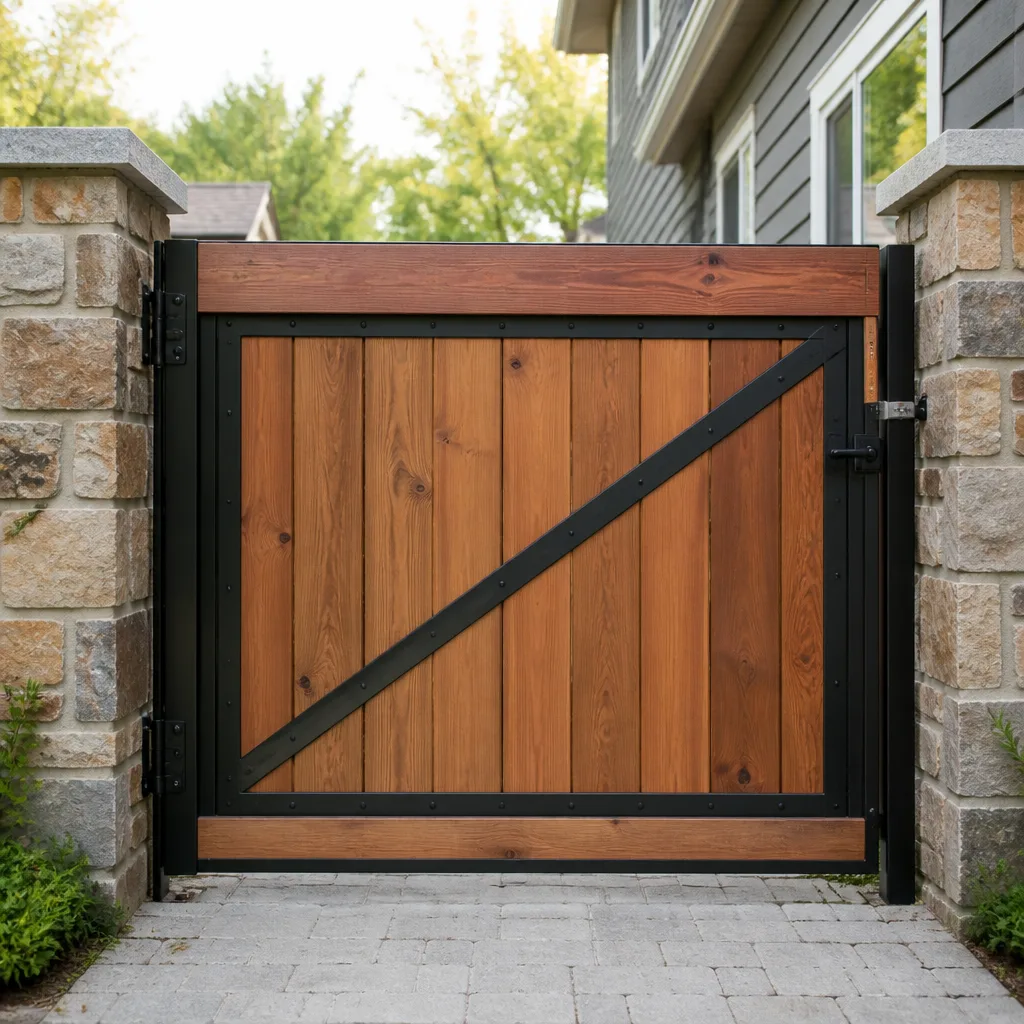 Wood & steel frame
 Farm & ranch
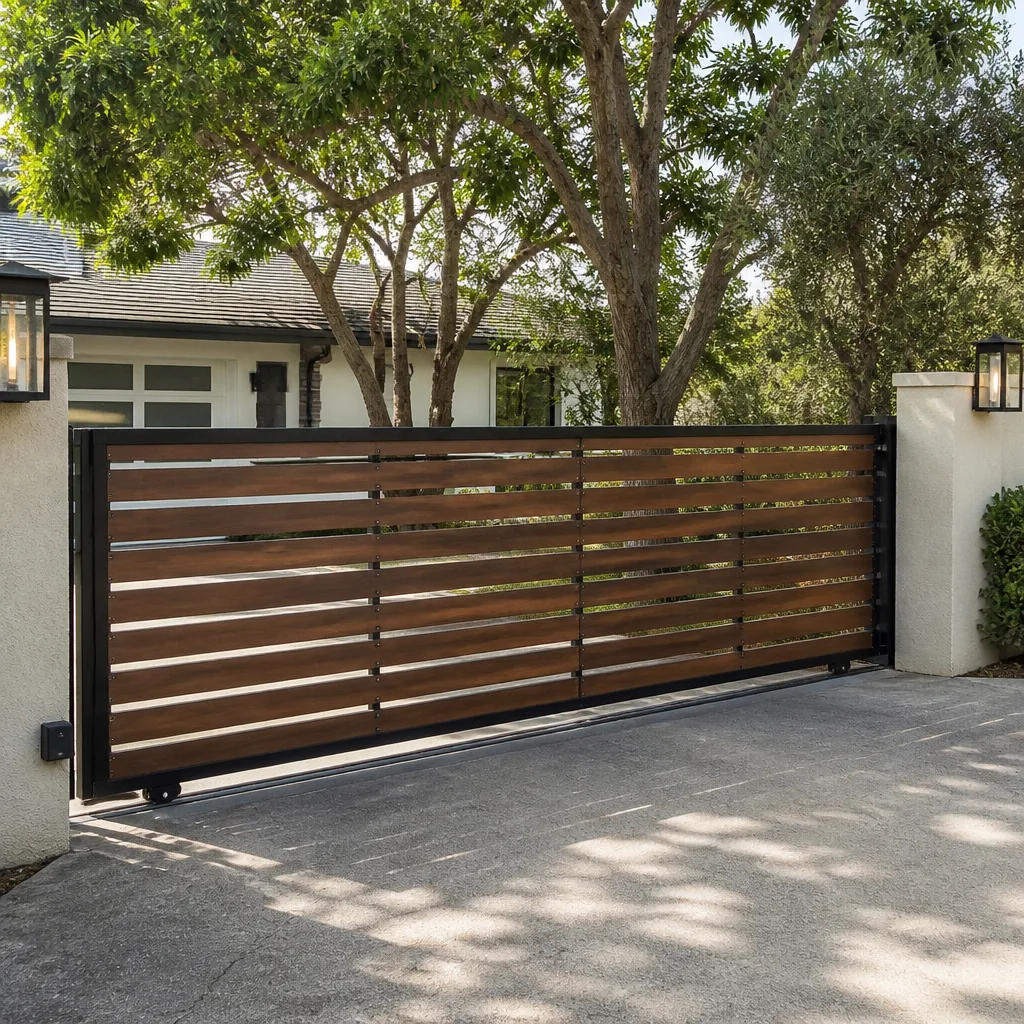 Sliding driveway gates
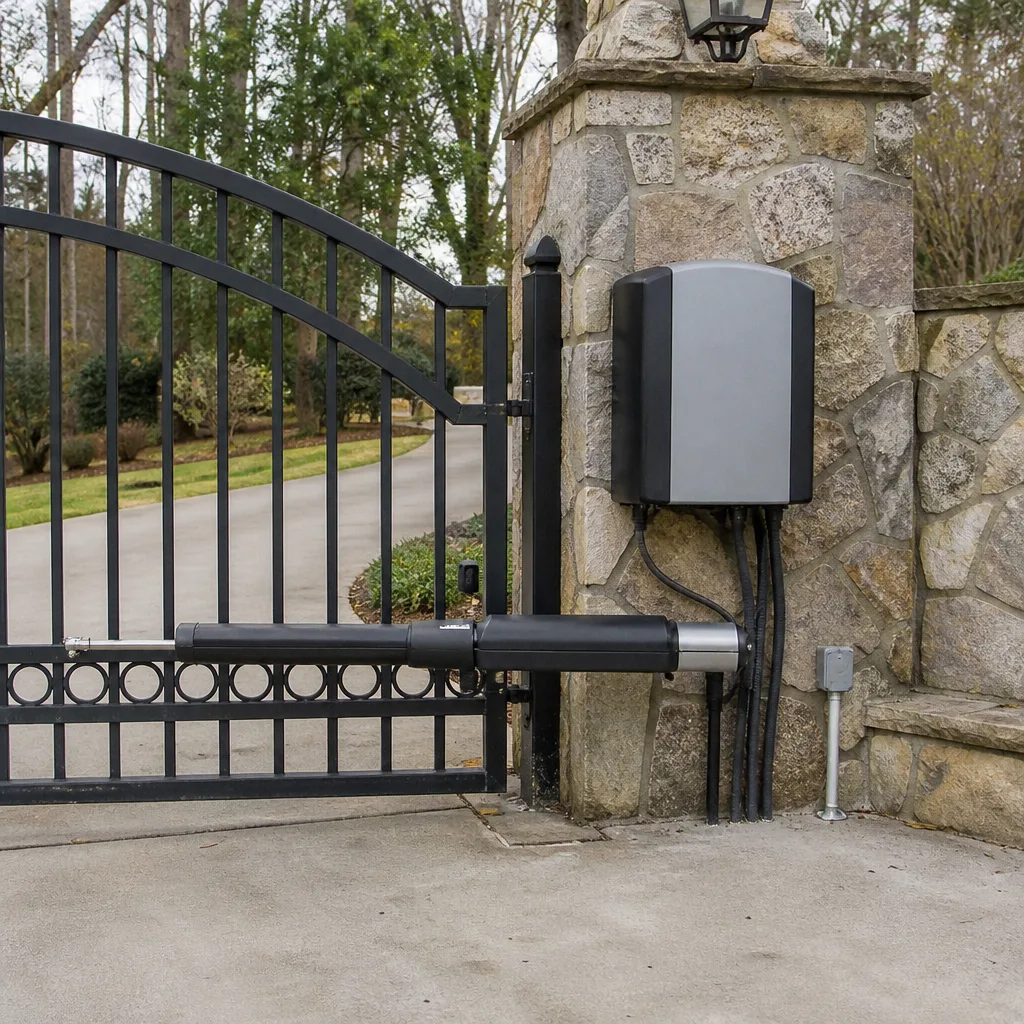 LiftMaster operators
Free on-site gate assessment - hinges, posts, and your LiftMaster or Nice gate operator checked before anything is quoted
The assessment is free and the quote is the invoice.
Get your free estimateGate Repair Maintenance Schedule: What to Do and When
Lubricating a gate hinge that hasn’t been cleaned first locks grit into the joint and grinds the metal faster than leaving it dry. We see the result on service calls regularly: hinges that should have lasted years, worn oval because someone reached for a spray can before reaching for a rag. That single mistake captures how most gate maintenance goes wrong. It’s not that owners skip it entirely. It’s that the tasks get done out of order, at the wrong interval, or with the wrong product, and each shortcut speeds up the exact failure the work was meant to prevent. This guide lays out a maintenance schedule built around how gate components actually wear, cycle by cycle, with a Georgetown angle on how our summer heat and cool winters change the timing.
Quick Answer
A working gate maintenance schedule runs on three cadences: a quick monthly walk-around for hinges, tracks and safety sensors; quarterly checks of the operator, battery backup and mounting hardware; and an annual deep service covering lubrication, fasteners, alignment and electrical connections. Time those tasks to wear cycles and local temperature swings rather than the calendar alone, and you’ll catch the three predictable wear parts before they fail.
Styles & brands we work with
- Wrought iron
- Wood & steel frame
- Farm & ranch
- Sliding driveway gates
- LiftMaster operators
Table of Contents
- Why a Wear-Cycle Schedule Beats a Seasonal Checklist
- Monthly Tasks: The Five-Minute Walk-Around
- Quarterly Tasks: Operator, Battery and Hardware
- Annual Tasks: The Full Deep Service
- How Georgetown’s Temperature Swings Change the Schedule
- The Right Lubricants (and the Ones That Cause Damage)
- How to Log Maintenance So a Technician Can Read It
- Three Components to Replace Before They Fail
Why a Wear-Cycle Schedule Beats a Seasonal Checklist
Generic gate advice tells you to “check your gate each season.” That’s not a schedule. It’s a reminder. Gates don’t wear on a seasonal clock. They wear on a cycle count, and different parts wear at very different rates. A nylon roller on a residential slide gate might see a few dozen cycles a day; the operator’s internal gears in the same housing might see thousands of load changes over the same period. Treating every component the same, on a calendar, means the fast-wearing parts fail between checks and the slow-wearing parts get replaced before they need it.
The right approach flips the logic. Build the schedule around what each part does, how often, and how it tells you it’s wearing out. Here’s how the components stack up when you sort them by wear rate:
- High wear, short life: hinge pins, nylon rollers, gate wheels, sensor lenses, and any part that physically rolls or pivots. These need eyes on them monthly.
- Moderate wear: operator chains, drive arms, aluminum arms, and mounting brackets. These handle load shifts and heat expansion; quarterly checks catch problems early.
- Slow wear, but critical: battery backup, control board, motor windings and sealed gears inside the operator. These don’t need much inspection but need their environment managed yearly, because heat and dust shorten their life regardless of cycle count.
Once you sort your gate’s parts into those three groups, the schedule writes itself. The task follows the wear rate. That’s the principle behind every cadence in this guide.
Monthly Tasks: The Five-Minute Walk-Around
The monthly check is the one that catches the most, because most gate failures announce themselves before they stop the gate. Set aside five minutes and walk the path a technician walks: sensors first, then the moving parts, then the stops. Here’s the order we recommend, and why each step sits where it does:
- Clean the safety sensor lenses. Dust, pollen and spider webs on sensor faces cause phantom reversals and false holds. Wipe the lenses before you test anything else, so a dirty sensor doesn’t confuse the next step. This is the single highest-value monthly task.
- Open and close the gate by hand cycling the operator. Watch and listen. A gate that hesitates, jerks, or makes a new grinding sound is telling you something. Note the sound in your log.
- Wipe and inspect the hinges and pivot points. Look for rust bloom, metal shavings, or dark residue on the pins. Residue means wear is already happening. Clean before you lubricate, never the other way around.
- Check the tracks on a sliding gate. Run your hand along the track top surface, feel for grit, raised spots, or debris. Clear anything that isn’t track.
- Test the reverse and safety edge. For an automated gate, trigger the safety device a few times and confirm the gate reverses. If it doesn’t, stop using the operator until it’s fixed. This is a safety-critical failure, not a convenience issue.
Log the month, what you found, and any noise or hesitation. That log becomes the difference between a routine repair later and an expensive one.
Quarterly Tasks: Operator, Battery and Hardware
Every three months the schedule moves past looking and adds hands-on checks of the systems that hold the gate together. This is where owners who use an automatic operator get the most value back from their maintenance time, because the operator is the part that fails invisibly. Four checks matter most:
- Battery backup test. Disconnect line power to the operator (or use its test mode if the manual allows it) and confirm the gate still completes a cycle. If the gate won’t finish, the battery is on the way out, and you want that news in June, not during a power cut in July. Test the battery before summer heat arrives, not after; heat is what does them in.
- Manual release check. Every automated gate has a manual release so you can open it during a power failure. Test it while the gate is stationary and re-engage it properly. A release that’s seized from disuse is one of the least pleasant surprises a gate owner can find.
- Fastener torque check. Operator mounts, gate brackets, post anchors, and hinge plates all loosen from vibration. Vibration is constant on a working gate. Check every exposed bolt you can reach, and re-tighten anything that wiggles.
- Chain or drive inspection. On chain-drive operators, look for slack, worn links, or a chain that’s running dry. On screw- or arm-drive systems, look for wear at the pivot end. Chain tension is the operator’s version of a loose belt, and it rarely gets checked until the chain jumps.
If your gate is a manual swing gate with no operator, the quarterly cadence still applies, but swap the operator items for post-lean inspection and gate-sag measurement. A manual gate that suddenly swings into the ground or scrapes the fence was setting up that failure for weeks.
Annual Tasks: The Full Deep Service
Once a year, the gate gets a full service that goes deeper than the quarterly check. For operators in the residential and light-commercial range that dominate much of the market, including Mighty Mule and LiftMaster models common around Georgetown, this is the inspection that finds the problems the owner can’t see. It’s also the annual task best handled by a gate specialist if anything looks off: gate repair is a specialized trade, and diagnosing an operator’s electronics isn’t a homeowner task.
The annual service should cover:
- Full lubrication pass on hinges, pivots, chains, and the wear surfaces of the roller or track. Use the right product for each material (see the lubricant section below).
- Structural inspection of posts, anchors, and the gate frame, looking for lean, rust, cracks and bolt holes that have enlarged from movement.
- Alignment check on every sliding gate, plus a reset of the gate’s stops and limit switches where the operator uses them.
- Electrical inspection of the operator’s wiring, terminal connections, and the power run, looking for loose lugs, corrosion, or chafing along the conduit. Any exposed wiring that could be reached by a person or a pet gets fixed before the gate is used again.
- Control-board and motor inspection where accessible, checking for dust buildup, insect nests, and any signs of heat stress or burned components.
- Battery test and replacement planning if the battery is showing its age. This is the right time to decide, not the right time to guess.
An annual service on a gate in a busy household, a community-entrance gate, or a commercial lot near the Georgetown square is best scheduled before the hottest stretch of summer, when heat is hardest on batteries and control boards. That timing is worth planning around, so the annual service actually happens then instead of in a lull.
How Georgetown’s Temperature Swings Change the Schedule
Georgetown has two extremes that matter to gate maintenance, and most generic schedules ignore both. Summers run to and past 100°F. Winters dip below freezing on enough nights to matter, without the sustained cold that would harden everything consistently. That pattern, hot summers and mild but real winter cold, produces a specific sort of wear.
On hydraulic operators, the fluid and seals take the brunt of the heat. High summer temperatures thin the fluid, and the pump works harder for the same motion. That wear doesn’t show up as an error on the control board; it shows up as slower cycles or a gate that gets stiff in the afternoon and moves easily once the day cools. In our experience, hydraulic operators in a Texas climate benefit from their fluid check in late spring and their seal inspection in fall, when the seals have had a full hot season to work. Do not wait until the operator starts leaking; by then the pump has been running on degraded fluid for weeks or months.
Battery backup systems behave the opposite way. Heat is what kills a lead-acid battery, and a summer at 100°F is harder on a battery than a cold winter is. That’s why we recommend testing backup batteries before summer, not after: the test in May catches the pack that spent last summer cooking in a shed or a shaded enclosure, months before the first power cut would force the issue. Cold is not the enemy here; heat is. The mild winters are a gift to gate hardware, not a risk.
The other local variable is dust from oak pollen and dry-season grit. A gate that sits near live oak canopy, or along a long gravel drive on the edge of town, will pick up grit faster than one on a paved street. In a dry summer, dust is a bigger enemy to nylon rollers and steel tracks than cold ever is.
The Right Lubricants (and the Ones That Cause Damage)
Lubricating a gate is not a job for leftover garage-shelf spray. The wrong product can swell, soften, or dissolve the parts it’s meant to protect. Match the lubricant to the material:
- Nylon rollers: use a dry-film silicone spray, or a thin white lithium grease applied sparingly. Heavy petroleum grease attracts grit and traps it in the roller; solvent-based sprays can attack nylon. Dry or light is the rule.
- Steel tracks: use a light oil or silicone spray wiped thinly along the running surface. Do not use heavy grease; it collects grit that turns the track into a grinding surface.
- Aluminum arms and pivot pins: a dry-film lubricant or a thin lithium grease. Aluminum doesn’t rust, but it does gall against steel pins without a film between the surfaces.
- Hinges and gate frame pivots: a heavier grease is fine here because these surfaces carry load, but only after you’ve cleaned off the old grease and any debris. Never grease over residue; that’s how you grind a hinge into scrap.
- Chains and open gears: a chain-specific lubricant. Not oil, not grease, not WD-40. Chain lube actually sticks to a moving chain.
Two products deserve a special warning. Never use WD-40 as a long-term lubricant on any gate part; it’s a cleaner and a light penetrant, not a lubricant, and it strips the existing grease without replacing it. Never use graphite powder on exposed gate hardware; it’s fine for locks, but it attracts moisture and dust on open-air parts and accelerates wear. Both mistakes show up on service calls regularly.
How to Log Maintenance So a Technician Can Read It
The single biggest advantage of a written maintenance log is diagnostic. When a technician pulls a gate apart and finds a worn gear, a burned-out motor, or a snapped drive arm, the log is what tells them whether the wear was normal, or the result of an installation problem that has been forcing the gate since day one. Without the log, every failure looks the same.
Keep it simple. A small notebook clipped inside the operator box works. Each entry needs five things:
- Date of the task, and the day-of-week if cycles are uneven (a commercial gate that runs all weekend cycles very differently than one that’s mostly idle Sunday).
- Task performed and the product used. Name the lubricant. If the label matters later, you’ll want it.
- Anything unusual: new sounds, a stiff spot, a sensor that hesitated, a bolt that took more torque than last time.
- Any part replaced, with its age. “Replaced left nylon roller, 14 months old” tells a technician far more than “replaced roller.”
- Cycles if the operator tracks them. Many LiftMaster and FAAC operators will report cycle counts, and those numbers confirm wear rate rather than guestimating it.
Bring the log to the service visit. A technician who can read that record will diagnose a fault as wear or installation in a fraction of the time, and they’ll know the exact product line the gate’s been on. If you don’t keep one, the technician will investigate the wear pattern from scratch, and you’ll pay the time for it.
Three Components to Replace Before They Fail
Most gate repair calls are preventable, because three components fail on a schedule you can predict. Replace each before its expected window closes and you avoid the failure entirely rather than paying for the aftermath.
1. Battery backup. Backup batteries have the shortest and most predictable life of any component in an automated gate, and heat shortens it. In a Texas climate, plan on testing yearly and planning a replacement cycle on the shop’s recommendation for your operator model, not waiting for the gate to die during a power cut. Cost of a battery on schedule versus the disruption of a dead gate is not a close call.
2. Nylon rollers and gate wheels. These wear out from friction and grit, and they wear faster on gravel-drive or oak-canopy properties. Once a roller begins to flat-spot, it puts stress on the track and the operator, and that stress spreads. Replace them as a set when the first one starts showing visible flat spots or a wobbly rotation.
3. Seals on an hydraulic operator. Seals degrade from heat, and the failure is not sudden. It starts with a slow, invisible fluid loss that makes the pump work harder. If the operator is more than a few years old and shows any hesitation on hot afternoons, have the seals inspected proactively. By the time the leak reaches the drive, the pump has already taken a hit.
Replace those three on schedule and your gate repair record stays short. Skip them and they become the three most common service calls we see in Georgetown.
Common Mistakes to Avoid
- Lubricating before cleaning. Grit locked into a hinge or roller grinds the metal against the surface and wears it faster than no lubrication at all. Clean first, every time, then apply the right product.
- Using motor oil or generic WD-40 as a gate lubricant. Oil runs off steel tracks and attracts grit; WD-40 strips existing grease without replacing it. Both accelerate the very wear the owner was trying to prevent.
- Skipping the monthly sensor check. Sensors are the most common cause of “the gate won’t work” calls, and dust, pollen and insects are the usual culprits. A wipe with a dry cloth catches it before it becomes a service call.
- Greasing over rusted or damaged parts. A lubricant won’t fix a worn pin or a pitted track. Follow the schedule with clean parts, and replace worn parts on schedule; a coat of grease on damage just hides it.
- Never testing the manual release. A manual release that’s never moved seizes from disuse, which is the worst possible time to discover it during a real power outage. Test it quarterly.
- Over-tightening mounting bolts to stop a wobble. A wobbling operator mount usually has a stripped hole or missing washer, not an over-loose bolt. Cranking the bolt down strips the hole further. Fix the cause.
- Ignoring the operator’s error codes. Most operators store a fault history. That record is the most diagnostic tool available, and ignoring it means every fault has to be investigated from scratch.
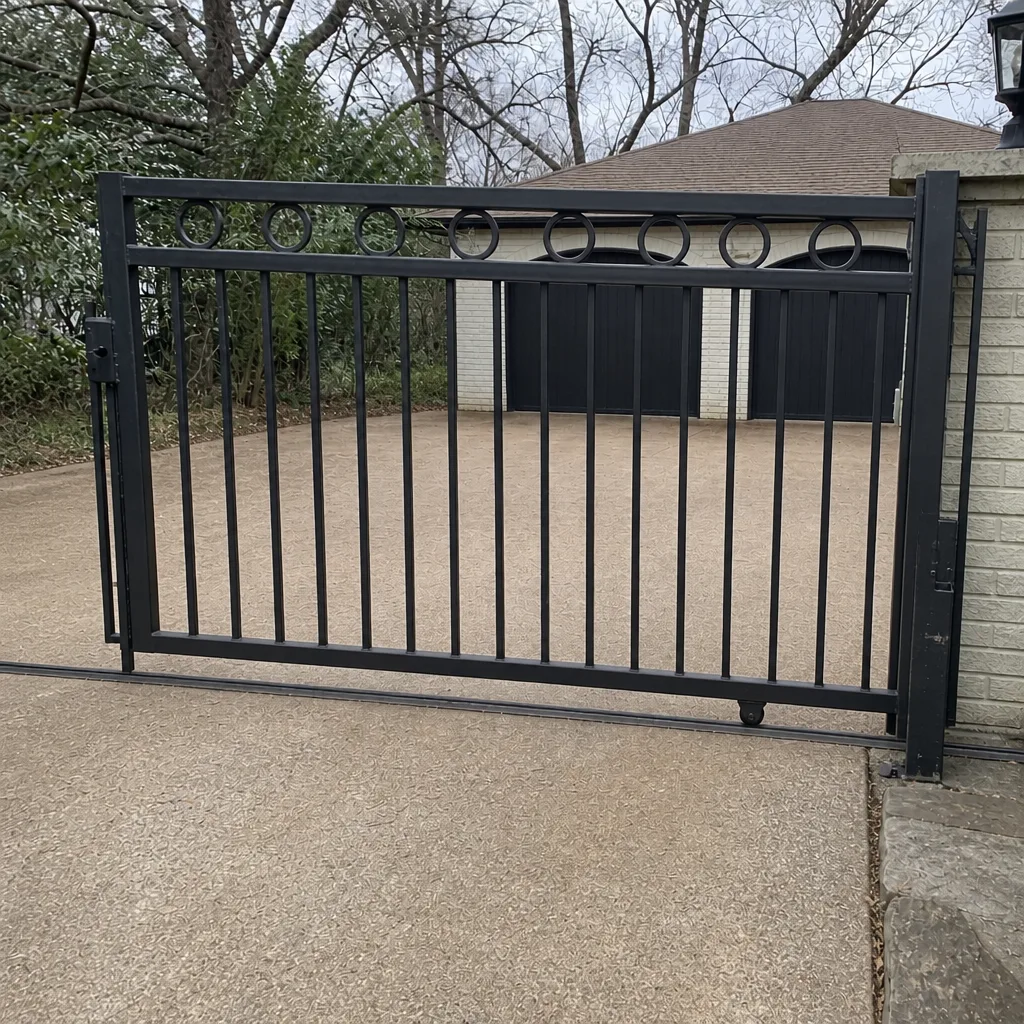
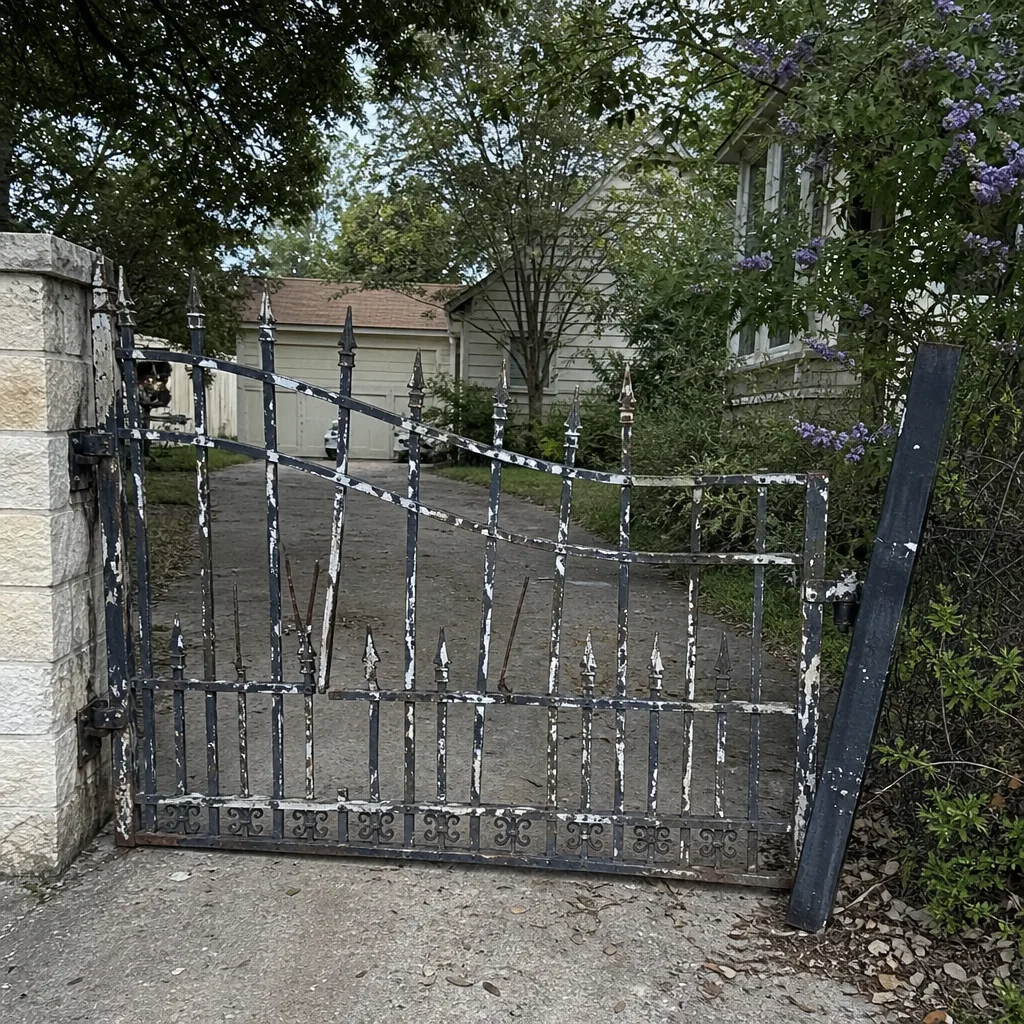
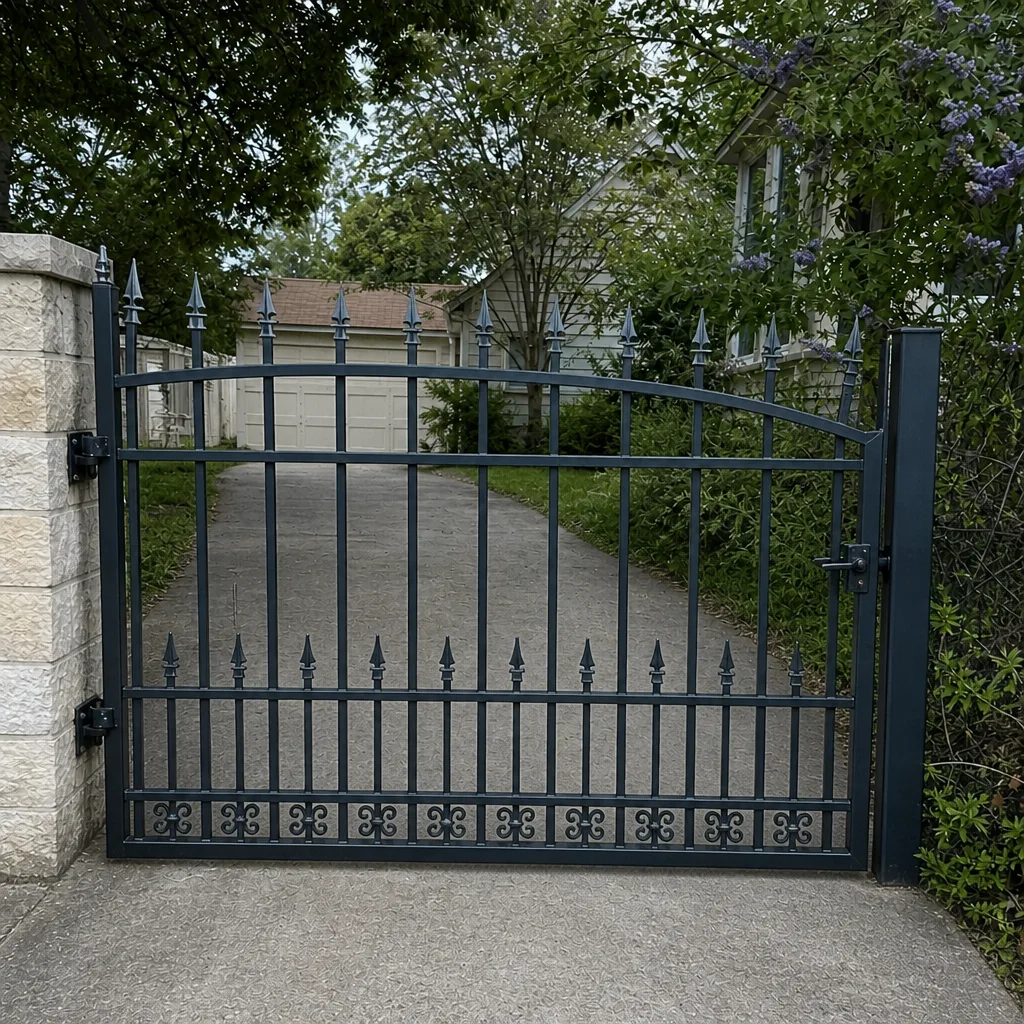
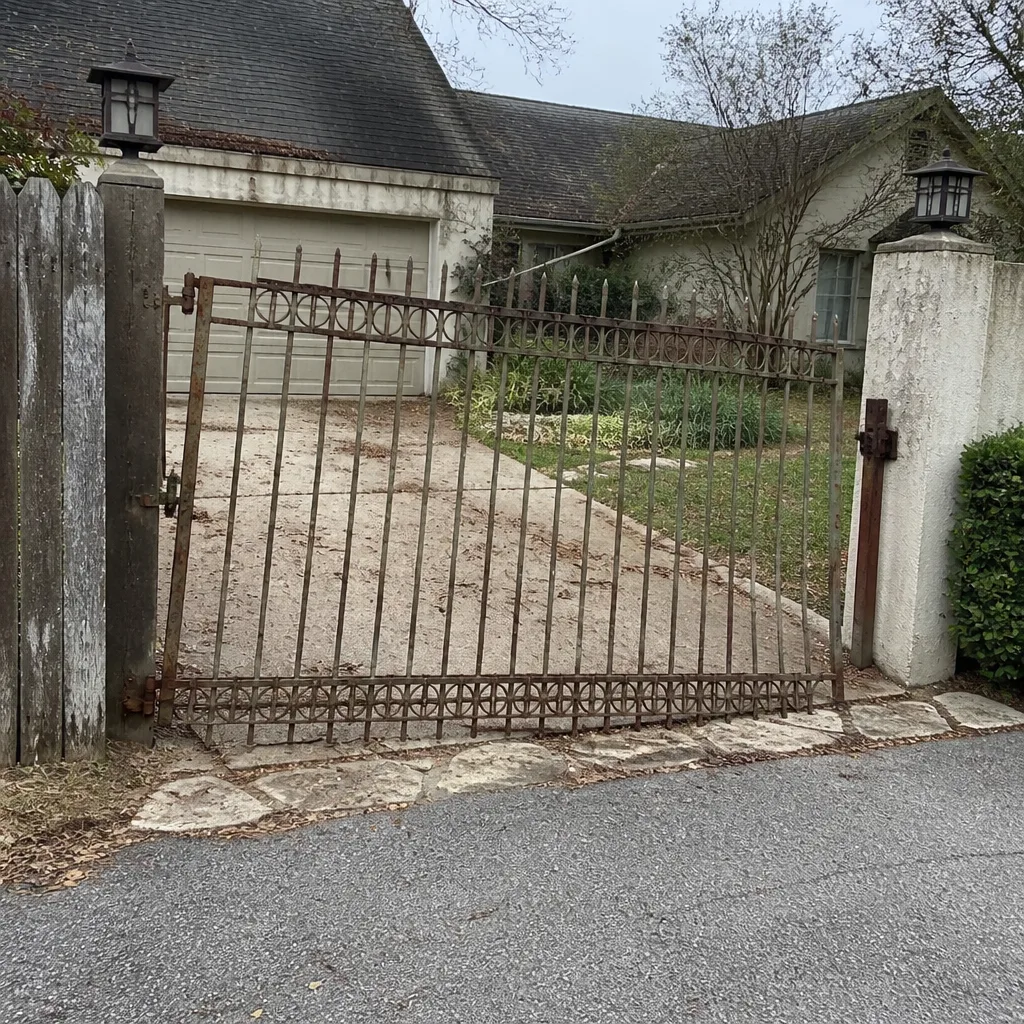
See the difference
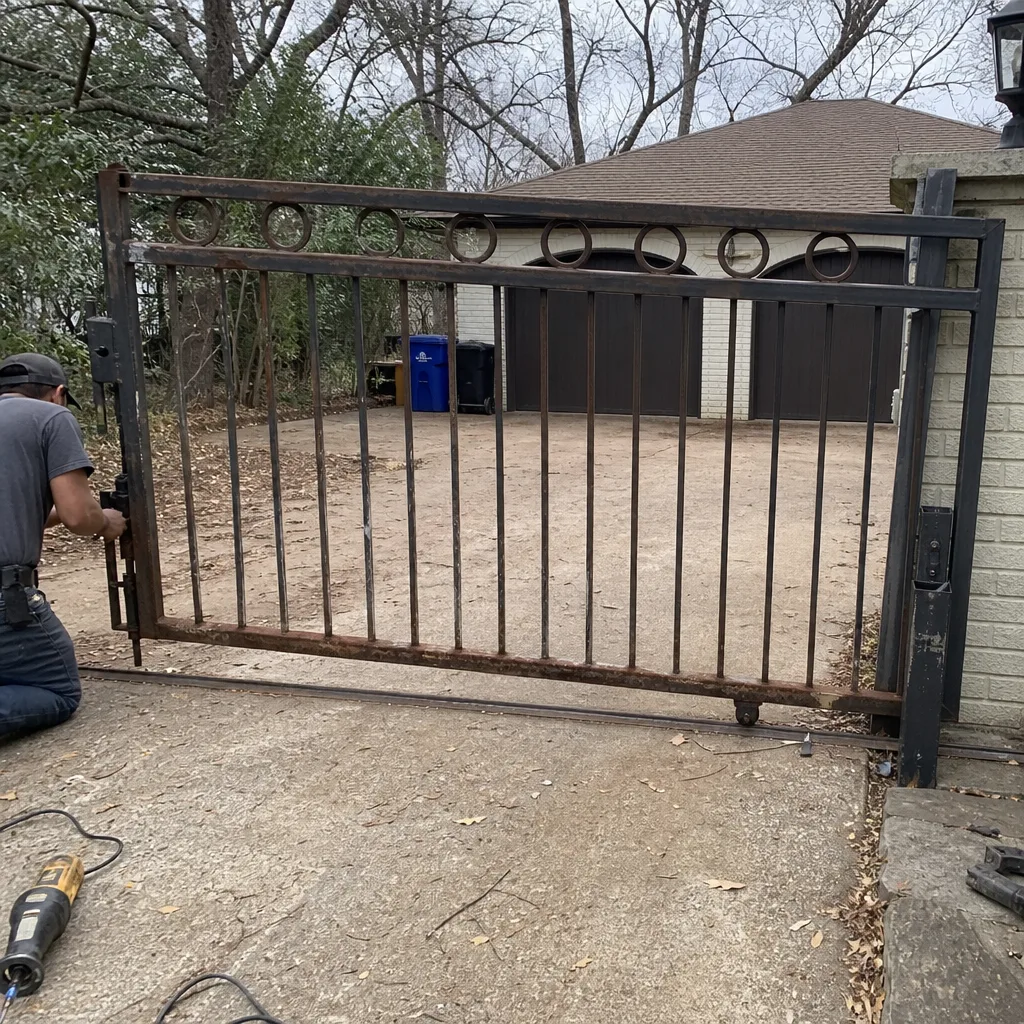 Before
 After
 Before
 After
 Before
 After
When to Call a Professional
Some tasks in the schedule are safe for any gate owner: wiping sensor lenses, cleaning and greasing a hinge, checking for loose bolts. Others belong to a trained specialist, and knowing the line is part of the schedule. Call a professional when the gate involves electrical wiring, a power run, a control board, a motor, or an hydraulic system; when the safety edge or reversing system doesn’t test clean; when the gate has shifted its alignment, cracked a post anchor, or shown structural movement; or when you simply can’t say whether a wear pattern is normal or caused by a bad installation. The electrical side of a gate is not something to improvise around; a trained specialist should handle it, and a gate that’s misbehaving on the safety circuit should not be used until it’s been checked. Gate Repair Georgetown offers free estimates in Georgetown, and our electric gate repair work covers both residential DIY-grade operators and commercial systems. Call (833) 408-4022. We answer 24/7. Fast dispatch from 7am to 7pm, Sunday through Friday.
Frequently Asked Questions
The best schedule for a Georgetown gate runs monthly, quarterly and annually: a five-minute monthly walk-around for sensors, hinges, tracks and the reverse test; a quarterly operator and battery check; and an annual deep service for lubrication, alignment, fasteners and electrical inspection. The cadence follows wear cycles, which means it catches the three predictable wear parts before they fail. Call (833) 408-4022 for an exact quote on a full service; estimates are free.
Gate maintenance in Georgetown is priced per job by the written estimate, after we look at your gate and its operator. Regular maintenance usually costs less than the emergency repair it prevents, because catching a worn roller or dead battery early avoids the downstream damage to the track or pump. Call (833) 408-4022 for an exact quote; estimates are free.
Gate failures in summer usually come from the battery backup or an hydraulic operator. Heat shortens battery life and thins hydraulic fluid, forcing the pump to work harder, so a gate that ran fine in spring can hesitate or stall in July. Testing the battery before summer and inspecting the seals each fall catches both problems before they strand the gate. Call (833) 408-4022 for an exact quote; estimates are free.
Yes. Mighty Mule and LiftMaster are two of the operators we work on routinely, along with FAAC, BFT, Linear, Viking, Ghost Controls, DoorKing and Elite. Whether the operator is a residential unit or a commercial system, our technicians have up to 13 years of experience diagnosing the specific model. Call (833) 408-4022 for an exact quote; estimates are free.
Test the manual release quarterly, and definitely before any storm season when the power might go out. A release that’s never been operated can seize, and a seized release during a power cut leaves you with a gate you can’t move. Re-engage it fully after testing. Call (833) 408-4022 for an exact quote; estimates are free.
No. We’re closed Saturday. Our dispatchers answer 24/7, so a call on a Saturday is booked into the next opening, Sunday through Friday, 7am to 7pm. Call (833) 408-4022 and we’ll get your gate on the schedule.
The Bottom Line
A gate maintenance schedule is worth doing only when the tasks are timed to how the gate actually wears. Monthly: sensors, hinges, tracks, reverse test. Quarterly: battery backup, manual release, fasteners, chain or drive. Annually: full lubrication, alignment, structural and electrical inspection. Time the battery test and seal inspection to Georgetown’s heat, not to the calendar, clean before you ever lubricate, and log what you do so a technician can read the wear pattern. Replace the battery, rollers and hydraulic seals proactively, and you’ll see fewer Gate Repair Georgetown calls. For a free estimate on your gate in Georgetown, call (833) 408-4022. We answer 24/7. Fast dispatch from 7am to 7pm, Sunday through Friday.
Written by the team at Gate Repair Georgetown.