
Last updated November 15, 2026
 Wrought iron
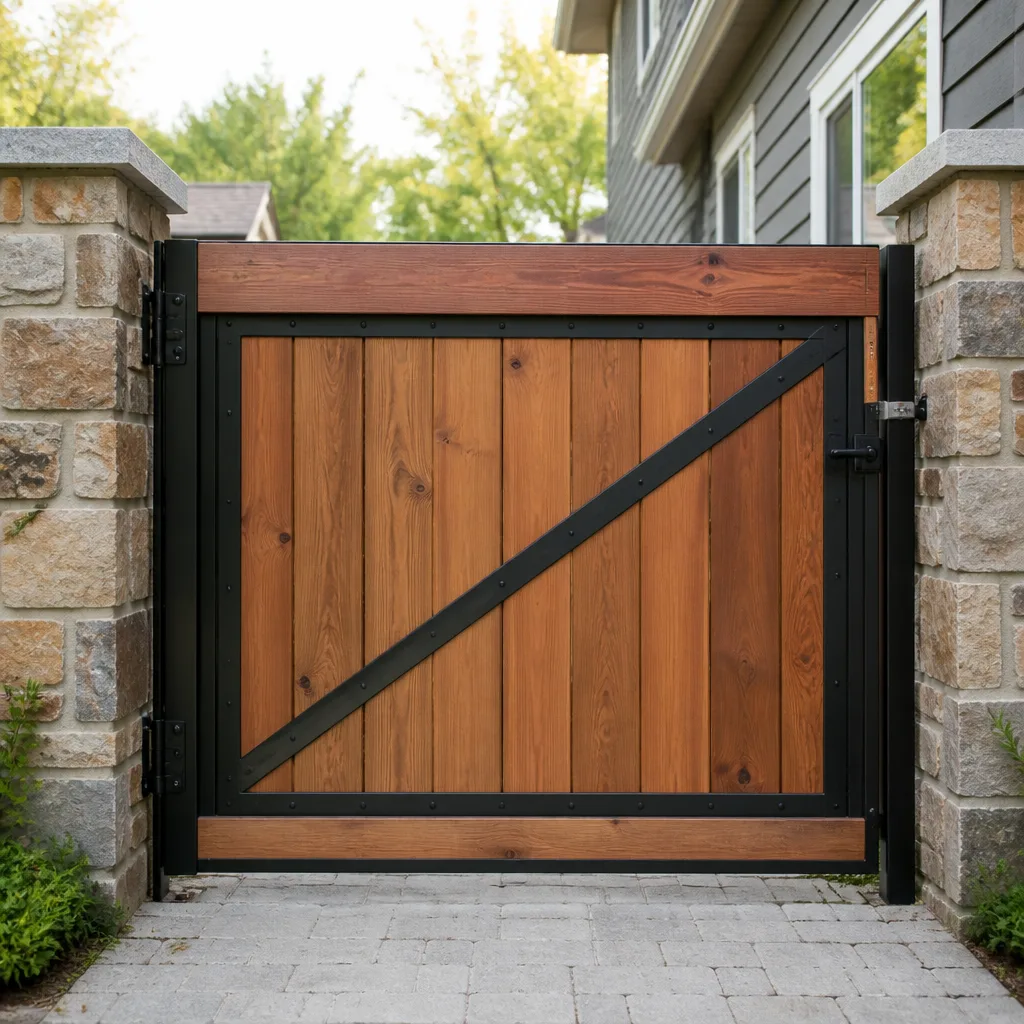 Wood & steel frame
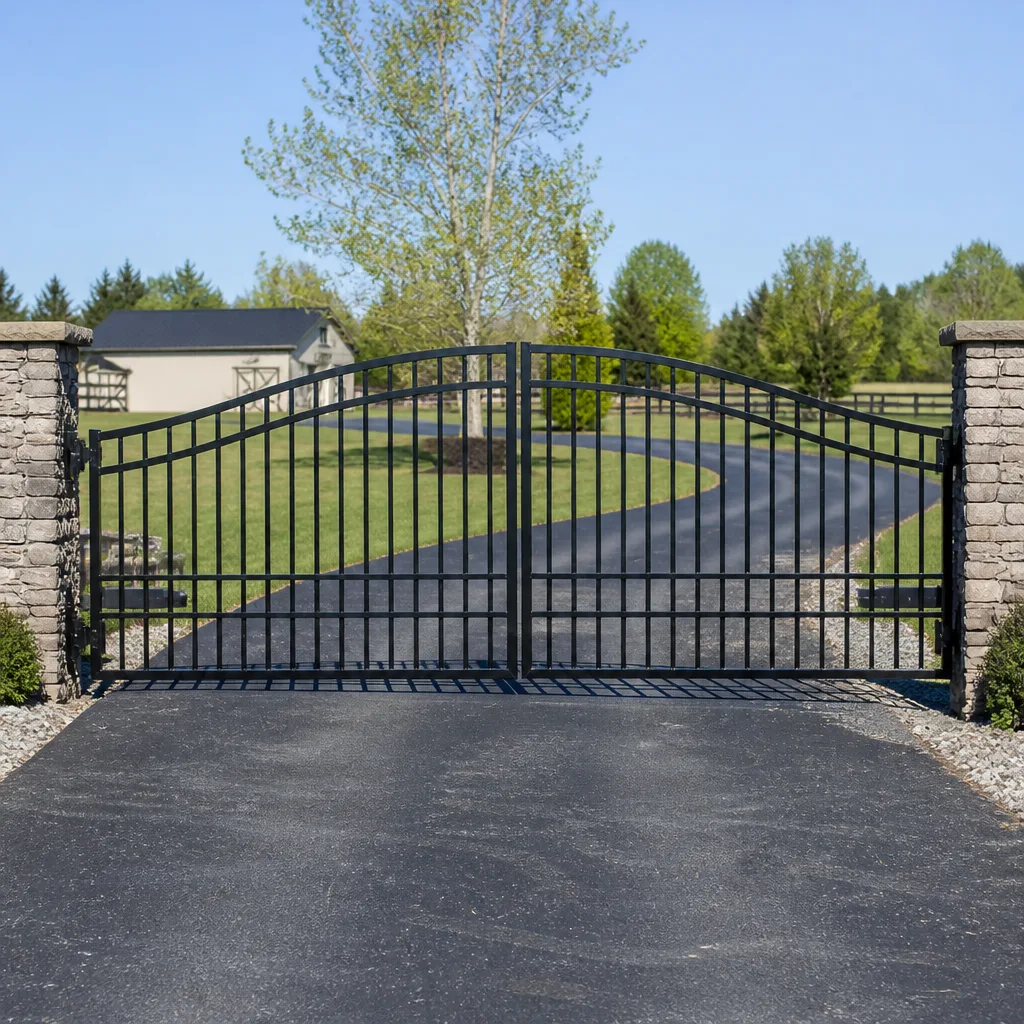 Farm & ranch
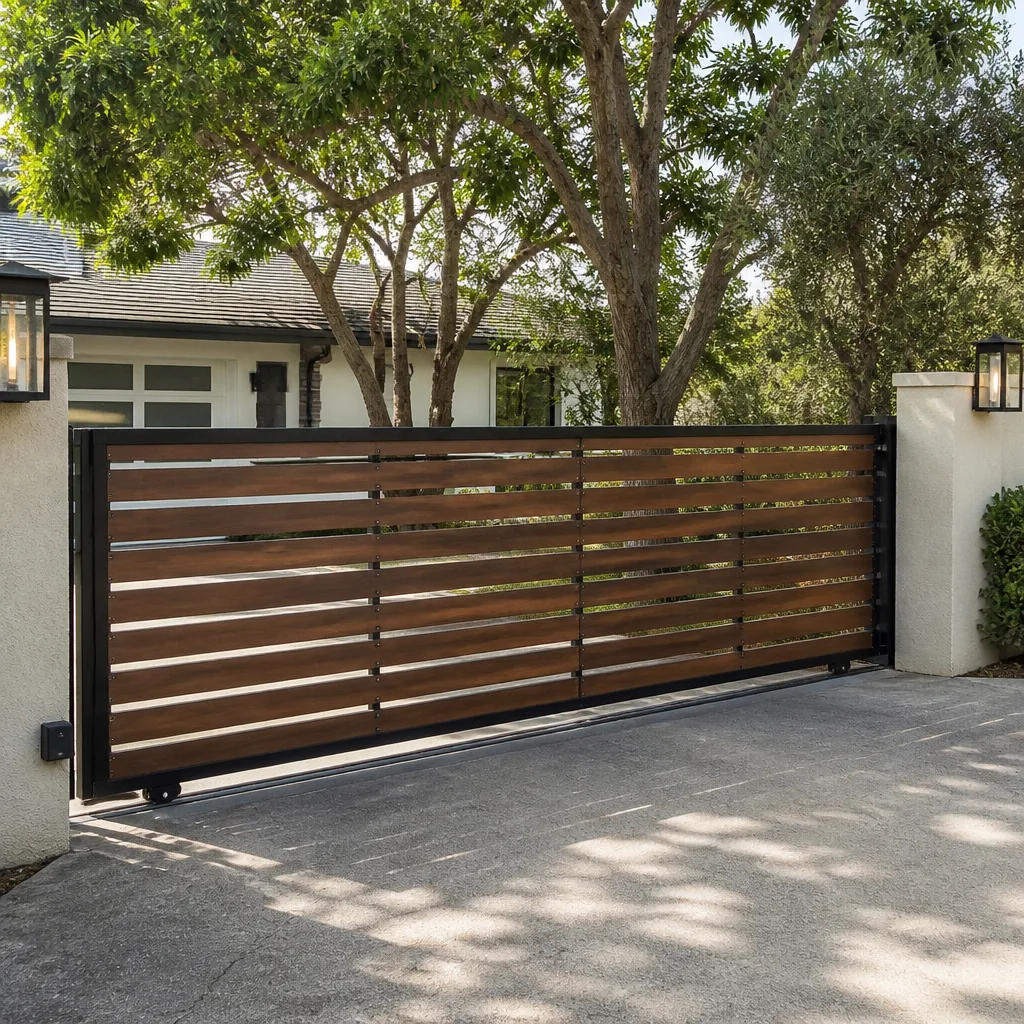 Sliding driveway gates
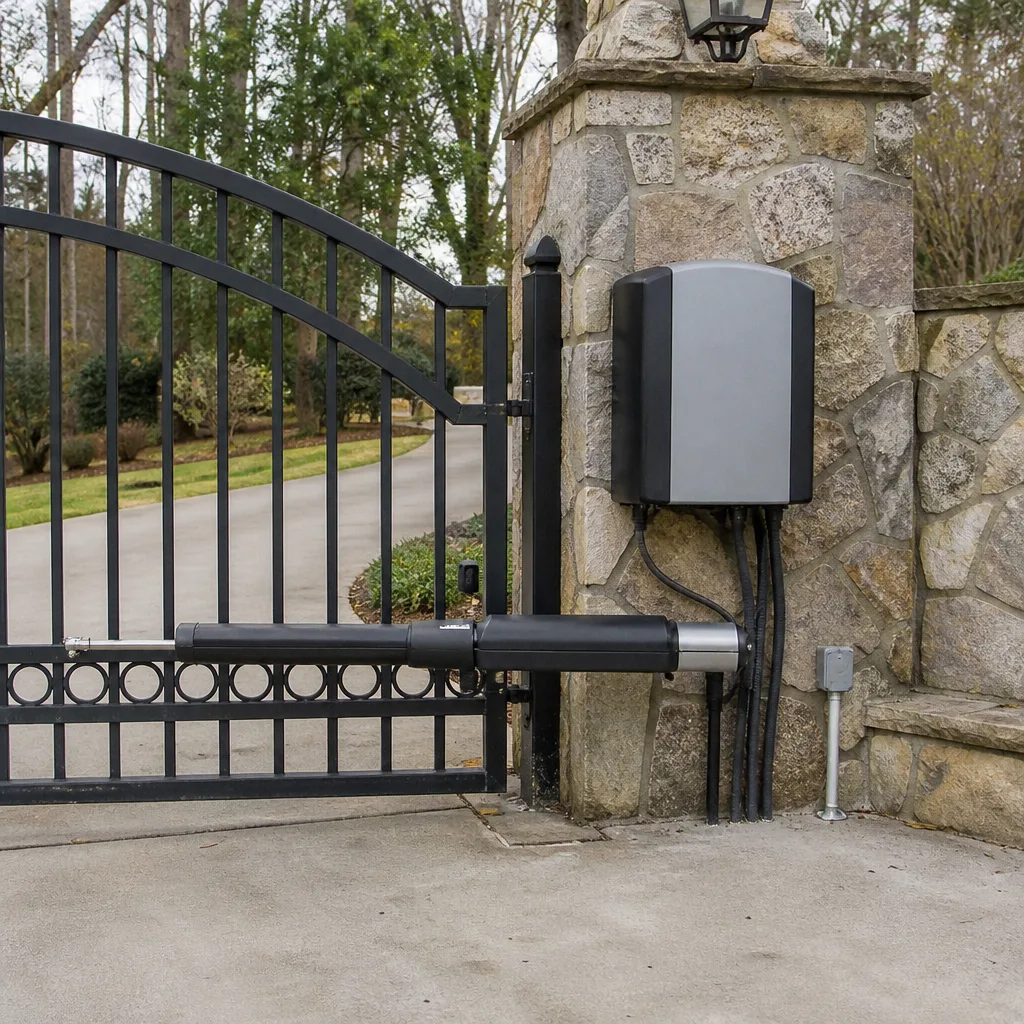 LiftMaster operators
Free on-site gate assessment - hinges, posts, and your LiftMaster or Nice gate operator checked before anything is quoted
The assessment is free and the quote is the invoice.
Get your free estimateDIY vs Professional Gate Repair: The Georgetown Homeowner’s Decision Guide
Replacing a gate operator’s battery backup is a legitimate DIY task. Adjusting a hydraulic swing operator’s close-force limit is not. That distinction is the whole point of this guide, and it’s where most DIY-versus-pro debates go wrong. The question isn’t whether you’re handy enough. It’s whether the specific repair in front of you is one you can safely finish, and whether a mistake would leave you exposed. A miscalibrated force setting is how residential gates injure people, and homeowner’s insurance typically won’t cover unprofessional work that caused the injury. So before you pick up a wrench, we want you to sort your problem into the right category. This guide breaks down which gate repairs in Georgetown are owner-serviceable and which aren’t, what your liability actually looks like when a gate you adjusted hurts someone, and how to diagnose your own gate so you can check a contractor’s assessment instead of taking it on faith.
Quick Answer
Some gate repairs are safe for a homeowner to handle: batteries, remote programming, and loop detector fuses are all realistic DIY jobs if you’re careful and follow the manual. Force calibration, electrical work, and post resets are not, because a bad setting or a loose post can turn a working gate into an injury risk. The decision rule is simple: if the repair touches the operator’s force, the power supply, or the structural footing, call a professional. If it touches a battery, a remote, or a plug-in accessory, you can usually do it yourself.
Styles & brands we work with
- Wrought iron
- Wood & steel frame
- Farm & ranch
- Sliding driveway gates
- LiftMaster operators
Table of Contents
- The Three-Question Framework for Any Gate Repair
- Repairs That Are Genuinely Owner-Serviceable
- Repairs That Require Professional Hands
- Your Liability Exposure When a DIY Gate Injures Someone
- The Full Cost Picture: Tools, Parts, and Time
- How to Diagnose Your Own Gate Before You Hire Anyone
- Texas Rules on DIY Electrical Work at a Residential Gate
- Operator Types Change the Equation
The Three-Question Framework for Any Gate Repair
Every gate problem we diagnose at Gate Repair Georgetown gets sorted with the same three questions, and you can apply them yourself before you touch anything. The questions aren’t about your skill level. They’re about the physical and legal exposure a job creates.
- Does this repair involve the operator’s safety systems? Force limits, obstruction sensors, photo eyes, and reversing edges all fall here. Any repair that changes how hard the gate pushes or whether it stops on contact is a professional job. There’s no safe DIY path for force calibration.
- Does it involve line voltage, mains wiring, or the power supply? Swapping a low-voltage battery is one thing. Working inside the operator housing near 120-volt wiring is another. If the repair means opening a live electrical enclosure, step back.
- Does it involve the gate’s physical structure? Posts, hinges, sagging frames, and track alignment determine whether the gate moves true. A gate that’s structurally off will wear out a new operator in months, and a reset post needs proper footing depth to stay put. That’s a job for someone who does it regularly.
If the answer to all three is no, you’re probably in the safe DIY zone. If it’s yes to any of them, the math changes: you’re no longer saving money, you’re taking on a risk. We’ve seen plenty of technically capable Georgetown homeowners handle batteries and remotes without trouble, and we’ve also seen operators ruined by well-meaning adjustments that pushed a force setting out of spec. The framework keeps you on the right side of that line.
Repairs That Are Genuinely Owner-Serviceable
A meaningful share of gate “repairs” aren’t repairs at all. They’re maintenance tasks or programming tasks that you can complete with the manual and fifteen minutes. Here’s the short list of jobs we’d tell any Georgetown homeowner to try first.
- Battery backup replacement. Most operators use a backup battery that ages out and stops holding a charge. Swapping it is a plug-and-play job on nearly every operator we work with. Follow the manual, power the gate down first, and match the battery spec exactly.
- Remote programming and re-pairing. If one remote works and another doesn’t, you usually just need to re-add it to the operator’s memory. Every major brand’s manual documents this, and it’s a genuine five-minute task on a LiftMaster or a Mighty Mule.
- Loop detector fuse replacement. Many commercial-grade operators use a loop detector with a serviceable fuse. If the gate stopped sensing vehicles, that fuse is the first check, and replacing it is straightforward.
- Manual release operation. Every automated gate has a manual release. Learning to use it, keeping it lubricated, and testing it is maintenance you should do yourself. It matters most when the power is out or the operator fails.
- Cleaning and lubricating moving parts. Hinges, rollers, and tracks collect grit and grass clippings. A wipe-down and the right lubricant keep resistance low, and a gate with low resistance is far easier on the operator.
- Photo-eye alignment and cleaning. If the gate reverses for no apparent reason, look at the photo eyes first. Cobwebs, dirt, and a knocked-out-of-alignment lens cause most false reversals. Cleaning and re-aiming them is a safe, simple check.
Do these and you’ll eliminate a lot of nuisance calls. But if the gate still misbehaves after the battery, the fuse, and the photo eyes are handled, you’ve likely got a problem in the “pro-only” category below.
Repairs That Require Professional Hands
These are the jobs where DIY becomes a bad financial decision, even if you’re mechanically capable. The reason isn’t that the work is hard to understand. It’s that a mistake here either causes injury or damages the operator in a way that costs more than the repair you skipped.
- Force calibration. Every automated gate has a programmed close-force limit. Adjust it wrong and the gate pushes too hard before it reverses. That’s how residential gates hurt people, and there’s no safe shortcut. Force calibration needs a trained hand watching what the gate actually does on contact.
- Electrical work at the operator housing. Any repair that means opening the operator’s live electrical section, tracing a power fault, or replacing the supply wiring should go to a professional. This is where electric gate repair work starts, and it’s the category where a small error creates real hazard.
- Post resets and footing repairs. A leaning post is a structural problem. It has to be pulled, re-set to proper footing depth, and cured before the gate can hang true again. That’s heavy work, and it’s the foundation the operator depends on.
- Sagging swing gate repair. A sagging gate drags, wears the operator, and can fail to latch. Repairing it means resetting hinges, checking the post, and confirming the frame is square. Some sag comes from the post, not the gate itself, and telling the two apart takes experience.
- Slide gate track and roller alignment. A slide gate that jumps the track can drop a heavy panel and pinch someone. Track alignment is a job for someone who understands the load the operator sees.
- Obstruction sensor and reversing-edge replacement. These are safety components, not accessories. Replacing or re-tuning them changes the gate’s behavior on contact, and they need test cycles to verify.
We specialize exclusively in gates, which is why we can tell fast whether a symptom is a force issue or a footing issue. Whether your operator is a Mighty Mule or a commercial FAAC system, the diagnostic order is the same. When a job lands in this list, it’s because the risk is real, not because we’re looking for work.
Your Liability Exposure When a DIY Gate Injures Someone
Here’s the part most DIY guides omit. If you adjust your own gate’s force setting or bypass a sensor, and that gate injures a visitor, a delivery driver, a neighbor’s child, or damages a vehicle, you’re the one who signed off on the work. There’s no professional’s insurance standing between you and a claim. Your homeowner’s policy will typically review whether the work was done competently and by someone qualified, and unprofessional work that caused the injury often falls outside coverage.
In Georgetown, this matters for reasons that range from ordinary to specific. A residential automatic gate is a machine that engages a visitor before you can see them. When a gate fails to reverse on contact, the person on the other side of it is usually at the property line, out of your line of sight, and getting out of a car or walking a dog. That’s exactly the scenario force calibration protects against.
Think through what a bad DIY repair actually exposes you to:
- A personal injury claim if the gate hits a visitor or a delivery driver because it didn’t reverse.
- Property damage liability when a gate that closes too hard dents a vehicle or clips a mailbox.
- A coverage question if your insurer decides the failure was caused by unprofessional work.
- An HOA or property manager dispute if a gate you repaired creates a problem for a shared entry.
Commercial and HOA gates raise the stakes. Those properties carry a higher standard of care, and a property manager who lets an unqualified person service the operator has liability to tenants and visitors alike. If your gate is at a shared entrance in Georgetown, professional service isn’t optional. It’s how you protect everyone on the other side of the gate.
The Full Cost Picture: Tools, Parts, and Time
DIY looks cheaper on paper because the only number people count is the part. The real comparison has four lines: the part, the tools you don’t own, the markup you pay at retail instead of trade pricing, and the value of your time. When you add those up for a professional-level repair, DIY usually loses.
| Cost line | DIY | Professional |
|---|---|---|
| Part cost | You pay retail markup | Trade pricing, passed through in the estimate |
| Tools | You buy specialty tools you’ll use once | Already on hand, included in the job |
| Time | Your weekend, plus learning the job | Scheduled and completed, priced per job |
| Diagnosis | Trial and error, and you may replace the wrong part | Accurate diagnosis on the first visit |
| Risk | Your liability if the repair fails | Work confirmed by the written estimate |
Pricing at gate repair companies in Georgetown varies with the operator brand, the part, and the job type, so we won’t hand you a fake number. What we can tell you is how the comparison usually goes. A battery or a remote is almost always cheaper as DIY, and that’s fine. Force calibration, post resets, and a serious electrical fault usually aren’t. Those jobs take diagnosis, a specific part, and a test cycle, and the price you quoted is the price you pay. Neither of us can eliminate that cost, but a written estimate tells you exactly what you’re buying before work starts.
How to Diagnose Your Own Gate Before You Hire Anyone
You don’t have to be the one who fixes the gate to be the one who diagnoses it. A careful diagnosis helps you decide whether the fix is in your skill set, and it lets you verify a contractor’s assessment instead of accepting the first theory you’re offered. Here’s the diagnostic order we use, and it works on any operator, from a DoorKing entry system to a residential Elite swing gate.
- Test the manual release. Disengage the operator and move the gate by hand. If it’s hard to swing or slide, the problem may be mechanical, not electrical. That single test explains more “weak operator” complaints than any other.
- Walk the path. Look at the hinges, rollers, track, and ground. A gate that hits a raised edge, drags on a driveway, or wobbles on a hinge will stall the operator, and no amount of electrical tinkering fixes a physical drag.
- Check the power source. Confirm the operator has voltage, isn’t tripped at the breaker, and, if it uses a battery backup, that the battery holds a charge. A dead battery on a unit that runs from the battery backup shows up as complete failure.
- Inspect the safety devices. Look at photo eyes and reversing edges. Clean the lenses, confirm alignment, and check the wiring for a loose connection or a chewed cable. Most false reversals trace back here.
- Note exactly when the gate fails. Does it fail on open, on close, after the gate has run for a while, or only when the sun is on the operator? The pattern narrows the fault substantially.
- Check accessory fuses. On operators with a loop detector or a keypad, a blown accessory fuse takes one control down while the rest of the gate keeps running. That’s an easy check and a cheap fix.
Work these steps and you’ll usually know whether your fault is mechanical, electrical, or safety-related before anyone arrives. That’s a real advantage when you’re comparing quotes. If the diagnosis points to force calibration, a post reset, or anything involving live wiring, put the tools down and call a professional.
Texas Rules on DIY Electrical Work at a Residential Gate
Here’s the short version for a residential gate in Texas: the permanent electrical wiring that feeds your operator is treated as part of your home’s electrical system, and that work is generally restricted to a licensed electrical professional. Low-voltage work at the operator, like a battery or a plugin accessory, isn’t the same thing. The line matters because a gate repair often sits right on it.
The good news is you can pull a permit and inspect a repair without any special standing. If your gate project involves new wiring, a new power run, or moving the operator, that electrical piece typically needs a licensed electrician and a permit from the City of Georgetown. We don’t do electrical work outside the gate’s automation and controls, so if your project needs a new power run, that’s an electrician, and a good gate specialist will tell you so before you sign anything.
Homeowners we work with in Georgetown often ask whether they can handle the low-voltage side themselves. The honest answer:
- Battery replacement and accessory fuses: yes, this is owner-serviceable.
- New conduit and permanent supply wiring: no, that’s licensed electrical work.
- Operator internal wiring at 120 volts: no, that’s where gate repair meets electrical work and should be handled by a trained tech.
If you’re not certain which side of the line your repair falls on, ask before you dig or open a panel. The City of Georgetown’s permit office is the right source for what needs a permit, and it’s the kind of question worth answering before work starts rather than after.
Operator Types Change the Equation
The same repair can be a genuine DIY job on one operator and a professional-only job on another. The operator’s design and its safety architecture determine what you’re actually touching. That’s why we tell homeowners the brand and model matter as much as the fault.
On a residential-grade operator like a Mighty Mule or a Ghost Controls, many components are accessible and documented for a homeowner, and a battery or remote problem is a reasonable DIY task. On a commercial-grade operator like a DoorKing entry system or a FAAC swing operator at an apartment entrance, the safety systems are more complex, the forces are higher, and the liability is broader. A mistake there affects more people than a homeowner and a neighbor.
The system’s design also changes how you should test a repair. A force-calibrated operator needs a controlled test cycle to confirm it reverses on resistance. A post reset needs a day or two to verify it held. These aren’t things you can shortcut with a quick test swing. If you own a LiftMaster automatic gate, the manual spells out the safety checks, and they’re worth reading even if you plan to hire out the repair. Understanding what your operator does when it meets resistance is the best defense you have against a repair that fails six months from now.
We’re trained across nine major gate brands: LiftMaster, FAAC, BFT, Linear, Viking, Ghost Controls, DoorKing, Elite, and Mighty Mule. Whatever your operator, the diagnostic principles above apply, and the decision framework holds.
Common Mistakes to Avoid
- Adjusting force limits to make a slow gate “work.” A gate that seems weak is usually fighting resistance in the hinges or the track. Raising the force to compensate hides the problem and makes the gate push harder on anything in its path. Fix the drag, not the setting.
- Bypassing an obstruction sensor because it’s “annoying.” A sensor that reverses for no reason has a cause: misaligned eyes, dirt, or a wiring fault. Bypassing it removes the gate’s ability to sense a person and turns a nuisance into a hazard. Never leave a safety device disabled.
- Buying a replacement operator before diagnosing the fault. A dead operator is often a battery, a fuse, or a wiring issue. Buying a new unit before confirming the fault is an expensive guess, and it’s the most common one we see.
- Trying to re-set a leaning post with concrete and a hope. A post that’s leaning from the bottom needs to come out and be re-set to proper footing depth. Patching the top leaves a gate that sags again within a season.
- Ignoring a track issue on a slide gate. A slide gate that’s starting to jump the track is a warning, not a quirk. Left alone, the panel can come off the track and hurt someone.
- Letting a gate that hits the ground “settle in.” A gate that drags is wearing out the operator with every cycle. The fix is usually in the footing, not the operator, and delaying it shortens the life of the operator.
- Skipping the manual release test. The manual release is your gate’s backup. If it’s seized, you’ll find out during a failure, which is exactly when you can’t afford it. Test it and keep it lubricated.
See the difference
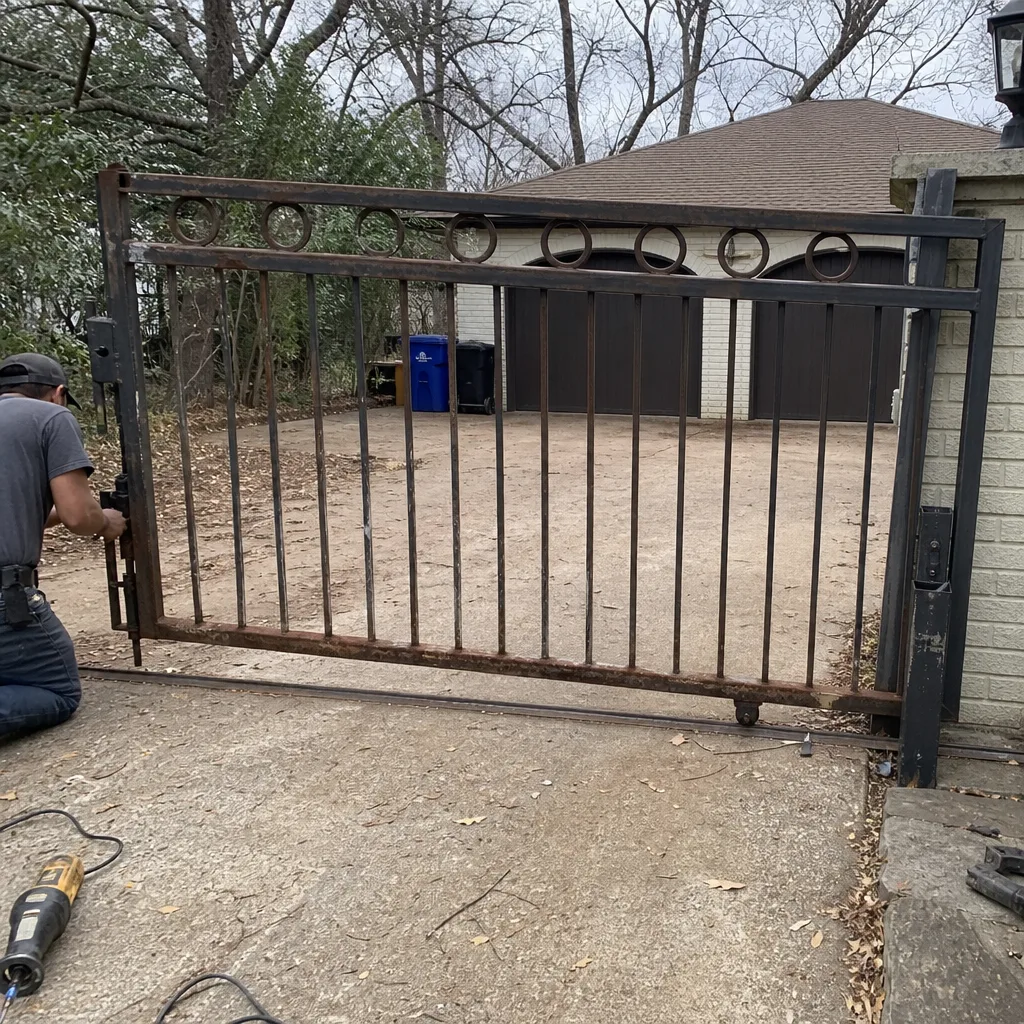 Before
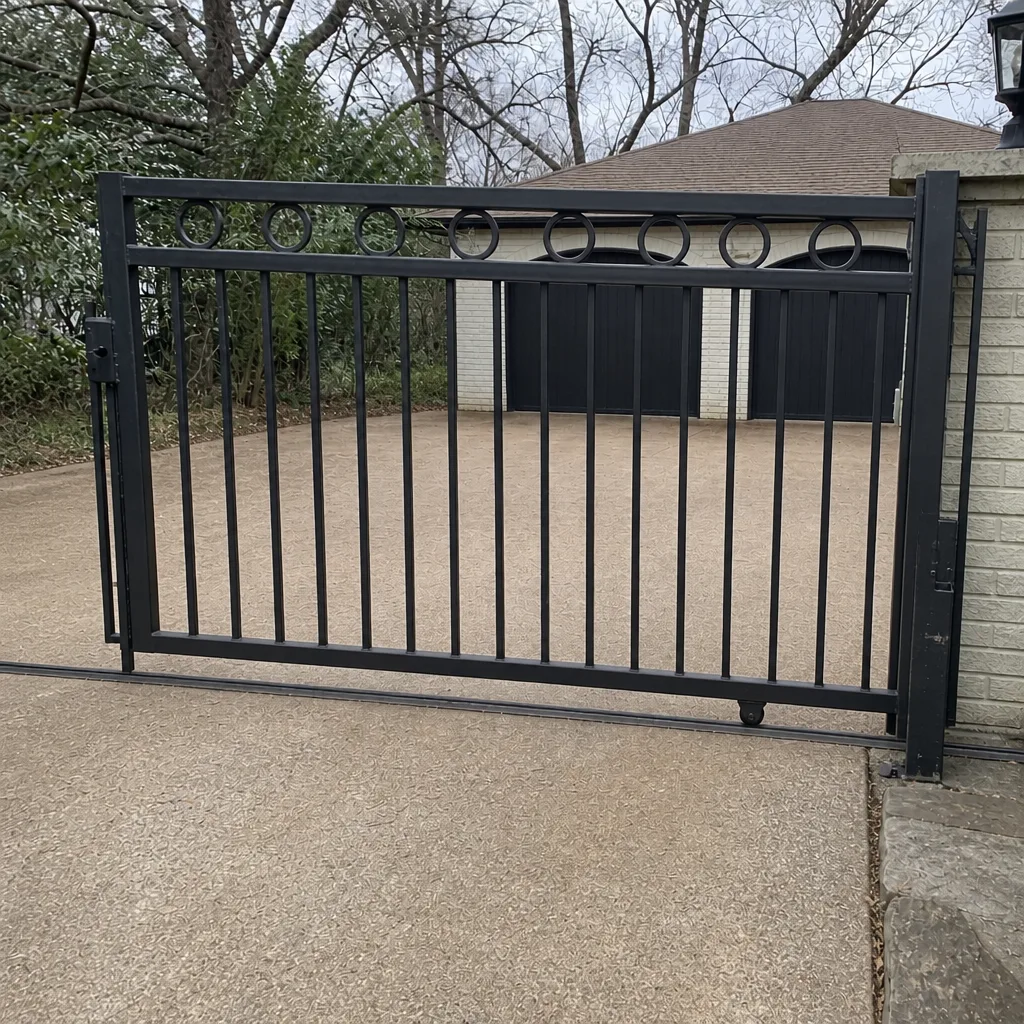 After
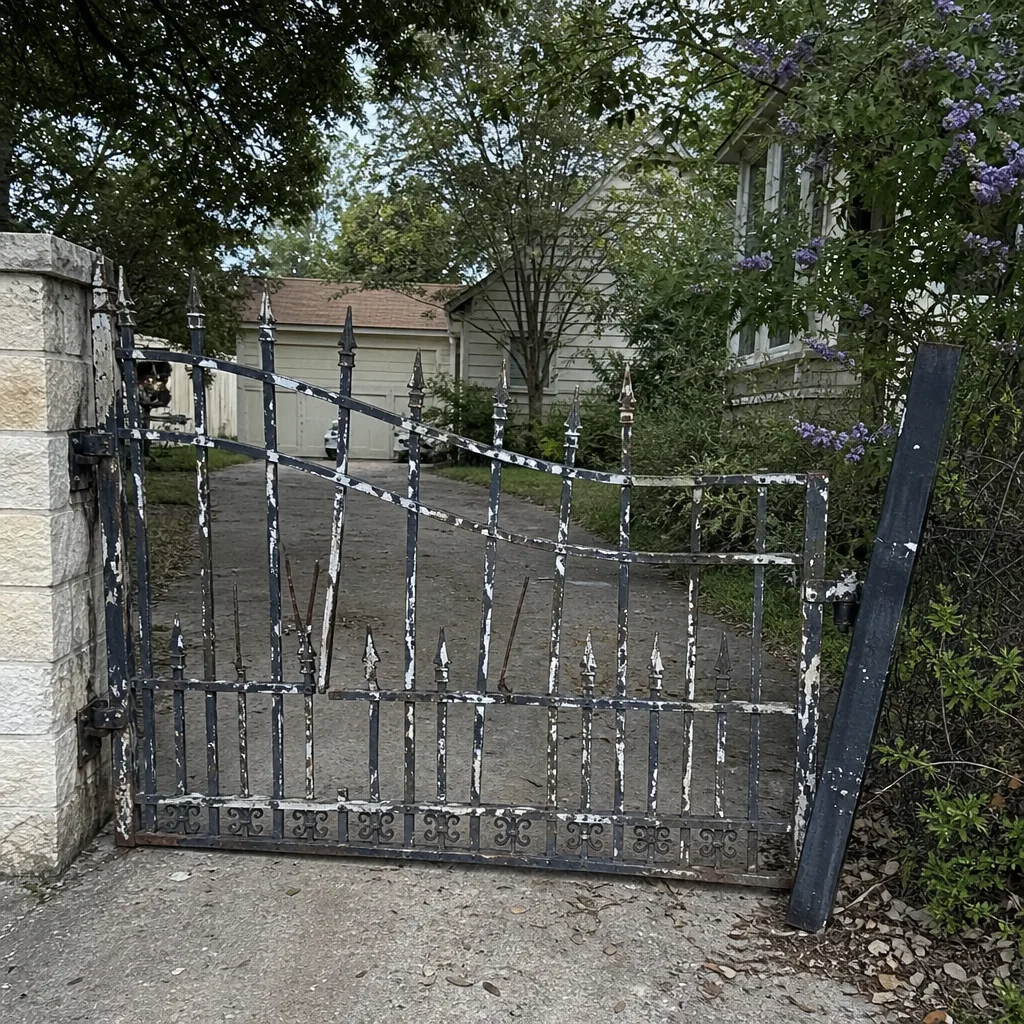 Before
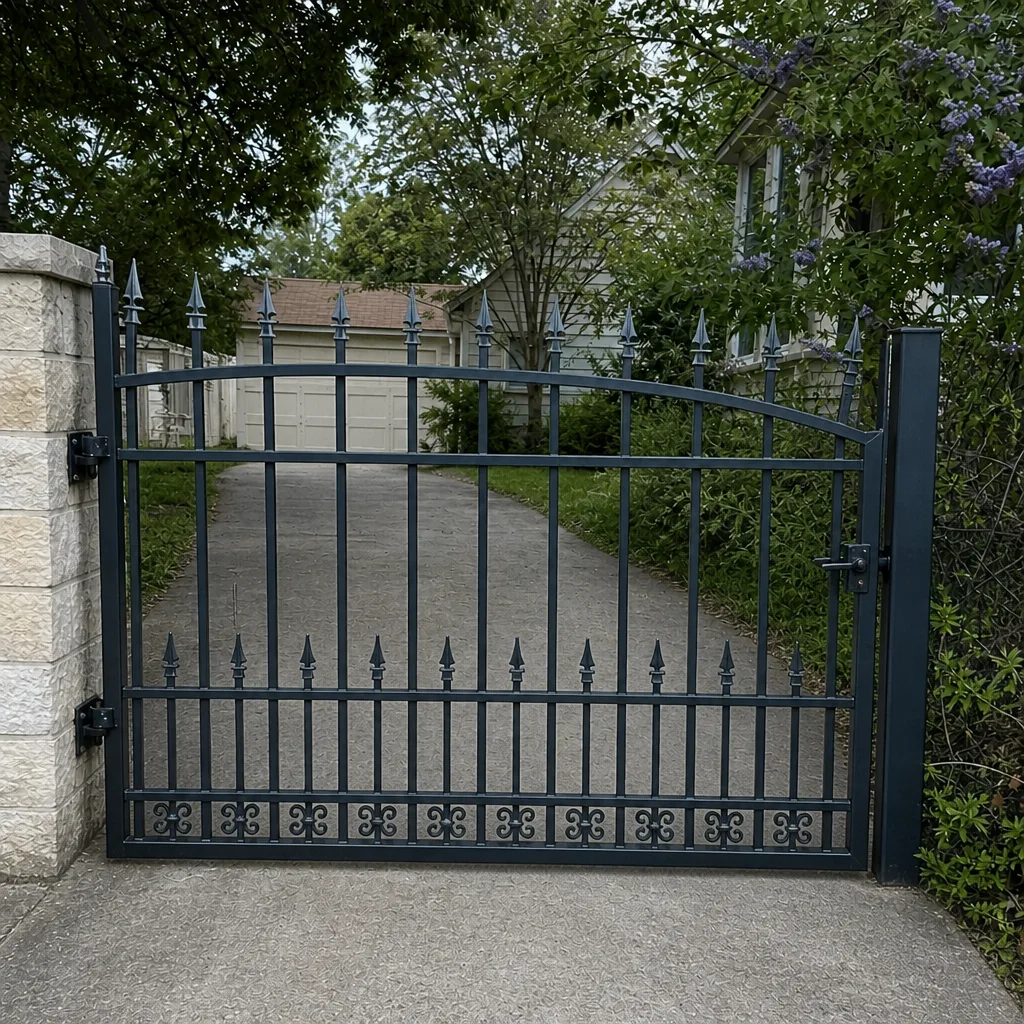 After
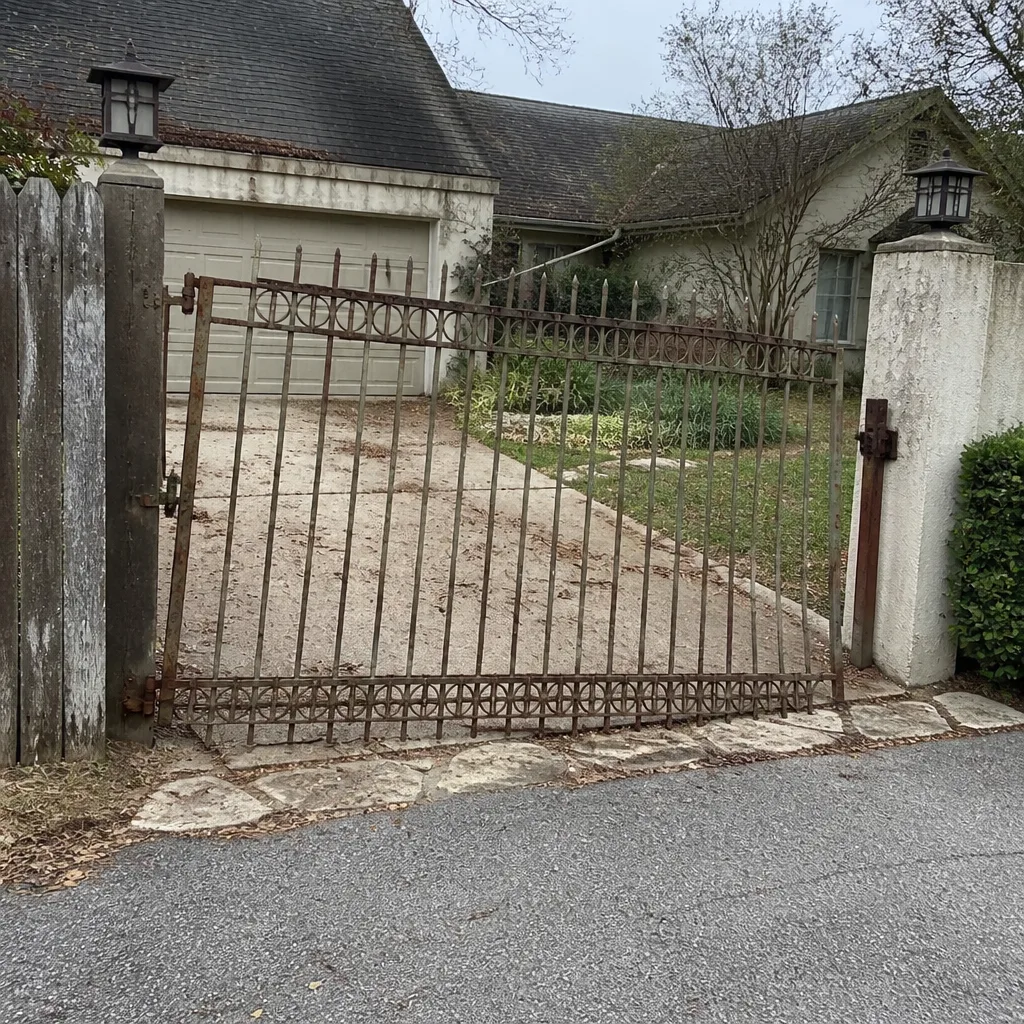 Before
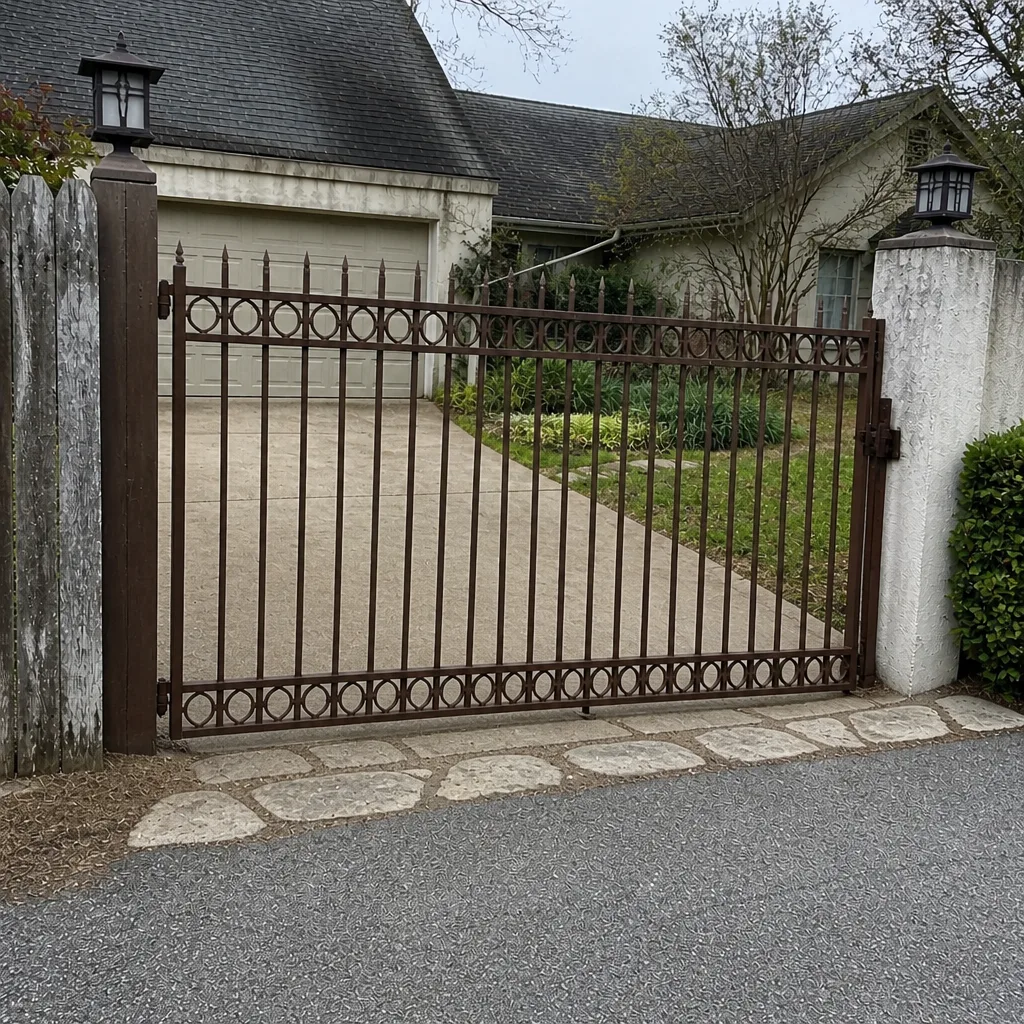 After
When to Call a Professional
Call a professional when the repair touches force calibration, live electrical wiring, the operator’s safety sensors, or the gate’s structural footing. Call when a gate you’ve repaired still misbehaves, when the symptom changes with temperature, or when you’re comparing quotes and want a second opinion on a diagnosis. Call when a slide gate starts jumping the track, when a swing gate sags, or when the operator housing smells hot. Call when the gate is at a shared entrance, an HOA entrance, or a commercial property, where the liability standard is higher. And call when the repair is one a homeowner would attempt, but a failure would leave you exposed.
Gate Repair Georgetown offers free estimates in Georgetown. The work is quoted and agreed before any work starts, so you know exactly what you’re paying for. Call (833) 408-4022. We answer 24/7. Fast dispatch from 7am to 7pm, Sunday through Friday. Our technicians have up to 13 years of experience, and every diagnosis is made against a specific operator, not a guess. Visit our Georgetown page for more on how we work in the area.
Frequently Asked Questions
Some repairs are safe to handle yourself: batteries, remotes, loop detector fuses, and photo-eye cleaning are all realistic DIY tasks. The question isn’t skill level but repair type, and any job that touches force calibration, live wiring, or structural footing should go to a professional. For a simple battery, DIY saves money; for a force calibration, DIY risks injury and a liability claim. Call (833) 408-4022 if you want a second opinion on which category your repair falls into.
You carry the liability for the repair, and your homeowner’s insurance will typically review whether the work was done competently by someone qualified. Unprofessional work that caused the injury often falls outside coverage. That’s why a force setting or a bypassed sensor is a bad DIY bet: the mistake shows up as a personal injury claim, not a repair bill. Call (833) 408-4022 for an exact quote on a professional repair; estimates are free.
No. Force calibration is a professional job, because a miscalibrated setting changes how hard the gate pushes on a person or vehicle. It’s how residential gates injure people, and there’s no safe DIY shortcut. A trained technician sets the force, then runs controlled test cycles to verify the gate reverses on contact. Call (833) 408-4022 to schedule a calibration; estimates are free.
Permanent supply wiring for a residential operator is generally licensed electrical work in Texas, and it typically needs a permit from the City of Georgetown. Low-voltage work like a battery swap is different and is usually owner-serviceable. If your repair means opening the operator housing or running new wire, call (833) 408-4022 and ask before you start; estimates are free.
Test the manual release, walk the gate path for drag and wobble, check the power and battery backup, inspect the photo eyes and reversing edge, and note exactly when the gate fails. That sequence tells you whether your issue is mechanical, electrical, or safety-related. It also lets you check a contractor’s assessment against your own observations. Call (833) 408-4022 if you want help sorting out what you found; estimates are free.
Often yes. Fast dispatch runs from 7am to 7pm, Sunday through Friday, and same-day service is common for a stuck gate, a dead operator, or a safety device that won’t behave. If your call comes outside dispatch hours, we book you into the next opening. Call (833) 408-4022; we answer 24/7. A free estimate tells you exactly what the repair involves.
The Bottom Line
The DIY-vs-professional question for gate repair in Georgetown comes down to which repair you’re facing, not how capable you are. Batteries, remotes, fuses, and photo-eye cleaning are legitimate DIY tasks, and we’ll tell you so. Force calibration, live electrical work, safety sensor replacement, and post resets are not, because a mistake there causes injury or an uncovered liability claim. The diagnosis is something you can do yourself, and doing it makes you a better buyer of the repair you hire out. Call (833) 408-4022 for a free estimate in Georgetown, and know the price before work starts. We answer 24/7. Fast dispatch from 7am to 7pm, Sunday through Friday.
For more on how a professional handles the harder jobs on your gate, see our pages on electric gate repair and gate repair.
Written by the team at Gate Repair Georgetown.