
Last updated November 15, 2026
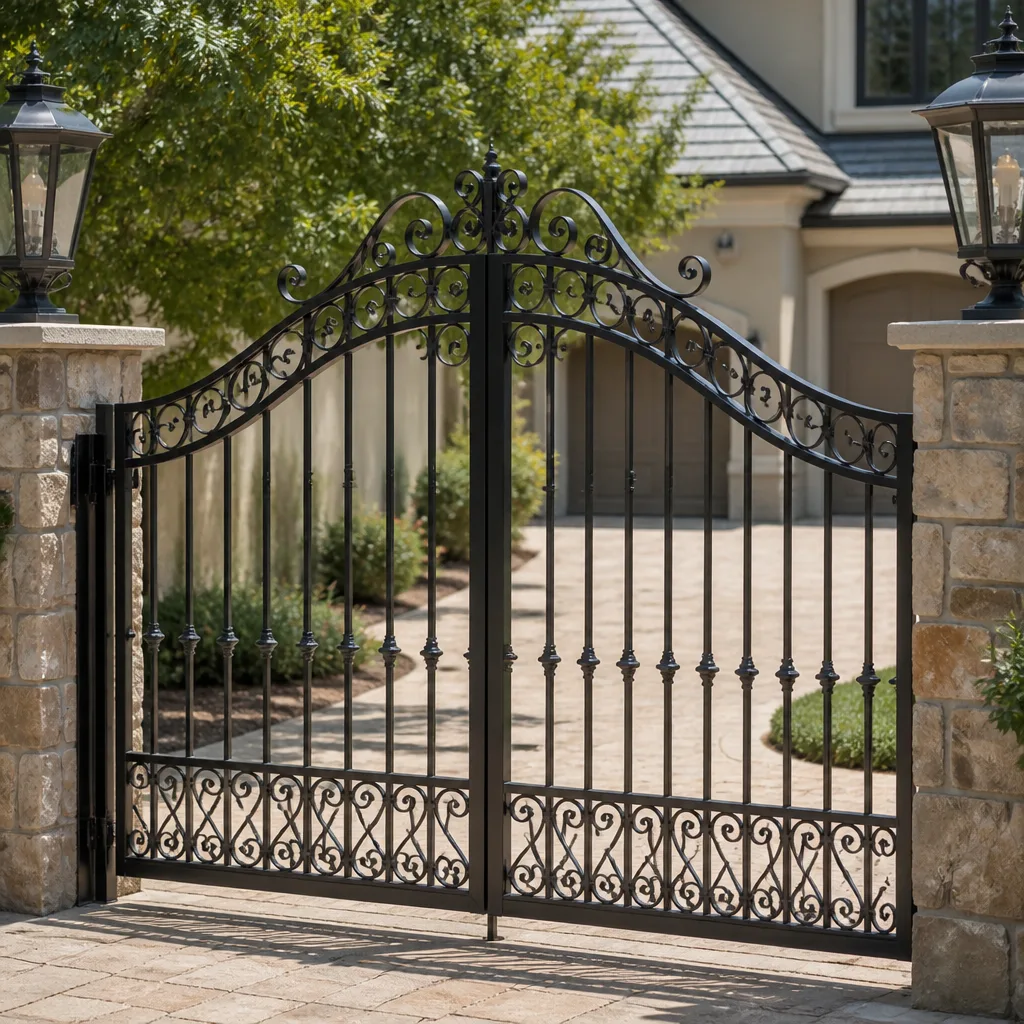 Wrought iron
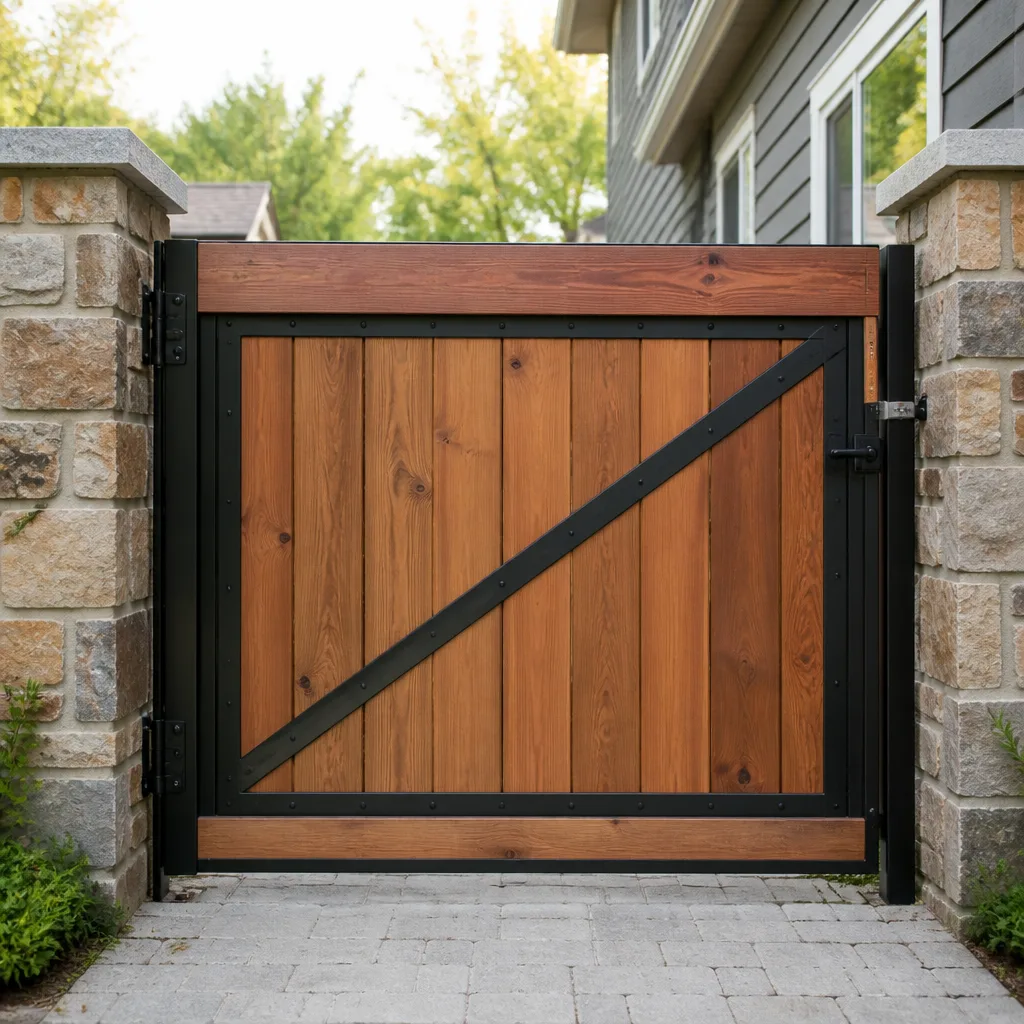 Wood & steel frame
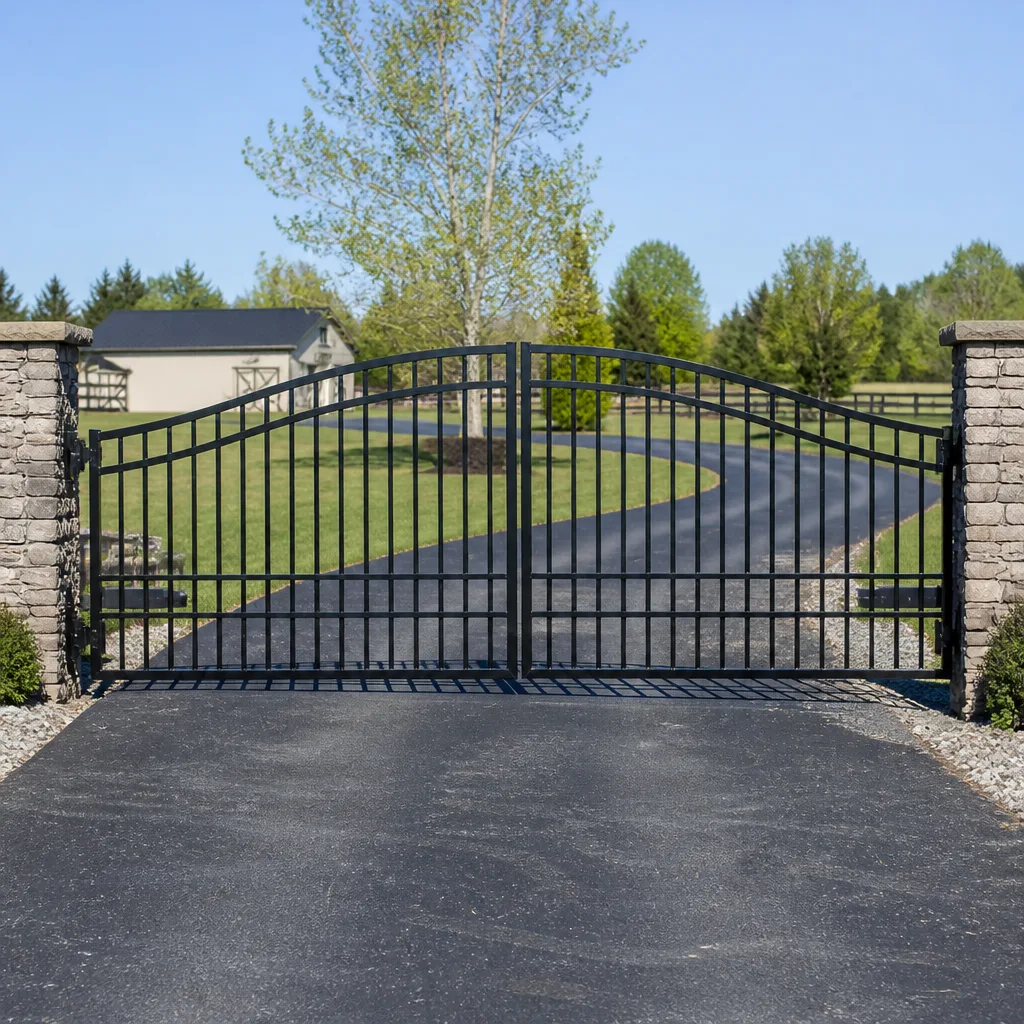 Farm & ranch
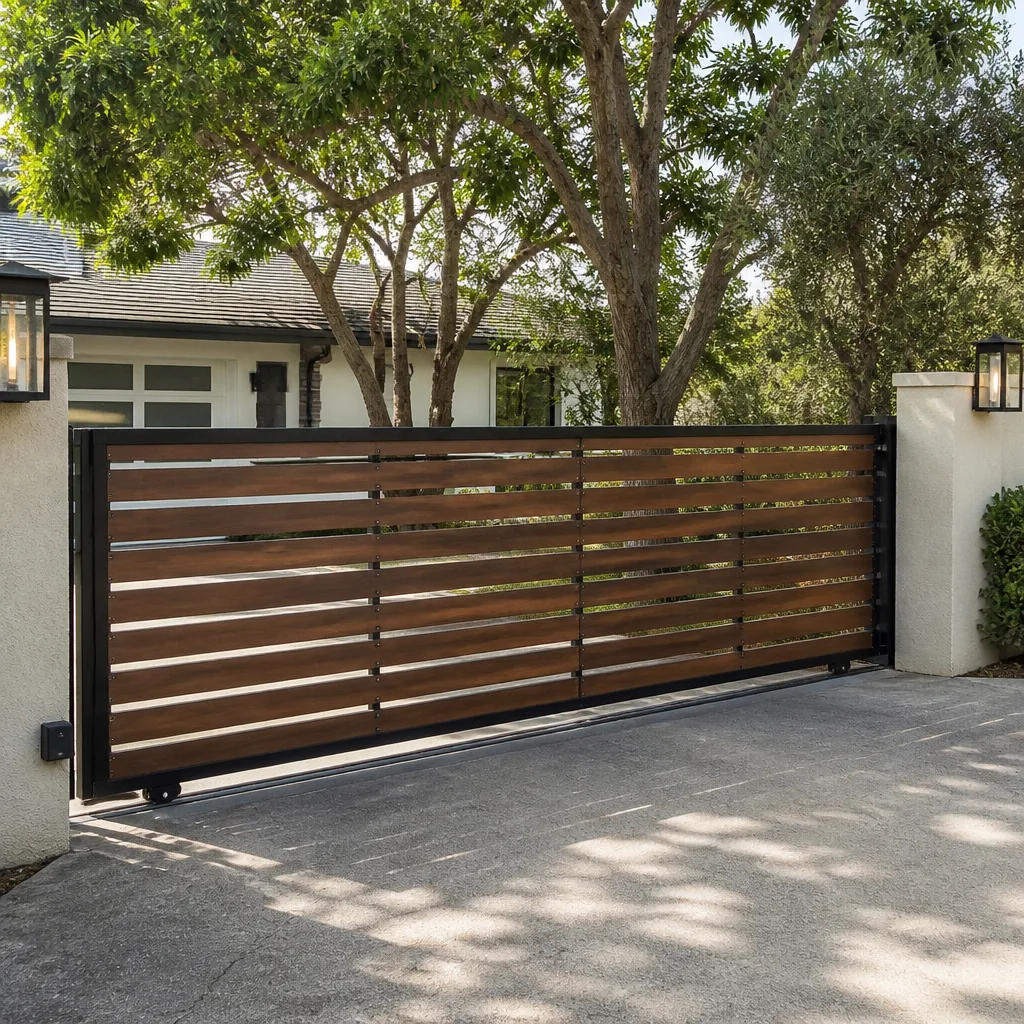 Sliding driveway gates
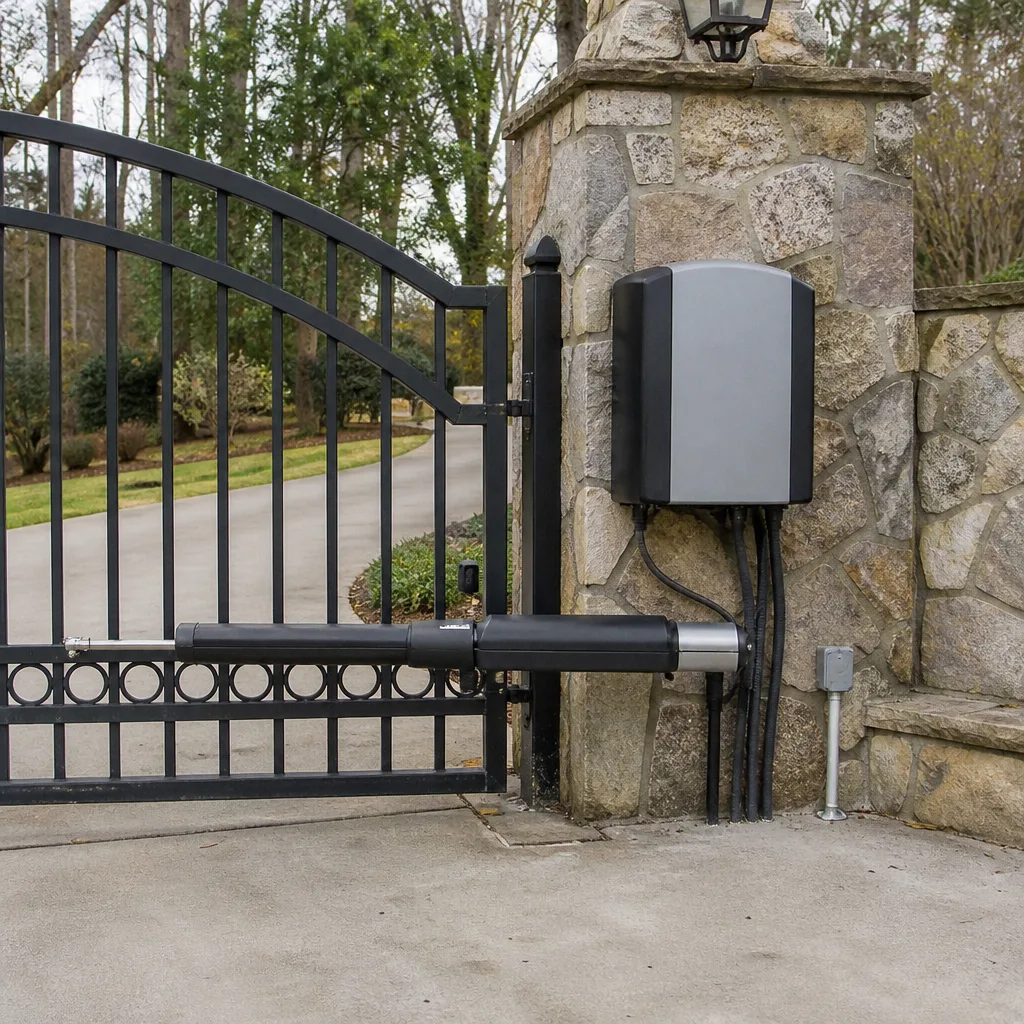 LiftMaster operators
Free on-site gate assessment - hinges, posts, and your LiftMaster or Nice gate operator checked before anything is quoted
The assessment is free and the quote is the invoice.
Get your free estimateThe Complete Guide to Gate Repair in Georgetown
Most gate failures in Georgetown don’t start at the gate. They start underground. The expansive clay and limestone caliche that runs through this part of central Texas moves with the seasons, and that movement slowly twists posts, racks frames, and throws operators out of alignment long before any motor or hinge actually breaks. Homeowners often replace a perfectly good motor when the real problem is a post that’s leaned two inches off plumb. This guide walks through the failure patterns that are actually common here, how cedar, steel, and aluminum gates age differently, how the HOA communities around Georgetown handle gate repairs, and how to tell whether your problem is the gate, the motor, or the footing beneath it.
Quick Answer
Gate repair in Georgetown usually means fixing one of three things: a post or footing that has moved in the clay and caliche soil, a hardware or alignment issue on a cedar, steel, or aluminum gate, or an operator fault on an automated system. A specialist diagnoses which of those is failing before touching the other two, because replacing a motor or hinge on a frame that’s out of alignment just moves the failure downstream. The right fix depends on the gate type, the soil conditions at your footing, and whether your HOA or property type sets limits on repair scope.
Styles & brands we work with
- Wrought iron
- Wood & steel frame
- Farm & ranch
- Sliding driveway gates
- LiftMaster operators
Table of Contents
- Why Georgetown’s Soil Causes Gate Failures
- The Five Gate Types Common in Georgetown HOA Communities
- How Cedar Gates Age Differently Than Steel and Aluminum
- How to Tell a Gate Problem from a Motor or Foundation Problem
- Georgetown Neighborhoods, Utility Corridors, and HOA Covenants
- What a Gate Repair Visit Actually Involves
- Electric Gate Repair: What Fails First on Automated Systems
- What Gate Repair Costs in Georgetown
Why Georgetown’s Soil Causes Gate Failures
Georgetown sits on a mix of expansive clay and limestone caliche, and both affect how a gate post holds over time. Expansive clay swells when it holds moisture and shrinks as it dries, and that cycle repeats across the seasons here. A post set in clay can move measurably from one season to the next, and if the footing isn’t deep enough or the concrete isn’t sized right, the post leans. Caliche is the opposite problem: it’s dense and rocky, difficult to dig through cleanly, and when a post is set into a shallow hole cut into caliche, there’s no surrounding soil to grip it. It sits loose in a rock pocket and shifts with any weight on the gate.
That’s why a gate that worked fine for months suddenly starts dragging. The gate leaf hasn’t grown. The post has moved.
What post movement does to the rest of the system
- Racking: the frame goes out of square, so the gate leaf sags and drags at one corner.
- Hinge stress: hinges carry loads they weren’t designed for, and bolts loosen or tear out of wood.
- Operator misalignment: an automatic operator pushes a gate that’s fighting the frame, which burns out motors and wears gears early.
- Latch drift: the latch and strike plate stop lining up, and the gate won’t stay closed.
If your gate has started dragging, catching, or refusing to latch, the footing is the first thing to check, not the motor. We’ve seen this pattern repeatedly in Georgetown because the soil here amplifies it. Proper footing depth and the right concrete work matter more than most homeowners realize, and a gate installation that skipped that step will always come back to it later.
The Five Gate Types Common in Georgetown HOA Communities
Most gated subdivisions and HOA communities around Georgetown use one of five gate types, and each one has a distinct set of repairs that show up most often. Knowing which type you own tells you what to watch for.
1. Single swing driveway gates
The most common residential gate in Georgetown. It swings on two or three hinges off one post and fails most often at the hinge side as the post leans or the hinges wear. Repair typically involves re-hanging the gate, replacing hinges, and resetting or reinforcing the post footing.
2. Double swing driveway gates
Two leaves meet at the center and latch together. These fail at the center latch more than anywhere else, because each leaf moves independently when the posts shift. A double gate also amplifies operator stress, since each side needs its own operator or a linkage, and one drifting leaf pulls both out of sync.
3. Sliding gates
Sliding gates ride on a track and a set of rollers. They fail when the track settles, when rollers wear flat, or when the gate comes off the track entirely. Track and roller repairs are the most common service for a sliding gate in Georgetown, and post movement can twist the track out of line.
4. Pedestrian and walkway gates
Smaller swing gates next to a driveway or between a house and a side yard. They fail at the latch, the hinges, and the wood itself. Because they’re small and lightweight, they’re often ignored until the post movement becomes obvious.
5. Commercial and community access gates
The larger automated gates at HOA entrances, shared driveways, and small commercial properties. These are built around heavier operators like DoorKing systems, and they fail most often at the operator, the safety edges, or the access control hardware rather than the gate leaf itself.
A gate specialist should be able to look at your gate, tell you which type it is, and name the two or three failure points most likely to be at fault without opening a manual.
How Cedar Gates Age Differently Than Steel and Aluminum
Cedar is everywhere in central Texas gates because it holds up to sun and heat well and takes stain nicely. But cedar has a different repair timeline than metal, and treating it like steel or aluminum will lead you to replace parts you don’t need or wait too long on the ones you do.
Cedar: the five-year inspection cycle
Cedar is a softwood. It swells and shrinks with moisture, which means gate joints loosen over time and the gate gradually loses rigidity. In Georgetown’s sun, cedar also fades and dries faster than it does in wetter climates, and it’s more prone to splitting at the hinges and at any point where a fastener penetrates the grain. A cedar gate that goes five years without a proper inspection and repair usually needs more than a hinge replacement when it finally comes in: it needs joint tightening, fastener replacement, and often a re-stain to keep the wood from drying out further.
Steel: rust and weld fatigue
Steel gates hold alignment better than cedar because the frame doesn’t shrink or swell. But steel fails at welds, at pivot points, and at any entry point for moisture. A steel gate in Georgetown that starts squealing or sticking usually has a worn pivot or a weld that’s started to give. Steel is the right long-term choice for a driveway gate that has to stay square.
Aluminum: light, stable, and prone to fastener wear
Aluminum doesn’t rust and doesn’t expand much with moisture, so it holds alignment well. The tradeoff is that it’s a softer metal, and fasteners, hinges, and pivot hardware wear faster on an aluminum gate than on steel. Aluminum gates die by loosened hardware, not by the gate itself.
What this means for repair planning
- Cedar: inspect and re-stain at least once every few years, and tighten joints before they loosen.
- Steel: watch welds and pivots, and treat any rust spot before it grows.
- Aluminum: check hardware and fasteners regularly; the leaf will last longer than the parts holding it.
A proper gate repair plan starts with knowing which material you’re dealing with, because the repair sequence for a cedar gate and a steel gate are not the same.
How to Tell a Gate Problem from a Motor or Foundation Problem
Before you call anyone, figure out which of three things is actually failing. That single step saves a lot of wasted money on the wrong repair.
Step 1: Disconnect the operator and move the gate by hand
- Put the operator in manual mode, or release it from the gate per the manufacturer’s instructions.
- Open and close the gate by hand through its full arc, watching for dragging, binding, or a spot where it gets harder to move.
- If the gate moves freely by hand, the problem is almost certainly the operator. If it binds, the problem is in the gate, the hardware, or the post.
Step 2: Check the post and the footing
Look for visible lean on the post, cracks in the concrete around the base, and a gap between the post and the concrete. A post that moves when you push it has a footing problem, and no amount of hinge adjustment will fix it. This is the single most common gate failure in Georgetown because of the clay and caliche soil, so check it before anything else on a gate that’s started dragging.
Step 3: Check the gate leaf itself
Run a straight edge along the top rail. If the gate is racked (out of square), the leaf has moved and the hinges are working on a frame that’s fighting them. Racking points back to the post or footing, not the hinge.
Step 4: Check the operator, last
Only once you’ve ruled out the gate and the footing, look at the motor. Signs that the motor is the actual problem include no response at all when you press the remote, a motor that hums but doesn’t move a freely-swinging gate, error codes on the control board, or an operator that stops mid-cycle and reverses when nothing is in the way.
Getting the diagnosis right the first time is what separates a specialist from a generalist. An electric gate repair visit should confirm which of these three is failing before any part gets replaced.
Georgetown Neighborhoods, Utility Corridors, and HOA Covenants
Where you live in Georgetown directly affects what a gate repair involves. Two gates of the same type can need very different work depending on the lot, the surrounding utilities, and the HOA rules that apply to it.
Older neighborhoods near the square
Lots in and around downtown Georgetown often have mature trees and irrigation lines running through the front yard, which can complicate footing work on a residential gate. Excavation near the footing has to avoid buried lines and any utility easement. It’s common to find an old gate footing that’s been patched more than once, and a proper repair sometimes means rebuilding the footing rather than adjusting what’s there.
HOA-dense subdivisions
The larger planned subdivisions around Georgetown enforce architectural and design rules through their HOA. HOA covenants typically dictate gate color, material, height, and sometimes the style of operator or access control hardware visible from the street. Before any gate repair or replacement in one of these communities, it’s worth checking the covenants, because replacing a gate leaf with a different material than the HOA approved can trigger a correction. Access control on shared gates also has to remain consistent with what the HOA uses, which is where a common commercial operator like DoorKing usually shows up.
Properties on larger lots and utility corridors
Some Georgetown lots back up to or adjoin utility corridors. Gates on these properties need to be placed and repaired with the easement in mind, since a post or operator installed inside a utility easement can create problems later. Before siting a new gate or rebuilding a footing near an easement, it’s worth asking the city or the utility what’s allowed there.
Commercial and HOA entrance gates
Community entrance gates are usually operated by heavier equipment and require account-level access control. These systems often use commercial-grade operators rather than residential ones, and repairs are scoped to the shared access system, not an individual homeowner’s hardware.
Because Georgetown covers all of these property types, we’ve learned to ask where a gate is before recommending how to repair it.
What a Gate Repair Visit Actually Involves
A proper gate repair visit is diagnostic first and repair second. Here’s what a specialist should do, in order.
- Walk the gate through its full motion. Listen for dragging and check where it binds.
- Check the post and footing. Confirm plumb, check the concrete, look for movement under hand pressure.
- Inspect the hardware. Hinges, latch, pivot points, rollers, and any safety edges or access hardware.
- Test the operator. Check the motor, control board, remote or keypad, and safety reversing behavior.
- Confirm the diagnosis and the parts. Because we work exclusively on gates, the parts are ones we handle on these systems every day. Whether your operator is a Mighty Mule or a commercial-grade system, the diagnosis process is the same, even though the parts and the failure modes are different.
- Explain the fix in plain terms and get approval before any work starts.
Brand matters more than homeowners expect
Different operators have different failure points and different parts. A Ghost Controls residential operator has a different control board and diagnostic process than a DoorKing commercial unit. A LiftMaster driveway operator differs again from a FAAC or a BFT system. Because we’re trained across the major brands (LiftMaster, FAAC, BFT, Linear, Viking, Ghost Controls, DoorKing, Elite, and Mighty Mule), we can diagnose and repair most operators without calling in a second contractor or sending you back to the manufacturer. When an operator has a specific diagnostic code, the brand is the first thing to identify.
Electric Gate Repair: What Fails First on Automated Systems
On an automated gate, the operator tends to fail in a predictable order, and identifying where yours is in that sequence tells you what to expect.
- Safety edges and photo eyes: the most common failure on any automatic gate. When the safety sensors fail, the gate usually stops mid-cycle, reverses, or refuses to close. That’s a safety concern, not just an inconvenience, and it’s the first thing we check on any electric gate repair call.
- Remote and receiver problems: a remote that no longer opens the gate while the keypad still does usually points to the remote or receiver, not the motor.
- Control board: the brain of the operator. Surges, water intrusion, and age are the usual causes. A failed board is one of the more expensive operator repairs and worth confirming before replacing one.
- Motor and gearbox: wear from pushing a misaligned gate. This is the failure that traces back to the footing and alignment problem, and the one that replacing the motor without fixing the gate will just repeat.
- Power supply and wiring: conduit damage, loose connections, and outdoor wiring issues. Electric gate repair touches power, which is genuinely dangerous to work on. Any wiring, panel, or power-side diagnosis should be handled by a trained professional staying within the scope of the gate system.
If you find a live wire, damaged conduit, or exposed connections, don’t touch it. Call for a professional. The other dangerous part on a heavy gate is the panel itself: a steel gate leaf that comes off a slide track or swings free can crush. Never stand between a gate and its post to check an operator fault.
What Gate Repair Costs in Georgetown
Gate repair pricing in Georgetown depends on the gate type, the material, and whether the problem is the gate, the operator, or the footing. Pricing is per job, quoted before any work starts, and the written estimate is what sets the final price. We don’t charge for the estimate.
As a general guide, repair costs fall into three tiers:
- Hardware and alignment repairs: hinge replacement, latch adjustment, tightening a racked gate, re-hanging a leaf. These are the least expensive repairs and the most common.
- Footing and post work: resetting or rebuilding a post footing. More involved than hardware work because it requires digging, concrete, and adjusting the gate to the new post position.
- Operator repairs: control board, motor, safety edges, receivers, and access hardware. The most expensive tier, and the one where confirming the diagnosis before replacing a part saves the most money.
Why we don’t quote a range up front
The gate type, material, footing condition, and operator brand all shift the price, and a range quoted without seeing the gate would be worse than none. A free on-site estimate is the way to get a real number. Call (833) 408-4022 for a free estimate, and we’ll confirm the diagnosis and give you a written price before any work begins.
Common Mistakes to Avoid
- Replacing the motor before checking the footing. If the gate is dragging because the post has moved, a new motor will fail the same way. Diagnose the whole system first.
- Assuming the HOA covenants don’t apply. In Georgetown’s HOA-dense subdivisions, gate color, material, and hardware are usually specified. Replacing a leaf without checking the covenants can mean correcting an approved repair.
- Ignoring post movement in clay. The expansive clay around Georgetown moves with the seasons, and a small lean in spring becomes a racked gate by summer. Catch it early.
- Treating a cedar gate like steel. Cedar dries and splits in the sun, and it needs tighter inspection intervals than a metal gate. Waiting five years between inspections usually costs more than the inspections would have.
- Doing your own electrical or panel work. Power-side gate repairs involve live wiring and heavy moving parts. Stay on the diagnostics and let a trained professional handle anything past the manual mode.
- Calling a general handyman. A gate is a system with a footing, a frame, a leaf, and an operator. A generalist guesses at which is failing. A specialist confirms it.
- Skipping maintenance until something breaks. A gate that gets a periodic once-over costs less over time than one that’s only ever touched when it fails.
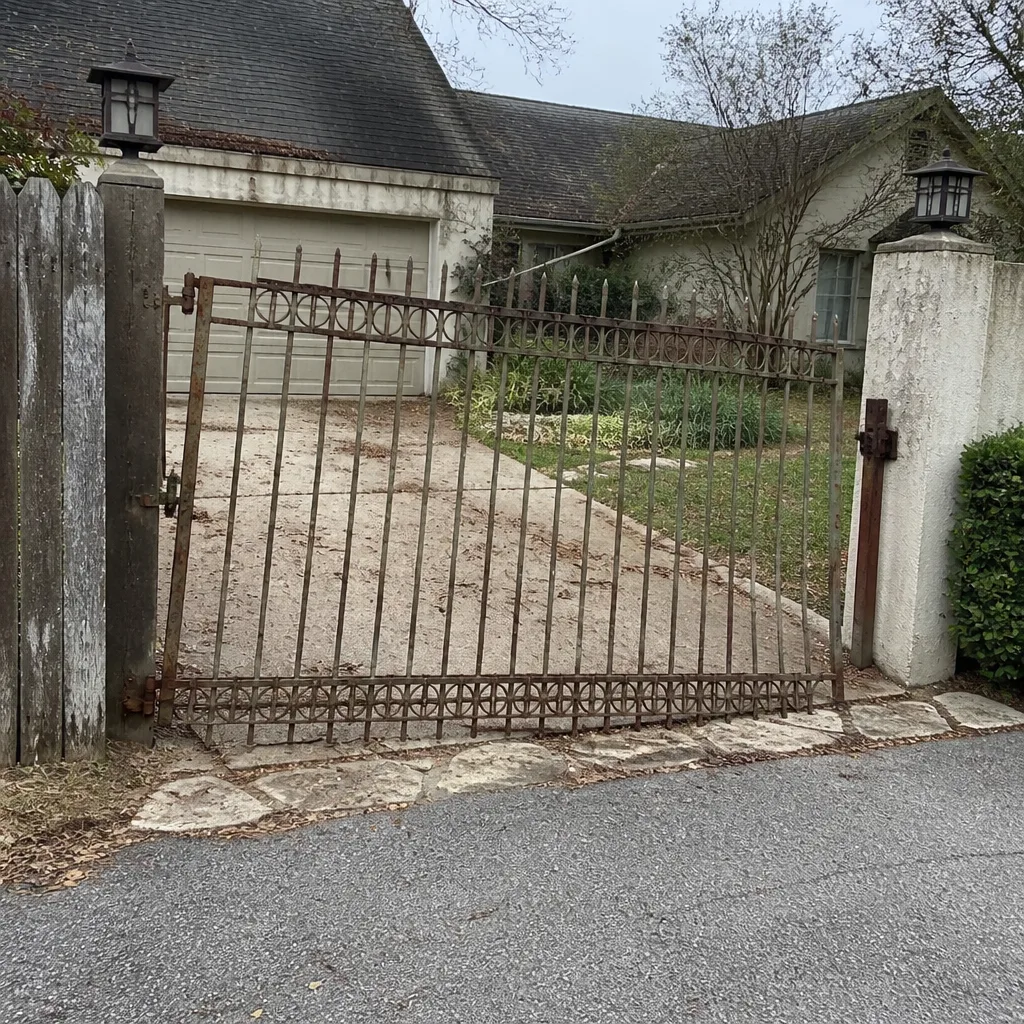
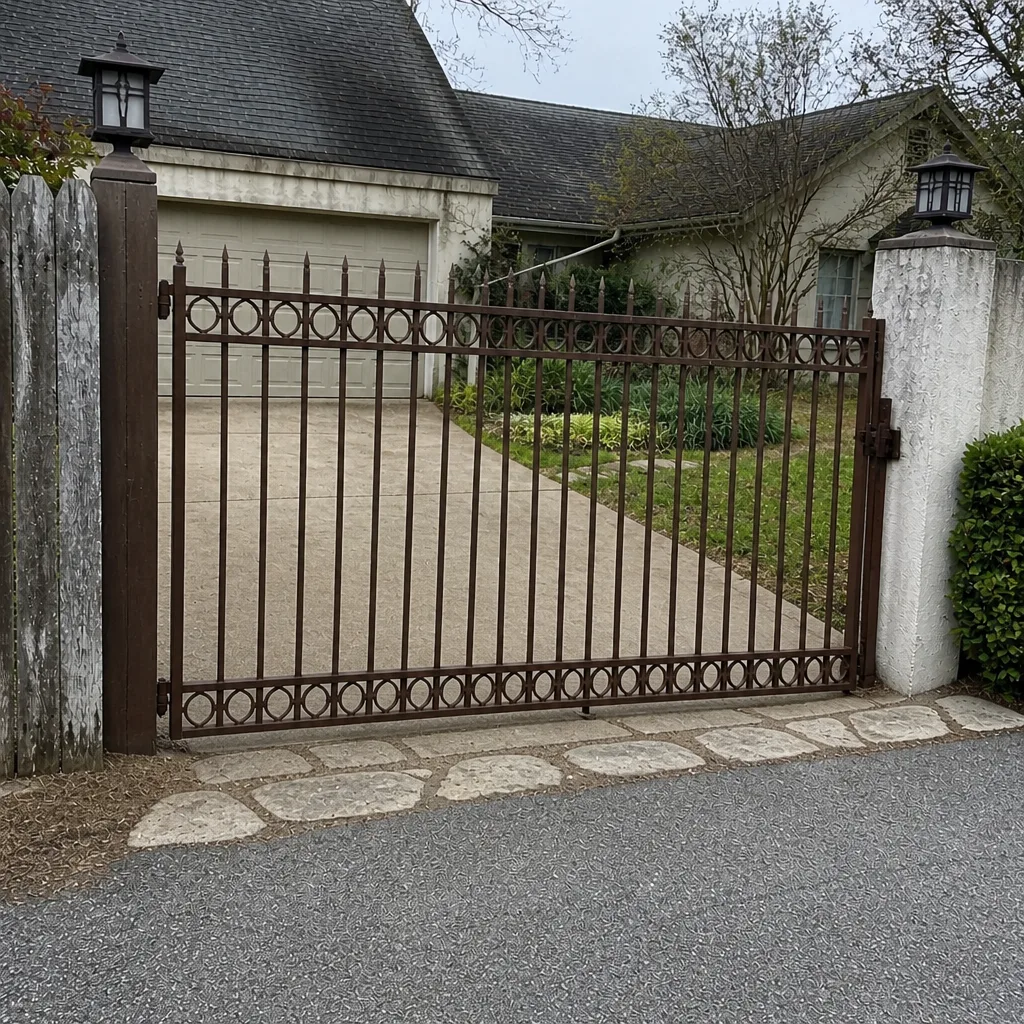
See the difference
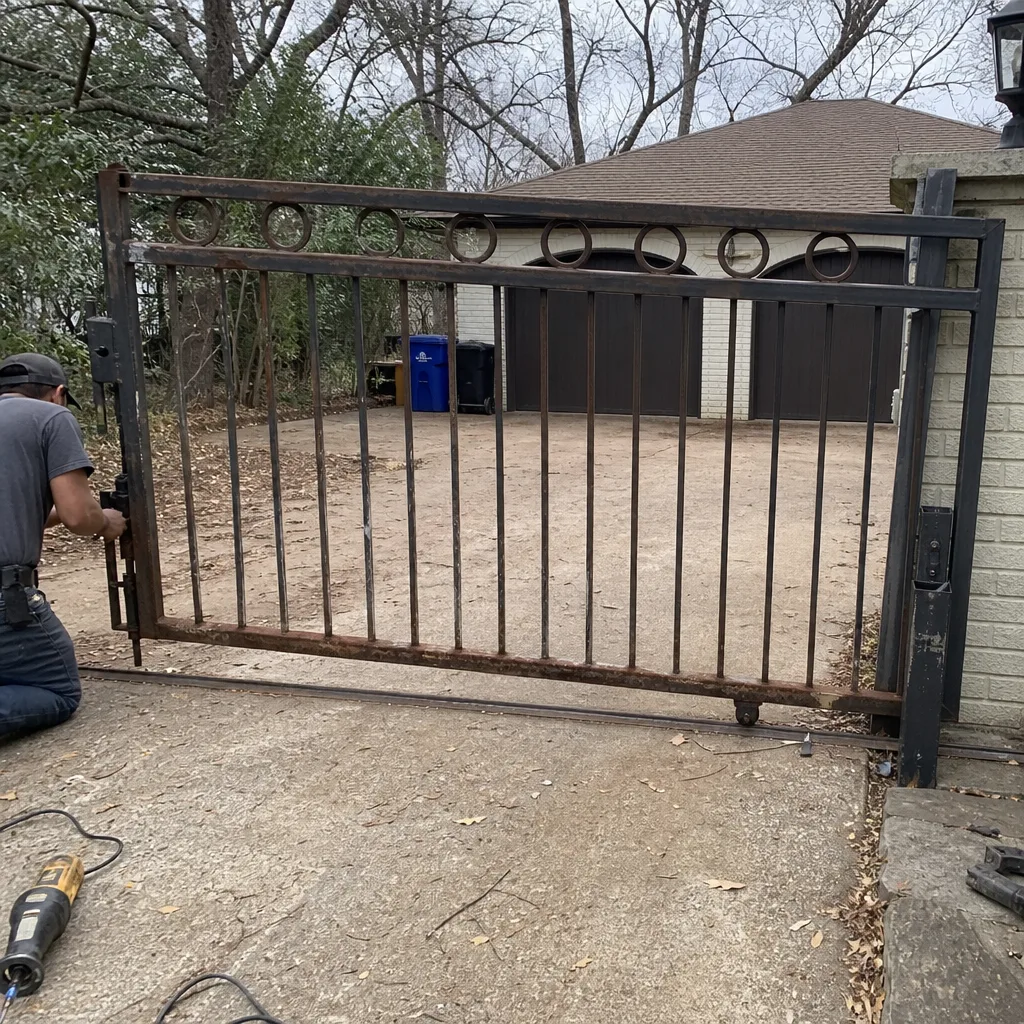 Before
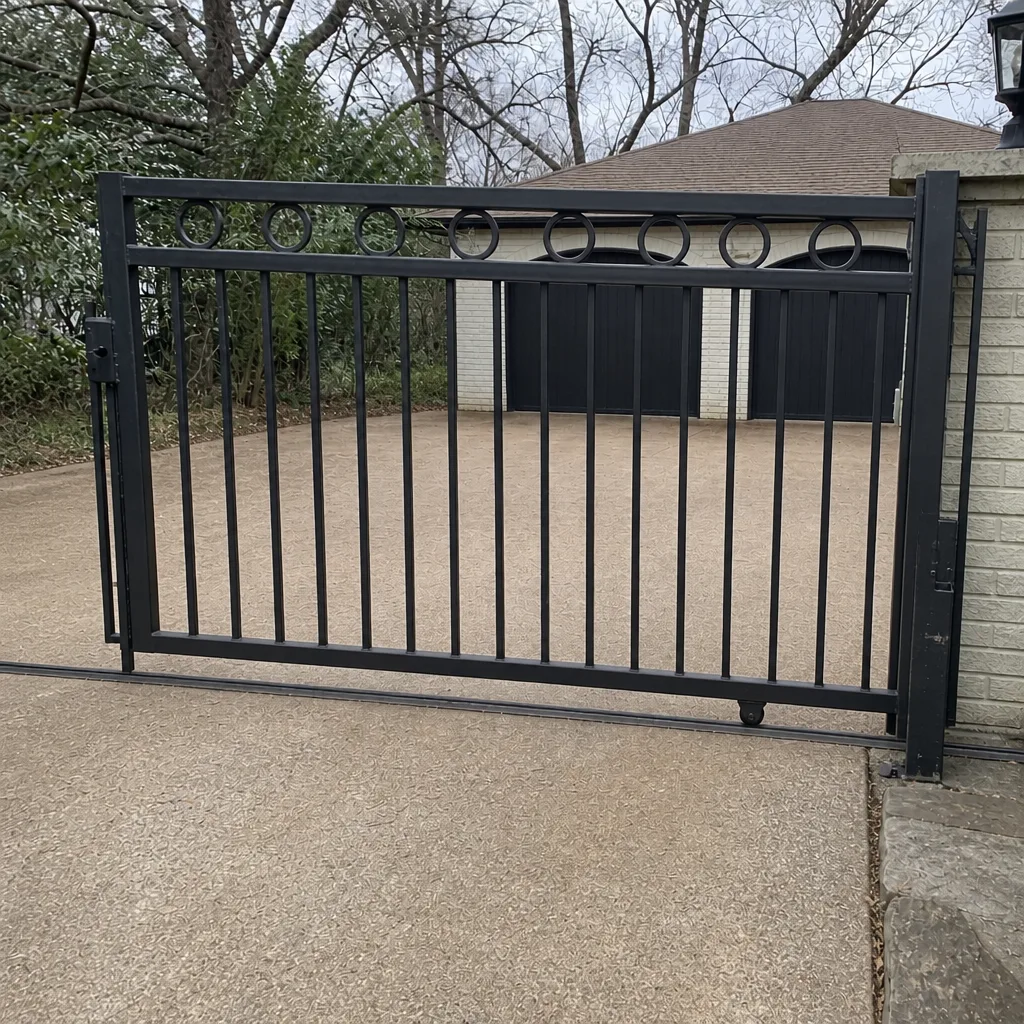 After
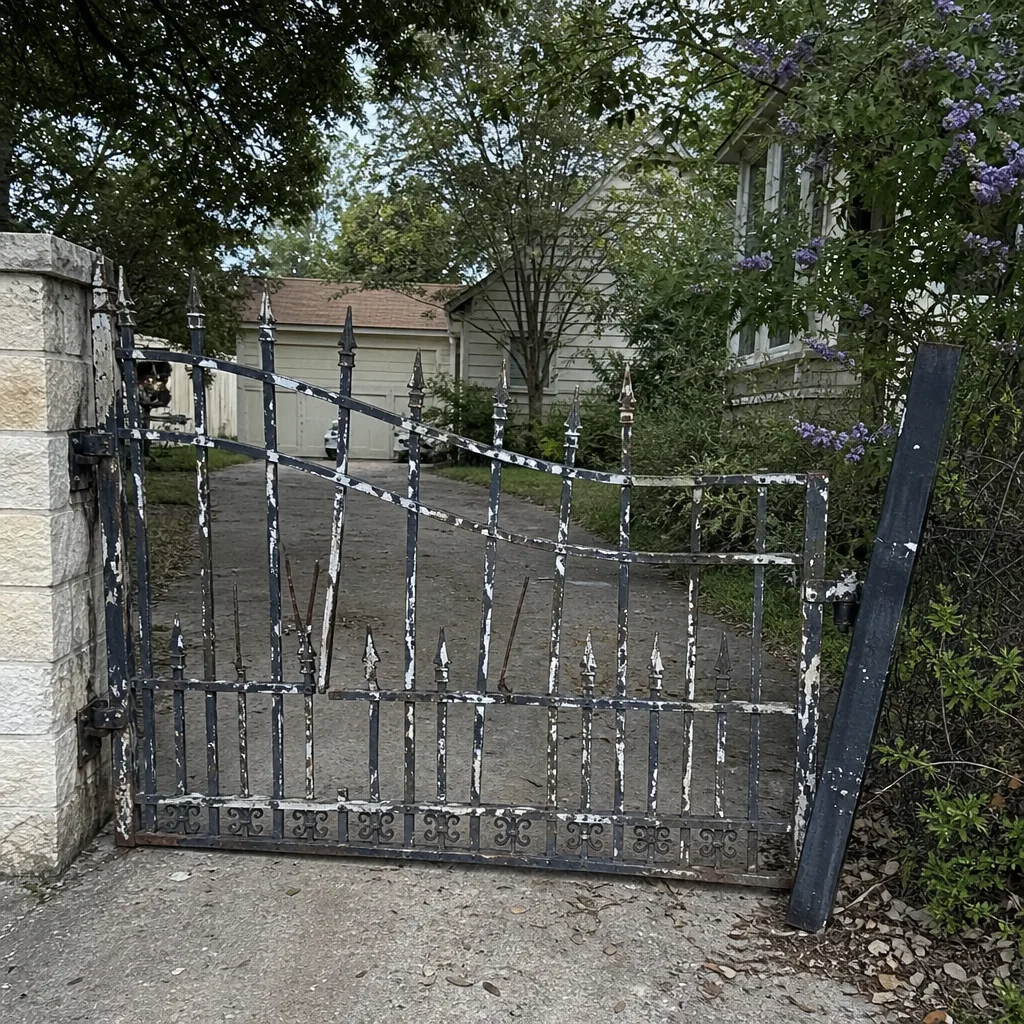 Before
 After
 Before
 After
When to Call a Professional
Call a gate specialist when the gate binds or drags anywhere in its swing, when the post leans or the concrete at the base cracks, when the operator stops mid-cycle or reverses with nothing in the way, when a remote or keypad stops working, or when the gate won’t close and latch. Call immediately if the gate is stuck open overnight, if it’s come off its track, if a safety edge or photo eye is failing, or if you see damaged wiring or exposed connections at the operator. Don’t try to force a heavy gate back onto a bend or a track: a panel that comes off can crush, and live gate wiring is dangerous to touch. If your gate survives but the motor has started struggling, get it looked at before the motor fails completely.
Gate Repair Georgetown offers free estimates in Georgetown – call (833) 408-4022. We answer 24/7, and fast dispatch runs from 7am to 7pm, Sunday through Friday. We’re closed on Saturday, so a call after Friday is booked into the next opening.
Frequently Asked Questions
Post movement in the clay and caliche soil is the most common cause of gate failures in Georgetown. The soil shifts with the seasons, the post leans, and the gate racks out of alignment, which stresses hinges, latch plates, and the operator before any component itself breaks. The fix is usually to reset or rebuild the footing and then adjust the gate.
Many electric gate repairs can be done the same day once we’ve confirmed the diagnosis, though some depend on parts availability for the specific operator brand. Call (833) 408-4022 with the operator brand if you know it, and we’ll give you an honest read on timing. For a new gate or a full operator install, we’ll measure and schedule properly, since that work is ordered and planned, not dispatched.
Yes. We repair residential operators like Ghost Controls and Mighty Mule, and commercial-grade systems including operations where DoorKing and Elite operators are in place. Residential and commercial operators have different failure points and different parts, so knowing which one you have is the first step in the diagnosis.
Release the operator into manual mode and swing the gate by hand. If it moves freely, the problem is the motor. If it binds or drags, the problem is in the gate, the hinges, or the post. This one check tells you which way to look before spending money on the wrong part.
Often yes. Many HOA communities around Georgetown specify gate color, material, and hardware, so a repair that changes any of those has to fit the covenants. Check your HOA rules before replacing a gate leaf or changing the access hardware, and if you’re not sure, ask us and we’ll tell you what to confirm before work starts.
The estimate is free, and the written estimate sets the final price. We quote after we’ve seen the gate and confirmed the diagnosis, because the gate type, material, footing condition, and operator brand all change the work. Call (833) 408-4022 for a free estimate, with no fee to come out and look.
The Bottom Line
Gate repair in Georgetown starts underground. The clay and caliche soil here is the reason so many gate failures come down to post movement, and diagnosing the footing, the gate, and the operator in the right order is what makes a repair last. Material matters, too: cedar needs tighter inspection intervals than steel or aluminum, and the operators on your gate have their own failure points depending on brand. If you suspect the post, the gate, or the motor, don’t guess. Call (833) 408-4022 for a free estimate backed by specialists who work on gates every day. We answer 24/7, and fast dispatch runs from 7am to 7pm, Sunday through Friday.
Written by the team at Gate Repair Georgetown.