
Last updated November 15, 2026
 Wrought iron
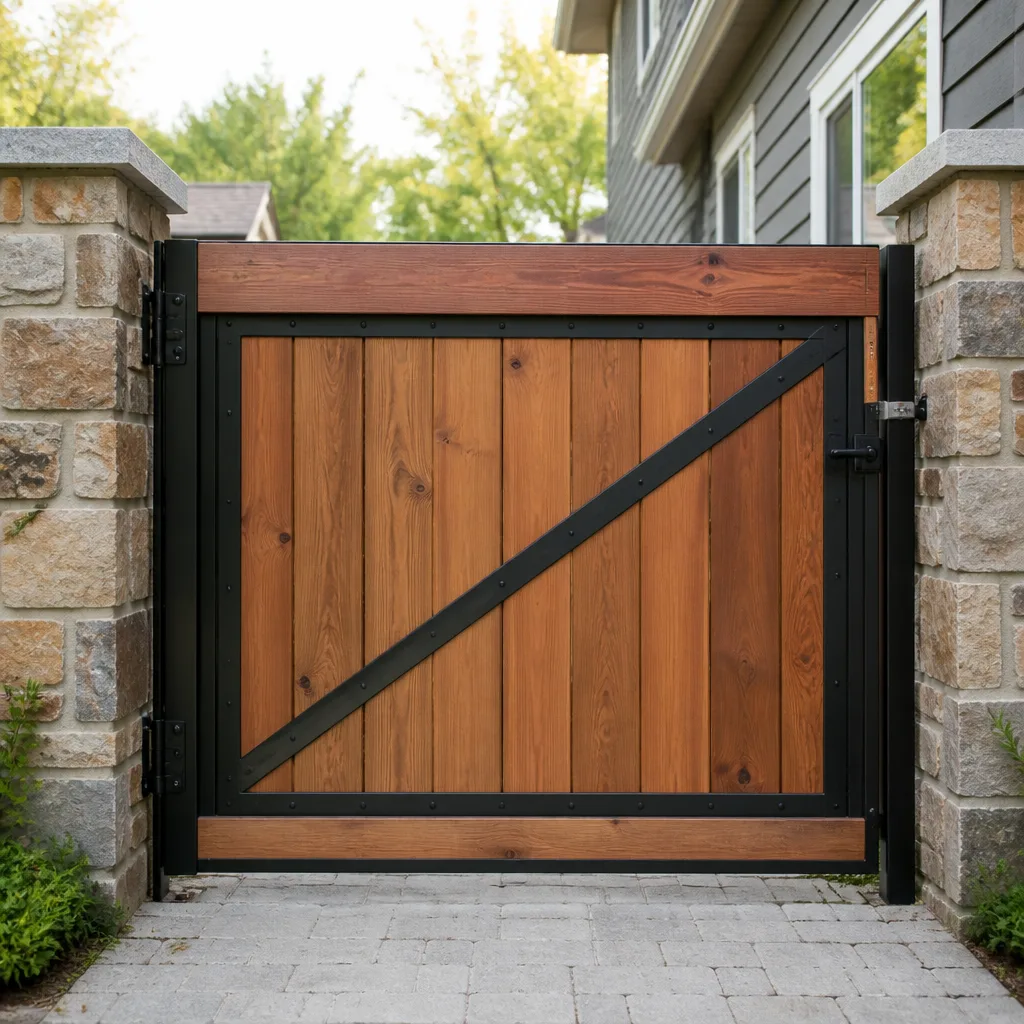 Wood & steel frame
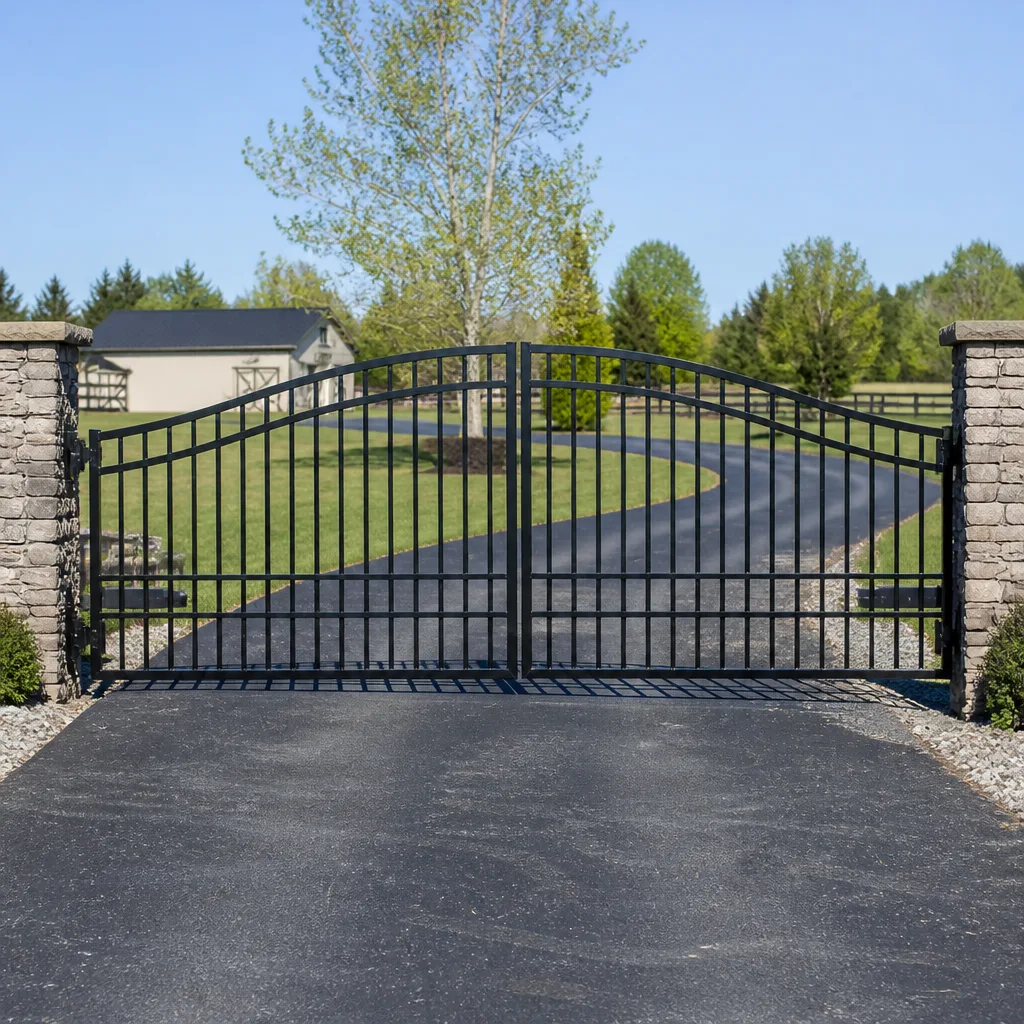 Farm & ranch
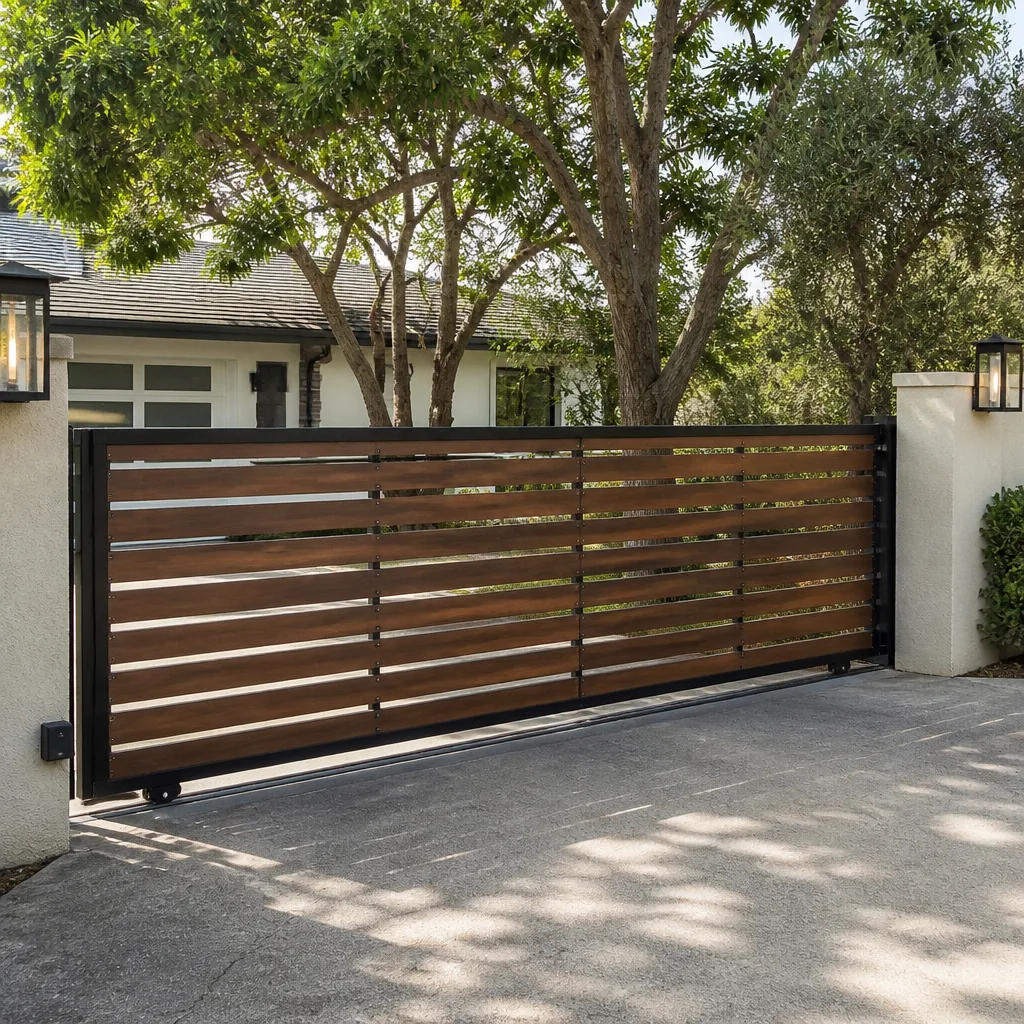 Sliding driveway gates
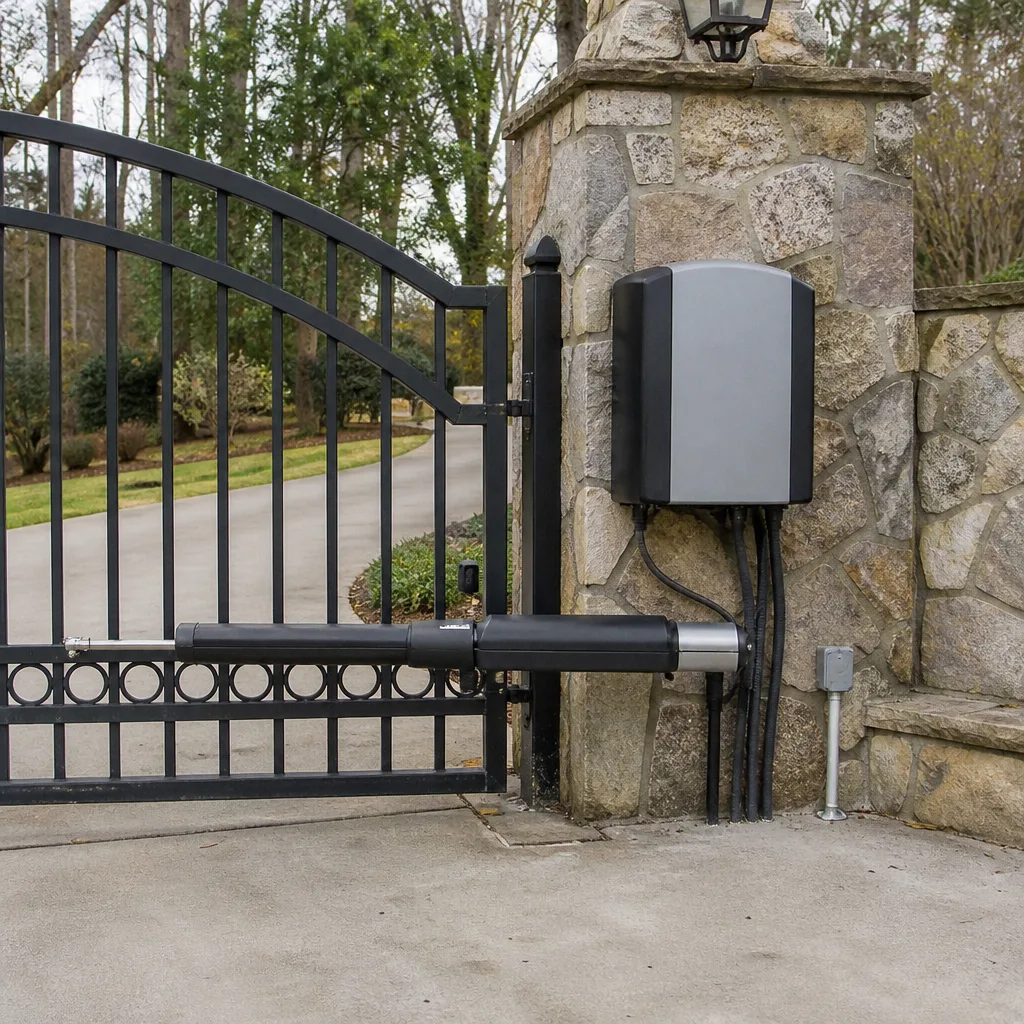 LiftMaster operators
Free on-site gate assessment - hinges, posts, and your LiftMaster or Nice gate operator checked before anything is quoted
The assessment is free and the quote is the invoice.
Get your free estimateSeasonal Gate Repair Care for Georgetown: Year-Round Homeowner’s Guide
Most gate failures we’re called out to in Georgetown aren’t sudden. They build slowly through a season nobody was watching. A control board collects fine grit through a wet spring, a battery backup quietly ages through a mild winter, and then the gate stops halfway open on the morning it matters. Georgetown’s weather doesn’t do anything subtle: spring storms dump rain fast, summer afternoons push past 100°F, and the occasional hard freeze catches everyone off guard. Each one stresses a different part of your gate. This guide walks you through what to check before each season, so the repair call you avoid is the one you never needed.
Quick Answer
Seasonal gate care in Georgetown comes down to four checkpoints: freeze-proof your operator and battery backup before winter, clean and inspect hardware after the wet spring, manage heat and solar output through summer, and use the fall window for chain tensioning, hinge replacement, and control board checks. Most gate breakdowns trace back to one skipped season of inspection. A short checklist at each seasonal change prevents the majority of them.
Styles & brands we work with
- Wrought iron
- Wood & steel frame
- Farm & ranch
- Sliding driveway gates
- LiftMaster operators
Table of Contents
- Why Seasonal Gate Care Matters in Georgetown
- Winter Prep: Freeze-Proofing Operators and Battery Backup
- Spring Prep: Hardware, Rust, and Concrete After the Wet Season
- Summer Heat: Thermal Cutoff, Solar Output, and Shade
- The Fall Maintenance Window: Chains, Hinges, and Control Boards
- Storm Prep: Hail, High Wind, and Gate Arm Geometry
- Your Georgetown Seasonal Gate Calendar
Why Seasonal Gate Care Matters in Georgetown
A gate operator is a small machine living outdoors, and it doesn’t get a season off. In Georgetown, the climate puts it through four distinct kinds of stress in a single year. Spring rain saturates the ground and finds its way into switches and hinge points. Summer heat builds inside motor housings until thermal protection shuts them down. The occasional winter freeze turns residual moisture into something that can crack seals and stiffen hydraulic fluid. Each stress is predictable, and each one has a check that catches trouble before it becomes a repair.
The pattern we see is consistent across residential and commercial properties in Georgetown. Gates that get a quick inspection at each seasonal change need fewer parts over time. Gates that don’t tend to fail in clusters, usually the week after the first freeze or the hottest stretch of August. The homeowner then faces a gate stuck open, a property exposed, and a repair that could have been a five-minute adjustment months earlier.
There’s also the matter of which operator you own. A residential Mighty Mule or Ghost Controls system and a commercial FAAC or BFT operator all respond to the same seasonal forces, but they tolerate them differently. Light-duty residential operators have less margin in heat and cold. Commercial-grade units hold up longer but carry more complex control boards and safety edges that need their own seasonal attention. Knowing your unit is the first step in knowing what to watch. If you’re not sure what’s on your property, a specialist can identify it on a visit and tell you what it needs.
What “seasonal care” actually means
Seasonal care isn’t a service plan or a subscription. It’s a short list of things to look at four times a year, priced per job when you decide you want help with any of them. Think of it as reading your gate’s condition the way you’d read a weather forecast: a few minutes of attention now tells you what’s coming.
Winter Prep: Freeze-Proofing Operators and Battery Backup
Georgetown’s freezes are rare, which is exactly the problem. A gate that has run fine through a mild winter can still be caught by a single hard freeze, and the failures that follow cluster in the days after. The good news is that most freeze damage is preventable with an October or November inspection. Here’s what to cover.
- Check hydraulic fluid and seals. If your operator is hydraulic, cold thickens the fluid and makes the unit work harder. Look for weeping at seals and have the fluid level verified before temperatures drop. A small seep in November becomes a stalled gate in January.
- Test the battery backup under load. A backup battery that reads fine on a meter can still fail under the current a cold morning demands. Have it load-tested, not just voltage-checked. If it’s aging, replace it before winter rather than after a failure.
- Clear the track and hinge points of debris. Wet leaves and grit that freeze in a track or hinge can jam a gate or force the operator against resistance it isn’t built for.
- Inspect the control board enclosure. A loose cover or a worn gasket lets moisture in, and moisture plus a freeze is how boards fail.
- Confirm the safety edges and photo-eye alignment. Cold can shift tolerances slightly. A safety edge that’s marginally aligned in fall may trip repeatedly in cold weather.
- Exercise the gate manually. Disconnect the operator and move the gate by hand. It should travel smoothly. Any binding you feel now is a hinge or roller issue you’ll want fixed before the operator has to fight it in cold weather.
The reason freeze-related calls spike is simple: a gate that was already marginal fails when the cold arrives. Inspection catches the marginal parts first. For brands like LiftMaster and Linear, battery backup and control board behavior are well documented, and a specialist who works on them regularly can tell you in a few minutes whether your unit is ready for a freeze.
Spring Prep: Hardware, Rust, and Concrete After the Wet Season
Spring in Georgetown means rain, and rain finds every weakness in a gate system. The wet season doesn’t usually break things outright. It accelerates wear that’s already started. A spring inspection is about assessing the damage the rain did and catching corrosion and shifting before summer heat locks it in.
What to check after the wet season
- Rust at hinge points and fasteners. Surface rust is cosmetic; rust that’s eating into a hinge pin is a hinge waiting to fail. Check the swing path of every hinge and look for staining or pitting.
- Concrete heave around posts and operator pads. Saturated soil that moves can lift or shift a post, which throws the gate out of plumb. A post that’s out of level puts constant strain on hinges, rollers, and the operator.
- Debris in limit switches and tracks. Grit, seed pods, and small debris work into limit switches and slide-gate tracks. A limit switch packed with debris can cause the gate to stop short or overrun.
- Water intrusion at the operator housing. Check gaskets, covers, and any cable entry points. Water that got in during spring rain will sit and cause trouble through summer.
- Photo-eye and safety edge performance. Test them deliberately. Mud splash and debris on the lenses are common after heavy rain, and misalignment is easy to miss until the gate refuses to close.
- Lubrication and pivot wear. Re-lubricate moving parts per the operator manufacturer’s guidance. Worn pivots that were fine in dry weather may reveal themselves after a wet season.
If your gate is on a slope or near a drainage path, pay extra attention to the operator pad and post footings. The footing depth and drainage around the pad matter more than most homeowners realize, and a post that shifts throws the entire gate out of alignment. This is also the time to check that the control board and wiring are dry.
Summer Heat: Thermal Cutoff, Solar Output, and Shade
Central Texas summers are brutal on gate motors, and Georgetown gets the full dose. When afternoon temperatures push past 100°F, operator housings can get hot enough that the unit’s thermal protection shuts the motor down. That cutoff is a feature, not a failure, but if your gate stops mid-day in August and works again by evening, thermal cutoff is often the reason. The question is whether it’s normal protection or a sign the motor is working harder than it should.
- Understand thermal cutoff behavior. Most operators have a temperature sensor that cuts power to the motor when the housing gets too hot. Frequent cutoffs, or ones that happen at milder temperatures, suggest the motor is overloaded or the housing isn’t ventilating properly.
- Check airflow around the housing. Debris, vegetation, or a housing installed in a pocket with no air movement will run hotter. Clear the area around the operator.
- Review solar panel output. If your gate runs on solar, remember that panel output changes with heat and angle. A panel that performed well in spring can underperform in summer heat. Check the panel angle and clean the surface so it’s collecting what it should.
- Consider shade placement. Shade from a tree or a structure can meaningfully reduce housing temperature and extend motor life, but only if the shade doesn’t drop debris into the track or limit switches. Balance the two.
- Listen for strain. A motor that sounds labored in the heat is asking for attention. Binding hinges, a loose chain, or a misaligned track all increase the load the motor carries in the hottest part of the year.
- Check battery and electronics cooling. Control boards and backup batteries are also heat-sensitive. Ensure the enclosure isn’t in direct sun if you have any flexibility in placement.
Summer is the season to watch, not ignore
The mistake we see most in summer is treating a thermal cutoff as a nuisance to work around rather than a signal to inspect. Heat is hard on any operator, but it’s much harder on one that’s fighting a mechanical issue. If your gate cuts out more this summer than last, that’s worth a look before fall.
The Fall Maintenance Window: Chains, Hinges, and Control Boards
Fall is the best maintenance window in Georgetown because it sits after the worst of the heat and the wet season, with mild temperatures before winter arrives. It’s the right time to do the work that prepares the gate for freeze season and the following spring. Three items top the list.
Chain tensioning
If your gate uses a chain drive, check the tension. A chain that’s too loose slaps and wears; too tight and it strains the sprockets and motor. Fall is when you correct it, so winter cold doesn’t worsen a marginal adjustment. Chain condition matters too: kinks, stiff links, and rust all signal replacement.
Hinge replacement
Hinges are the most common wear point on a swing gate. By fall, hinges that have taken a season of heat and moisture are usually showing their condition. Worn hinges cause a gate to sag, which loads the operator and stresses the gate frame. Replacing a hinge in the fall is far easier than dealing with a sagging gate and a strained operator in the middle of winter.
Control board inspection
The control board is the brain of the operation, and it’s worth a professional inspection once a year. Look for corrosion, loose connections, and signs of moisture intrusion from the wet season. Boards on LiftMaster and Linear units are reliable, but heat and moisture are the two things that shorten their life. A board that’s already showing corrosion in fall will likely fail during a cold winter.
- Chain tension and lubrication
- Hinge condition and alignment
- Control board corrosion and connections
- Safety edge and photo-eye function
- Battery backup load test (ahead of winter)
- Post plumb and footing condition
- Operator housing seals and gaskets
Storm Prep: Hail, High Wind, and Gate Arm Geometry
Georgetown’s storm season brings hail and high wind, and both are hard on gate hardware. A gate arm or leaf that takes a strong gust can be forced out of alignment, and the operator then fights geometry that’s no longer square. Hail adds its own risk, particularly to operator housings and sensors mounted on the gate.
What storms do to a gate system
- Gate arm geometry shifts. High wind can flex a gate arm or push a leaf past its stop. Even a small shift changes the angle the operator works against, which shows up as binding, hesitation, or repeated faults.
- Sensors and safety edges take damage. Hail and flying debris can crack photo-eye lenses or damage safety edge rubber. A single damaged eye can stop the gate from closing.
- Hinges and posts take load they weren’t built for. A gate held against a gust puts enormous force on hinges and posts. A post that shifts in saturated ground during a storm may not show the damage until weeks later.
- Operator housings get dinged. Small impacts to a housing can compromise seals and let moisture in ahead of the next wet season.
Storm prep steps
- Inspect the gate’s swing or slide path. Make sure nothing obstructs it and that stops are solid.
- Check the gate arm and hinge alignment. A gate that doesn’t sit square in its tracks is a gate waiting to be pushed out of geometry by wind.
- Verify the safety reverse function. This is the most important safety feature on any automatic gate. Test it before storm season and after any severe weather.
- Trim vegetation and remove loose objects. Anything that can blow into the gate or operator is a risk.
- After a storm, inspect before you run the gate. Check for debris, damage to sensors, and any visible shift in the gate’s position before operating it.
If a storm has shifted your gate arm or damaged a sensor, don’t keep cycling the gate hoping it settles. Running an out-of-geometry gate strains the operator and can turn a small alignment issue into a motor or control board replacement. This is a good moment to look at the storm damage and decide whether a call is warranted.
Your Georgetown Seasonal Gate Calendar
Here’s a compact calendar you can keep. Each season has a short list; a few minutes per season is all it takes to stay ahead of the failures that cluster when the weather turns.
- October – November: Freeze-proof the operator, load-test the battery backup, check hydraulic fluid and seals, clear debris from tracks and hinges, test safety edges and photo-eyes.
- Spring (after wet season): Inspect for rust and pitting, check concrete heave around posts and operator pads, clean limit switches and tracks, test photo-eyes and safety edges, re-lubricate per manufacturer guidance.
- Summer: Watch for thermal cutoff, clear airflow around the housing, review solar output and panel angle, consider shade placement, listen for motor strain.
- Fall (best maintenance window): Tension the chain, replace worn hinges, inspect the control board, confirm battery backup ahead of winter, check post plumb and footing condition.
- Storm season: Check gate arm and hinge alignment, verify the safety reverse function, trim vegetation, and inspect before running the gate after any severe weather.
Property-specific factors
Every gate in Georgetown is on its own piece of ground, and the ground matters. A gate on a slope, near a drainage path, or in full afternoon sun faces its own seasonal load. Commercial gates that cycle hundreds of times a day wear faster than a residential gate that opens twice. The calendar above is a starting point; a specialist who has looked at your gate and operator can tell you which items deserve the most attention.
Common Mistakes to Avoid
- Treating a thermal cutoff as a nuisance. If your gate stops in the August heat and works again by evening, that’s protection, not a problem to work around. But frequent cutoffs, or ones that happen in milder temperatures, are a sign of motor overload worth a diagnosis.
- Skipping the battery backup test before winter. A battery that reads fine on a meter can still fail under the current demand of a cold morning. Load-test it, don’t just voltage-check it.
- Ignoring a gate that doesn’t sit square in its track. A gate that’s slightly out of alignment will take a storm gust much harder. Check geometry before storm season, not after.
- Assuming a general handyman can handle it. Gate hardware and electric gates have their own safety edges, operators, and control boards. Work on gates is easiest when it’s all someone does.
- Clearing debris from tracks but not from limit switches. Grit in a limit switch can cause the gate to stop short. It’s easy to miss if you’re only looking at the track.
- Letting rust go untreated at hinge points. Surface rust is cosmetic; pitting is structural. Rust eating into a hinge pin is a hinge waiting to fail.
- Running a gate after a storm without checking it over. A gate that’s out of geometry strains the operator. Inspect first.
See the difference
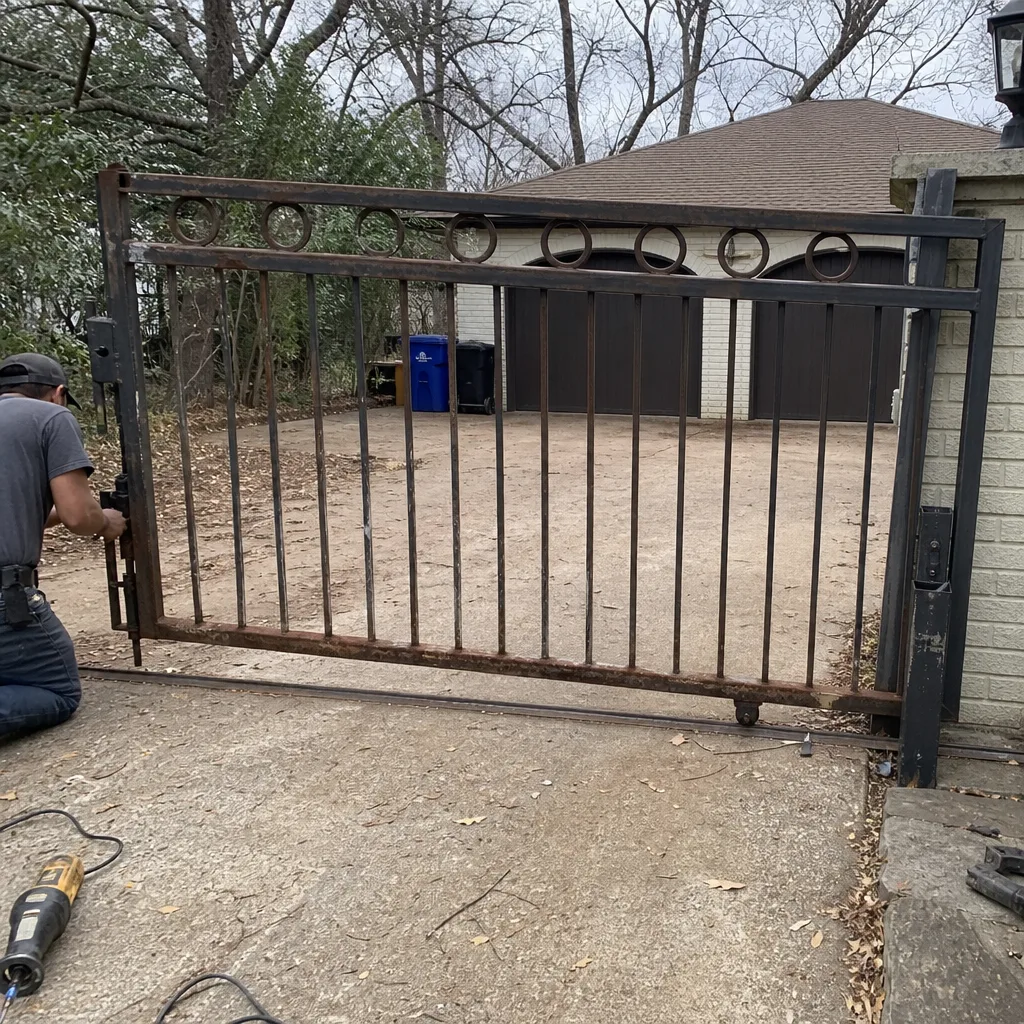 Before
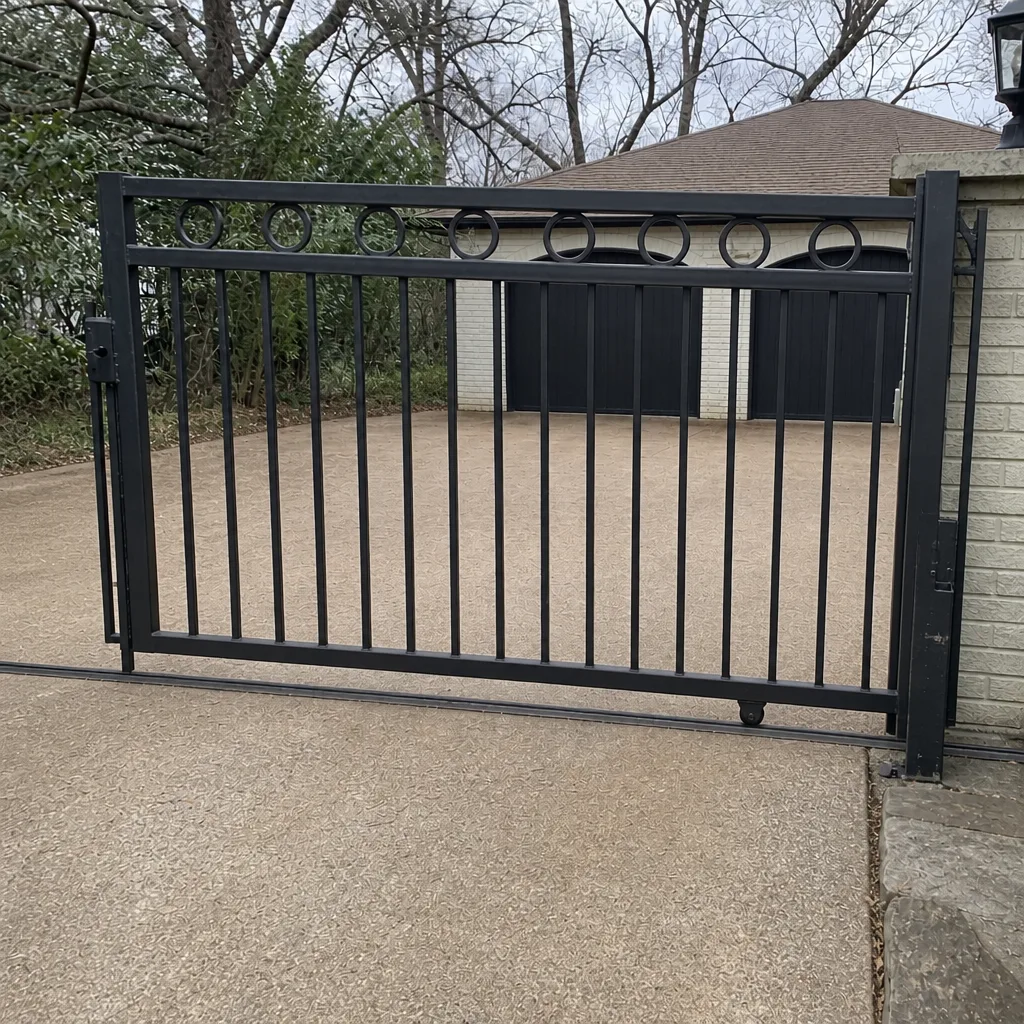 After
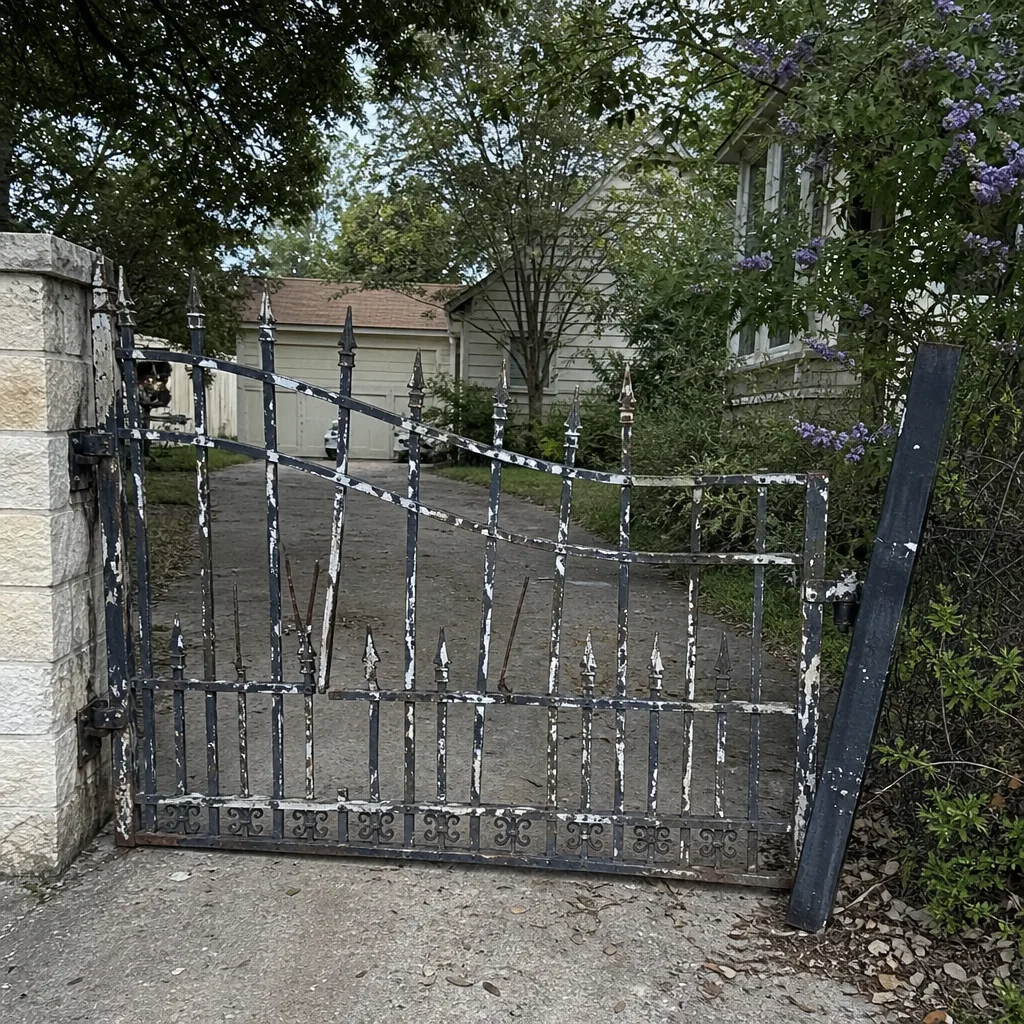 Before
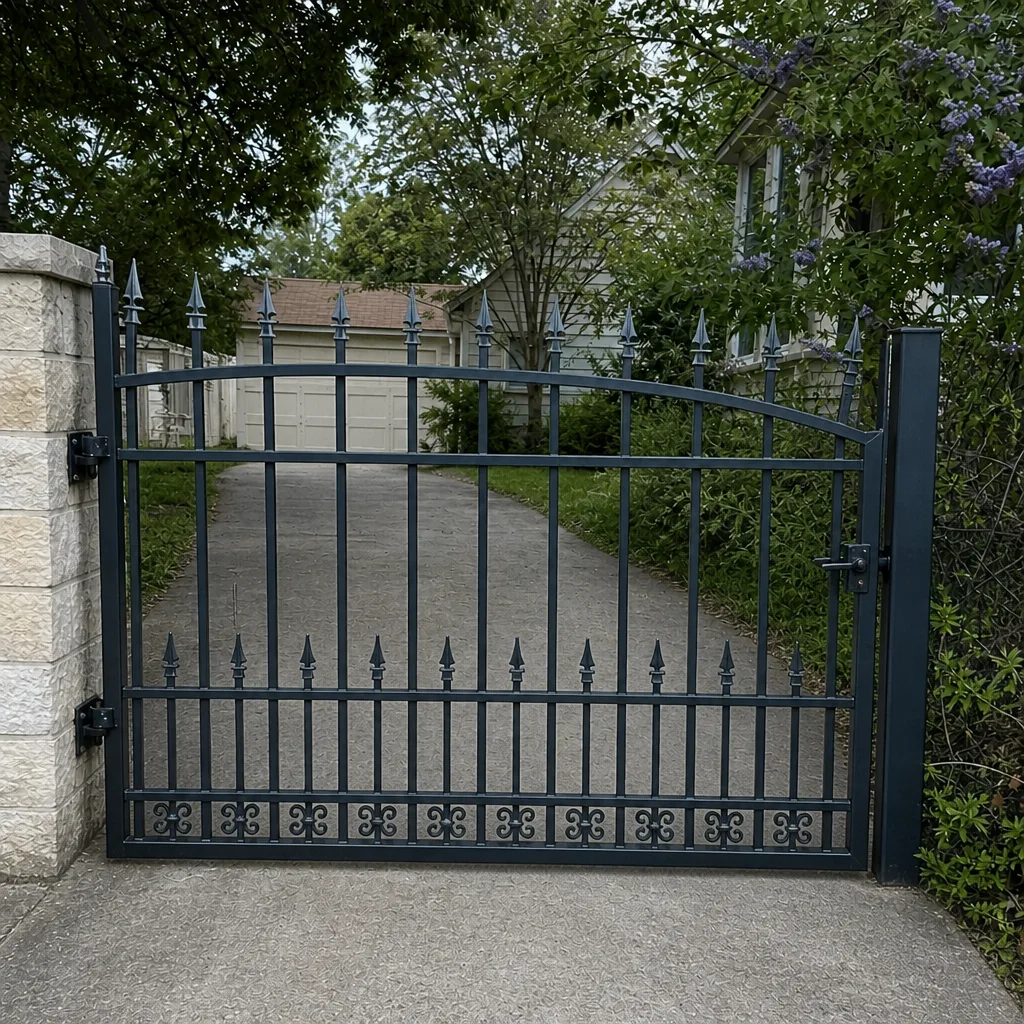 After
 Before
 After
When to Call a Professional
Some seasonal checks are household tasks: clearing debris, trimming vegetation, and eyeballing for rust. Others need a specialist. Call a professional when your gate stops during summer heat more often than it used to, when hinges are clearly worn or a gate is sagging, when the battery backup needs a load test, when the control board shows corrosion, when a gate arm or post is out of alignment, when safety edges or photo-eyes aren’t behaving, or when you’re not sure what’s on your property and want it identified. Anything involving the operator’s wiring, the control board, or a heavy gate panel that could crush is work for a trained professional. Never open an operator housing or attempt to adjust wiring yourself; that’s where serious injury happens.
Gate Repair Georgetown offers free estimates in Georgetown. Call (833) 408-4022. We answer 24/7. Fast dispatch from 7am to 7pm, Sunday through Friday. Our technicians have up to 13 years of experience, and we work on gates exclusively: repair, electric gate repair, and installation. Whether your operator is a Mighty Mule or a commercial FAAC system, we know it, and we can tell you what your gate needs before the next season changes. For a deeper look at the repair side, see gate repair in Georgetown.
Frequently Asked Questions
At minimum, four checkpoints a year: a pre-winter inspection of the operator and battery backup, a post-wet-season check for rust and concrete movement, a summer watch for thermal cutoff and solar output, and a fall maintenance window for chain tensioning, hinge replacement, and control board inspection. Most of these are inspections; a few need a specialist. For automated systems, add a test of the safety edges and photo-eyes at every change.
They cut out more, but that’s usually thermal protection doing its job. When afternoon temperatures push past 100°F, an operator housing can get hot enough that the motor shuts down. The thing to watch is whether the cutoff becomes more frequent or happens in milder weather, which points to an overloaded motor. In that case, have it diagnosed; the fix is often mechanical, like worn hinges or a loose chain, rather than a new motor.
We work on LiftMaster, FAAC, BFT, Linear, Viking, Ghost Controls, DoorKing, Elite, and Mighty Mule. That covers most residential and commercial operators a Georgetown homeowner or property manager is likely to own. If you’re not sure which brand is on your gate, call us and we’ll help you identify it.
Before temperatures drop, check hydraulic fluid and seals if your operator is hydraulic, clear debris from tracks and hinges, inspects the control board enclosure for moisture, and load-test the battery backup. Also confirm safety edges and photo-eyes are aligned. A gate that’s marginal in fall tends to fail when the cold arrives, so the inspection catches the weak part first. For more on operators specifically, see electric gate repair.
Thermal cutoff is the most common reason. The motor’s temperature sensor cuts power when the housing gets too hot, and the gate works again once it cools. If it happens often, check airflow around the housing and look for mechanical issues that make the motor work harder. A gate that cuts out more this summer than last is worth a diagnosis.
Yes. We handle both routine and urgent needs, from seasonal tune-ups to storm damage and full replacements. The price is quoted and agreed before any work starts, so you know the cost before we begin. Call (833) 408-4022. We answer 24/7. Fast dispatch from 7am to 7pm, Sunday through Friday. You can also learn more about us on the Georgetown page.
The Bottom Line
Georgetown’s weather doesn’t do anything subtle, and neither does a gate that’s been neglected through a season. Spring rain accelerates rust and shifts posts; summer heat reveals mechanical strain through thermal cutoff; rare winter freezes catch marginal batteries and seals; storm season tests alignment and safety edges. The good news is that each of these has a short, predictable check. Do them at the seasonal change, and the repair calls you avoid are the ones you never needed. If you’d rather have a specialist look at your gate and tell you what it needs, Gate Repair Georgetown offers free estimates. Call (833) 408-4022 to get started, or see Gate Repair Georgetown for the full picture of our services.
Written by the team at Gate Repair Georgetown.